
In 2007, I found myself in Pamplona during San Fermín, watching friends prepare to experience the encierro. They had questions, lots of them. Where should I position myself? What happens if I fall? How do I know when to run?
As someone who had studied this tradition, run the route myself, and spent years in the U.S. Army learning how preparation saves lives, I knew one thing for certain. That is, time spent rehearsing this bull run could be the difference between an exhilarating experience and a catastrophic one.
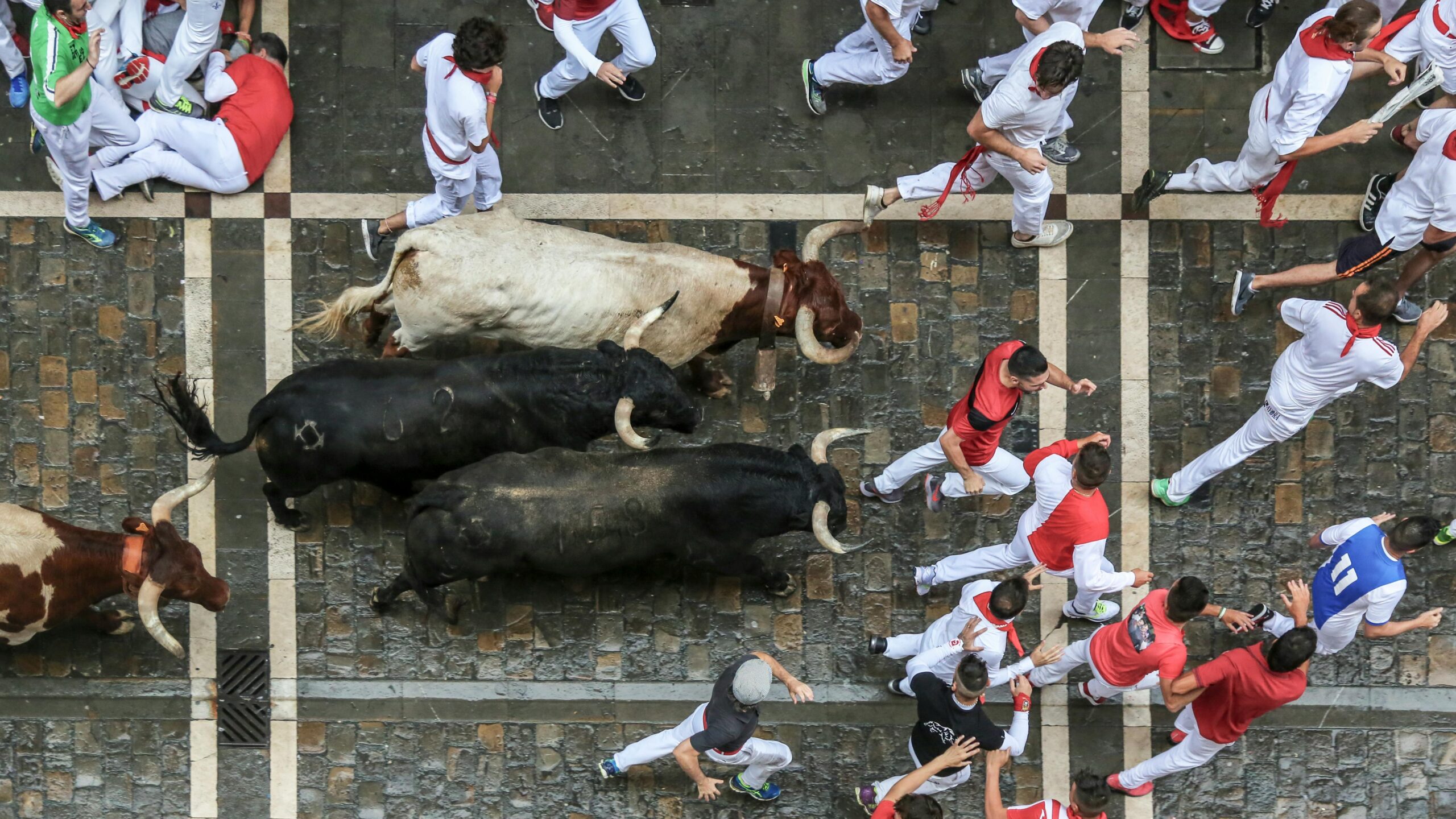
Leading bulls through Estafeta Street, Pamplona
That realization became the foundation of Encierro.
From Iraq to Pamplona: A Humanitarian’s Approach to the Bull Run
My path to founding Encierro didn’t start in Spain; it started in uniform. In the Army, we lived by a simple principle: rehearse operations, think through contingencies, anticipate what could go wrong. That mindset didn’t leave me when I came home from Iraq. If anything, it deepened.
I directed Chasing Red, a documentary about the running of the bulls focused on my instruction of a younger runner. Through that process, I recognized something fundamental about myself: I wanted to provide solutions, structure, and rationality to help people get through something potentially disastrous.
That’s what attracted me to humanitarianism.
When the 2015 Nepal earthquake struck, I deployed with Team Rubicon, an organization of military veterans responding to disasters worldwide. I’ve since dedicated my professional career to this work. The thread connecting Iraq, Nepal, and Pamplona is the same: helping people navigate dangerous situations through preparation and clear thinking.
“Humanitarianism is finding solutions that result in the reduction of human suffering.”
Preparation for serious events allows for better decision-making, which translates into the reduction of human suffering. Sometimes, through a conversation before the bull run, someone decides they don’t want to run. Either it’s no longer important to them, or they realize the impact their decisions might have on other runners, on their families. That is humanitarian work.
The 204-Hour Party (And How We Spend It)
San Fermín is a 204-hour fiesta. Most people spend every single one of those hours partying, and that’s wonderful, it’s what makes the festival so special. But here’s what sets Encierro apart:
“I find the greatest enjoyment talking about the bull run with people who are about to make a serious decision.”
While Pamplona pulses with music and celebration, I spend hours each day walking the recorrido, the 875-meter route from the corrals to the bullring. I explain strategy, answer questions, help people think through what they’re about to undertake. It provides an immense degree of satisfaction. I’m grateful to connect with people who are taking what might seem like frivolous ventures seriously, recognizing that their decisions and their approach affect not only themselves, but the other runners on the route and their families.
Let me be clear about what we do and don’t do:
“I’m not there to convince people to run. I’m there to make sure they make as informed a decision as possible.”
We’re not selling packages. We’re not trying to get more people to come to Pamplona. We’re runners. Daily, we confront the challenges of the bull run on the route. What we offer is something different: a resource for people who have already decided to run and need someone to talk through the decision they’re making, not to coax them, not to convince them, but to help them understand the sequence of events, the risks, the timing, the strategy.
In the Arena With You
Here’s something you won’t hear from other tour companies in Pamplona: there are no easy answers when it comes to the encierro. In war, in natural disasters, on this route, these situations have imperfect answers. What they need are people thinking critically about the uniqueness of each situation.
That’s what makes Encierro different. We’re in the arena with you.
Every morning during the fiesta, I run. So do Anthony Fizer and Brock Fizer, the two exceptional young runners I have the privilege of working alongside. We’re not spectators talking about something we used to do. As active bull runners, we assume the same risks you’ll assume, experiencing the same split-second decisions, bearing the consequences of what can happen on the route.
“It’s important that the person you’re getting your guidance from is in the arena with you. Experiencing it. And knowing it intimately.”
Real, Raw Answers
You could ask a chatbot for standard answers: do this, don’t do that. You’ll get half of them wrong, and they can’t answer the nuance of your questions. We can. Because we’ve seen everything that can happen on the run route. Everything on these streets, we’ve been through.
Our answers are fluid because the encierro evolves with each run. The bulls are different every day. Crowds shift. Weather changes dynamics. A runner’s technique that worked yesterday might be dangerous today.
For people who might give a tour but have only read about the run or watched it from the sidelines, it’s one thing to spectate and talk about it. It’s another thing to actually live it.
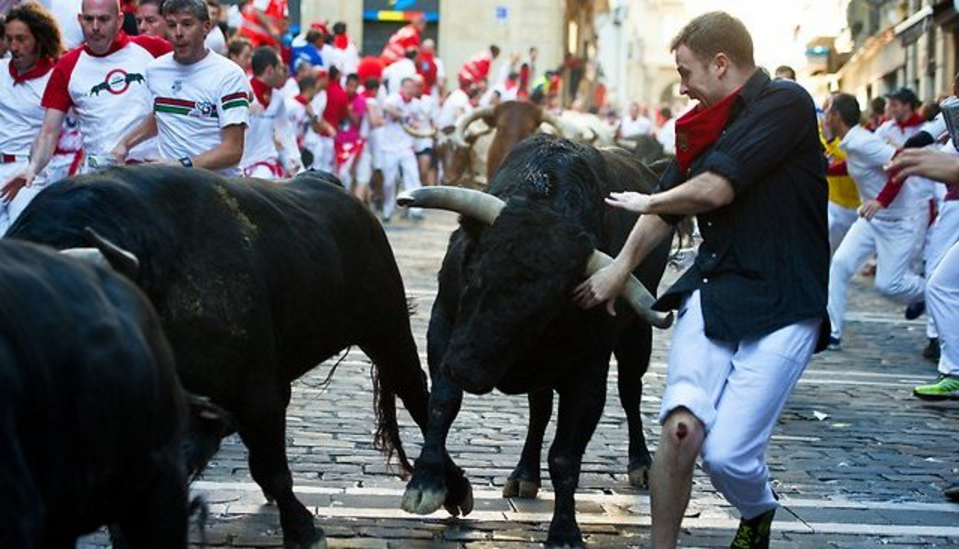
Dennis running at La Curva, one of the most technical sections of the route (2012)
There Are Bull Runners, and Then There Are People Who’ve Run
Throughout the fiesta, I’ve heard people providing tours who haven’t run, or maybe have run once or twice. I think there’s a solemnness and a seriousness among true bull runners that comes from daily participation, from making the encierro a part of who you are rather than something you did that one time.
Encierro is a company by bull runners for bull runners. We are the only company in Pamplona comprised entirely of active runners who run every single year.
First-time runners make decisions on the run route that impact all runners, myself and my friends included. That’s why I feel a certain responsibility to professionalize bull running instruction. If someone is receiving guidance on this tradition as serious as I know it to be, that person providing instruction should also be running in the streets, accepting those same risks every day during the festival.
If you search “Dennis Clancey bull run tours” on Google, you’ll see something interesting: major tour operators hire us. Encierro is the source. We’ve provided expert bull run instruction to over 3,000 clients – more than any other outfit in Pamplona. We are trusted because we are the authority on running of the bulls instruction, and we’re committed to providing that expertise through people who live this tradition every July.
Who We Serve
Here’s something that surprises people: many of our clients never participate in the run.
A significant portion are spectators who will watch from balconies but want an authentic explanation of what’s happening on the route every morning. They want to understand what it is to be a bull runner, what the various techniques are, and what this tradition is all about. These individuals become ambassadors who share with their friends, whether their friends will run or not, the true nature and value of the run, the encierro.
Everyone has a right to get on that run route and assume the risk. The beauty of the run is that it’s open to all people. You just have to step out on the streets. But whether you’re running or spectating, Encierro is here as a resource. We are not here to convince you one way or the other, but to ensure you understand what you’re witnessing or participating in.
Why We Do This
I started Encierro because I’m a humanitarian, and I think when people are entering into something that can be life-altering, a dangerous decision like the running of the bulls, it’s important to ensure they understand the uncertainties. This isn’t something I would ever encourage someone to do. But I do enjoy, as someone primarily concerned with how to reduce suffering in the world, helping individuals think through the decisions they’re about to make.
In those split seconds when things are happening on the route, having some bit of muscle memory, some bit of a plan for how you’ll move or react. I think those decisions can impact positively or catastrophically someone’s life.
That’s why we walk the recorrido for hours every day. That’s why we run alongside you. That’s why all of us at Encierro are active runners who take this tradition as seriously as you do.
We’re in the arena with you.
Dennis Clancey is the founder of Encierro and has been providing bull run instruction in Pamplona since 2007. He is a military veteran, filmmaker (Chasing Red), and humanitarian who has responded to disasters worldwide with Team Rubicon. He runs with the bulls every year during San Fermín alongside Anthony Fizer and Brock Fizer.