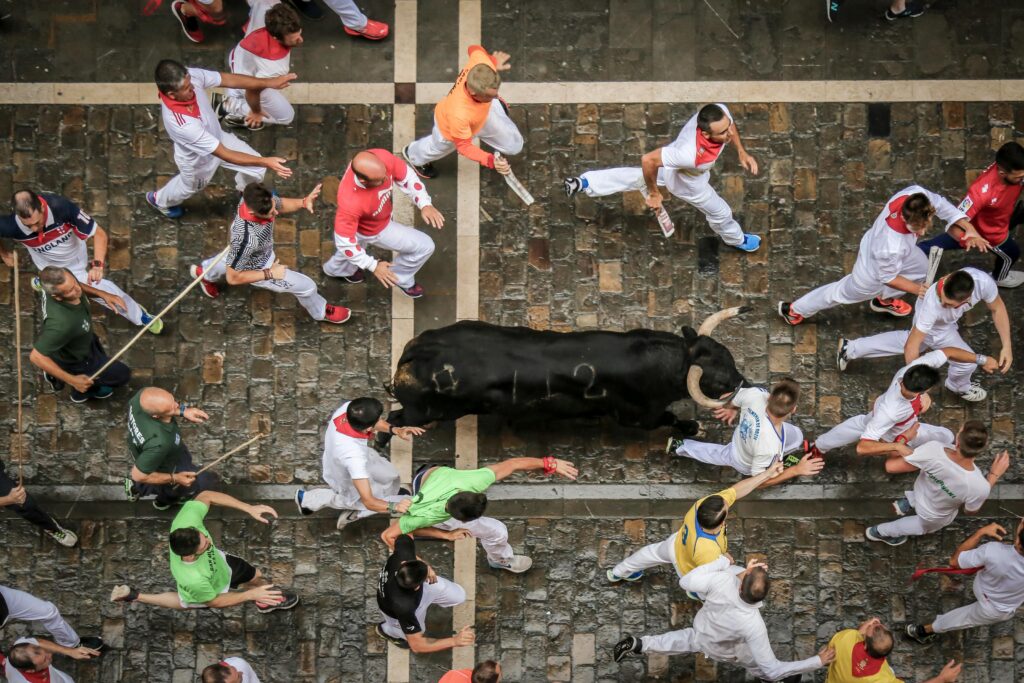
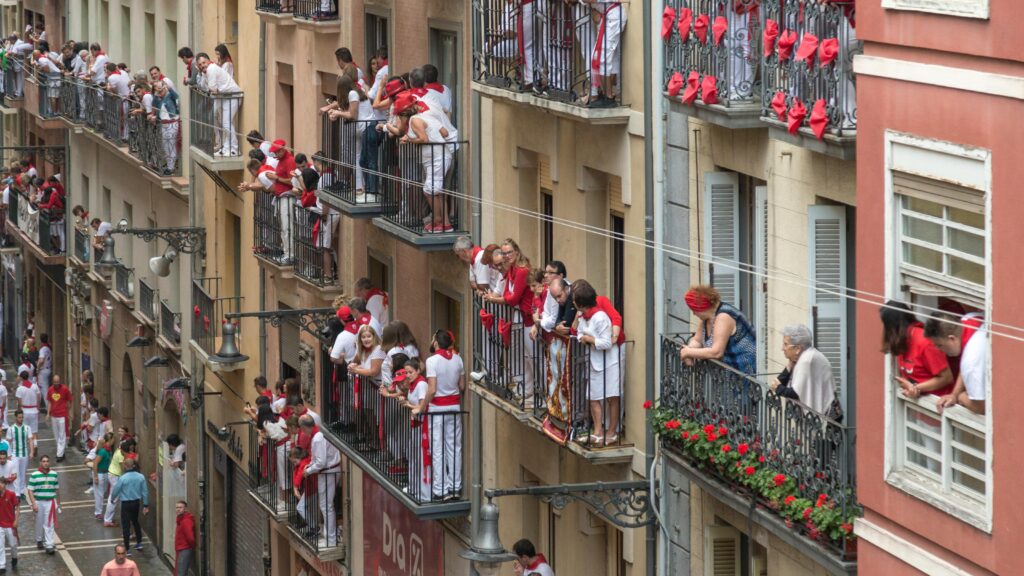
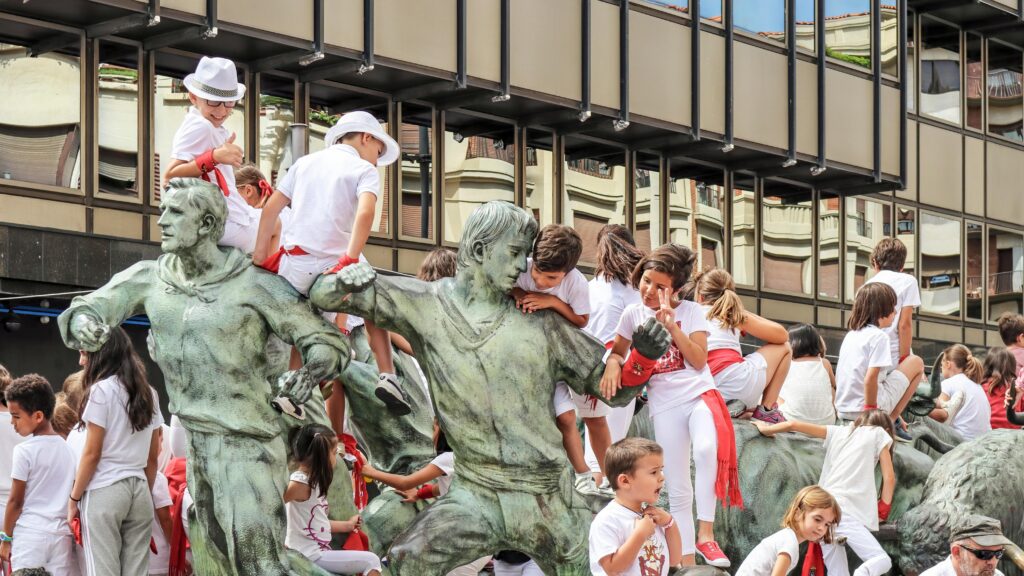
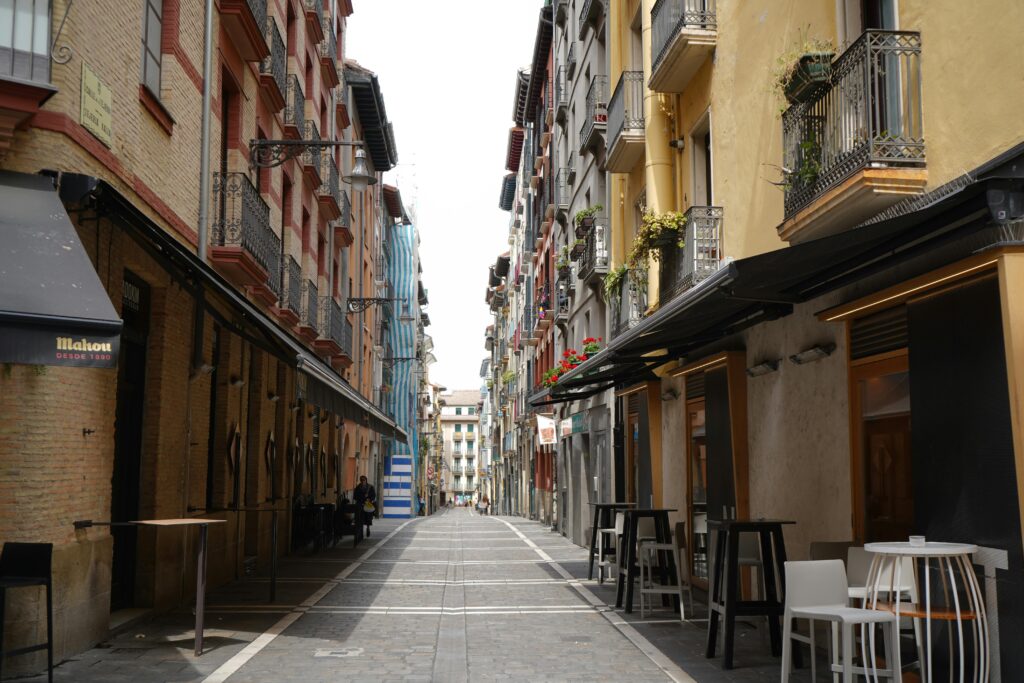
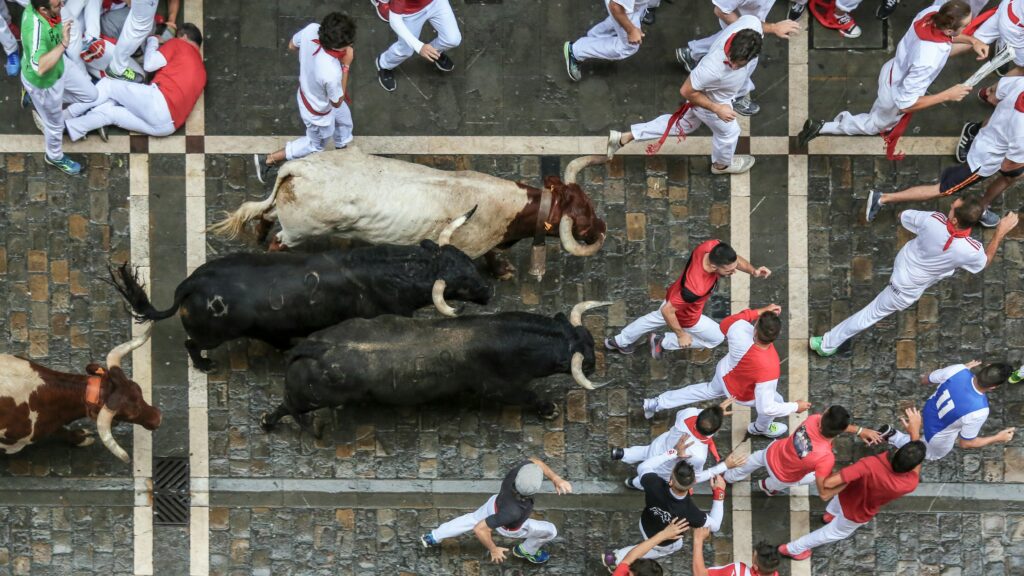
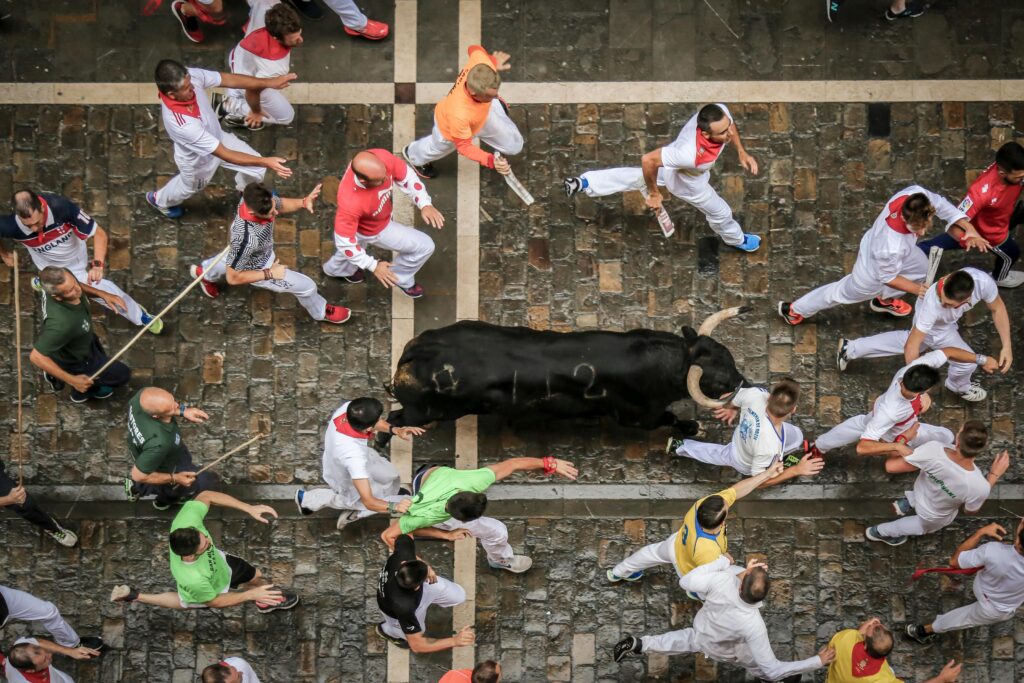
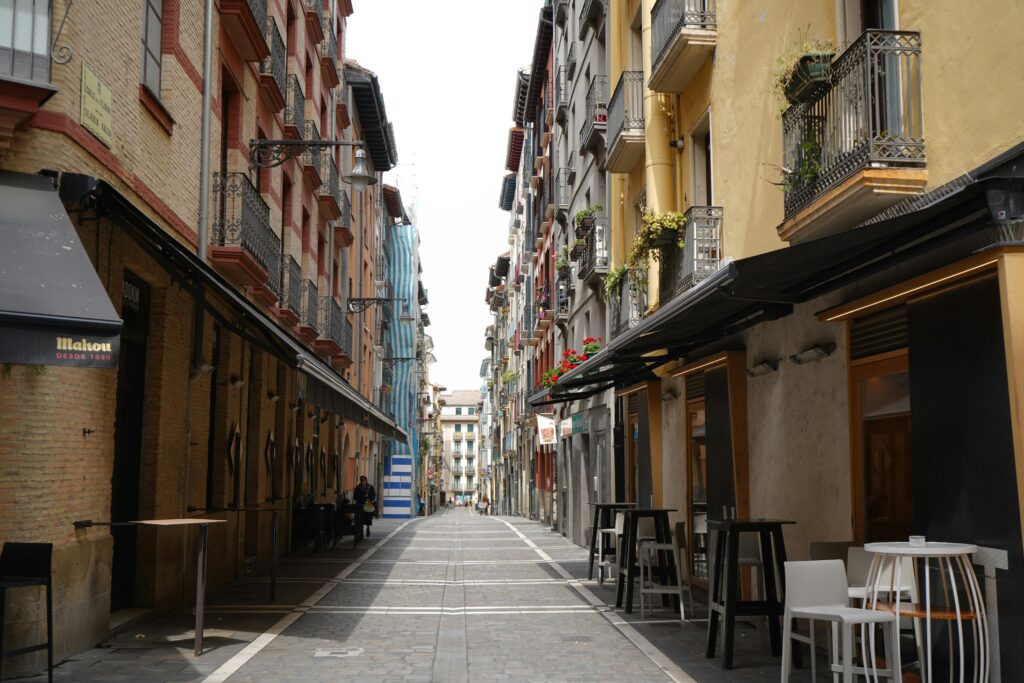
The encierro route does not exist in isolation. Every meter of the 875-meter course runs through Pamplona’s casco viejo, the medieval old city, and the path it follows is not arbitrary. The route connects three ancient settlements that were once rivals, unified only in 1423 by royal decree. To understand where the bulls run is to understand how Pamplona itself was built, settlement by settlement, conflict by conflict. The stones beneath the runners’ feet are the same stones that have watched this city evolve for nearly a thousand years. Okdiario’s encierro photography captures how the historic streets shape the dynamics of the run.

The Medieval Maze That Became a Route

The route winds through tortuous medieval streets, and that torture is intentional by the city’s original layout. According to sanfermines.net, the course “winds its way through the tortuous medieval streets of the Old Part of the city,” featuring “steep slopes, double right angle bends, narrow, shady streets, and there is even a tunnel at the end, leading into the bullring.” What makes this description remarkable is what follows: the route was not designed for the bulls. The route exists because of pure geographic chance. It follows “the location of the former city walls, the medieval gateways into the city and the situation of the bullring.”

The bulls run where they run not because planners centuries later envisioned an encierro route, but because Pamplona built walls where walls were needed, placed gates where gates made sense, and positioned the bullring where the city’s geography allowed it. The encierro is accidental architecture.

The casco viejo itself spans roughly half a mile by half a mile. As Dennis Clancey explains, “The encierro route is entirely within Pamplona’s old city, and it really bisects it. It’s about half a mile by half a mile. And then you have this half mile route that crisscrosses from north to south in it.” This narrow geography is not a limitation. It is the source of the encierro’s character. Every turn, every slope, every moment of compression is built into the city’s medieval DNA.

Three Burgos: Before Unification

Medieval Pamplona was not one city. It was three competing settlements, each with its own identity, its own governance, and its own conflicts. This is the historical foundation that the encierro route unknowingly maps.

The Navarreria was the indigenous settlement, the original city that predated the other two. It sat in the high ground of what is now the eastern section of the old city. The Burgo de San Cernin (named after the city’s patron saint) was a Frankish settlement created to serve pilgrims on the Road to Santiago. It occupied what is now the central area of the casco viejo. The Poblacion de San Nicolas was a mixed community that developed around the church of San Nicolas.

These three communities did not coexist peacefully. They competed for resources, for power, and for the favor of the crown. In 1276, the War of the Navarreria erupted, and the conflict was so severe that the Navarreria was nearly destroyed. It took fifty years for the settlement to recover. The rivalry continued into the fourteenth and fifteenth centuries until, finally, economic pressure and royal intervention forced a resolution.

On September 8, 1423, King John II issued the Privilegio de la Union, a royal decree that unified the three settlements into a single municipality with a single ayuntamiento (town government). The Privilegio did not erase the old divisions. They remain visible in the street layout, in the architecture, and in the boundaries that still mark where one burgo ended and another began.

Town Hall Square: The Neutral Ground

The Town Hall of Pamplona, constructed after the Privilegio de la Union, was deliberately placed in a location that embodied the compromise. It sits on what was once no-man’s-land between the rival settlements, at the intersection of the three old communities. This is not coincidence. This is politics made visible in urban planning.

Dennis Clancey describes the significance: “It’s appropriate that Town Hall is where it is. Because it’s essentially central to the run route and also central to the town today. But central to the unification—it’s an intersection of the old villages that made up Pamplona.”

Town Hall Square is also home to a historical marker that most runners pass without noticing. There is a plaque set into the pavement that marks the Privilegio de la Union. Clancey adds a challenge for visitors: “There’s a plaque in the middle of Town Hall Square. That’s a challenge to people reading this—go to Town Hall Square and try to find it. It’s back towards the back, furthest from Town Hall. It marks the unification of three villages.”

The plaque is deliberately inconspicuous, tucked away from the main plaza where most visitors would expect it. Finding it requires the kind of intentional exploration that separates casual tourists from people who have actually studied Pamplona’s geography.

How the Route Maps to the Old City

The encierro begins at Santo Domingo, in the former bastion of the old city walls. The bulls run uphill through a slope that is narrow and enclosed by stone walls on both sides. This is the Cuesta de Santo Domingo, the steep section that remains one of the most dangerous parts of the route.

From there, the route passes through the Plaza del Ayuntamiento—Town Hall Square—which represents the unification point of the three burgos. The bulls move through Mercaderes Street, the commercial heart of the medieval city, and then encounter the sharp right-angle turn that leads into Calle Estafeta.

Estafeta is the longest straight section of the route, 300 meters of shaded street that runs parallel to the main plaza before angling downward toward the final stretch. From there, the route narrows through the Telefonica section and eventually funnels into the callejon, the narrow tunnel that leads directly into the bullring.

Each of these sections corresponds to a specific part of Pamplona’s medieval geography. Santo Domingo marks the edge of the old city walls. The Plaza del Ayuntamiento is the unified center. Mercaderes represents the commercial zone. Estafeta represents the ancient east-west thoroughfare that connected the three burgos. And the final descent represents the movement out of the medieval core toward the modern expansion of the city.

In Pamplona (2002), Ray Mouton captures this connection to history: “The sun rises over the Pyrenees and Pamplona. In darkness, old stone buildings and narrow cobblestone streets worn and weathered through the ages reveal themselves. Everything around me is of another time, anchored in antiquity.” The route is not merely a physical space. It is a journey through layers of medieval history written in stone. Diario AS has documented how the route’s integration with the old city creates unique challenges for both runners and organizers each year.

Expert Insight: Dennis Clancey on the Route’s Geography

“The encierro route is entirely within Pamplona’s old city, and it really bisects it. It’s about half a mile by half a mile. And then you have this half mile route that crisscrosses from north to south in it.” “There’s a plaque in the middle of Town Hall Square. That’s a challenge to people reading this—go to Town Hall Square and try to find it. It’s back towards the back, furthest from Town Hall. It marks the unification of three villages.” “It’s appropriate that Town Hall is where it is. Because it’s essentially central to the run route and also central to the town today. But central to the unification—it’s an intersection of the old villages that made up Pamplona.”

— Dennis Clancey, founder of Encierro and member of La Unica Pena

Dennis Clancey has run the encierro since 2007 and has spent years studying the route’s relationship to the city. His observations underscore a critical point: the route is not just a physical challenge. It is a historical artifact, embedded in the city’s medieval structure. Understanding the geography of the casco viejo transforms how runners see the encierro.

Walking the Route, Reading the History

To truly understand the encierro route, walk it outside of Fiesta. Walk it when the streets are quiet, when you can trace the elevation changes without the pressure of crowds and bulls. Look at the building facades and see which ones predate the nineteenth century. Notice where the street layout changes abruptly, marking the boundaries between the old burgos. Pay attention to the plaque in Town Hall Square.

On the Jokin Zuasti episode of Ander Etxanobe’s Mozxs Podcast, it was said that “the geography of Pamplona’s encierro route (including Cuesta de Santo Domingo, Calle Estafeta, Curva de Estafeta)” forms the backbone of what runners must understand. The technical knowledge of the route is inseparable from the knowledge of Pamplona’s medieval history. They are the same thing.

Mouton writes: “When they step back onto a cobblestone street and leave cyberspace behind, they step back into another time with traditions stretching back hundreds of years.” The cobblestones are not decoration. They are the physical record of the city’s past. The bulls have run through these streets for nearly a hundred years, but the streets themselves have existed for nearly a thousand.

Spanish Vocabulary

Casco viejo (KAS-koh vee-AY-hoh): The old quarter or historic center of a Spanish city. Pamplona’s casco viejo contains the entire encierro route within its medieval street grid.

Burgo (BOOR-goh): A settlement or borough, typically a merchant town that developed around a religious site or fortress. Medieval Pamplona consisted of three burgos.

Privilegio de la Union (pree-vee-LEH-hee-oh deh lah oo-nee-OHN): The royal decree issued in 1423 that unified Pamplona’s three burgos into a single municipality.

Ayuntamiento (ah-yoo-en-tah-mee-EN-toh): The city government or town hall. Pamplona’s Ayuntamiento was built as a neutral gathering point after the Privilegio de la Union.

Frequently Asked Questions

Why does the encierro route go where it goes?

The route follows the medieval layout of Pamplona’s old city, including the former city walls, the old gateways, and the position of the bullring. It was not designed for bulls. The bulls run where they run because of urban geography established centuries before the encierro tradition developed.

What were the three burgos of Pamplona?

The Navarreria (indigenous settlement), the Burgo de San Cernin (Frankish), and the Poblacion de San Nicolas (mixed). They competed with each other until unified by the Privilegio de la Union in 1423.

Where is the plaque marking the Privilegio de la Union?

In Town Hall Square, toward the back of the plaza furthest from the Town Hall building itself. It is deliberately inconspicuous.

Can I walk the encierro route?

Yes. The route is open to the public outside of Fiesta. Walking it when the city is quiet allows you to study the geography, the elevation changes, and the medieval layout without the chaos of the bulls and crowds.

How long is the encierro route?

850-875 meters, depending on the measurement. It begins at Santo Domingo and ends at the bullring.

The encierro route is a pathway through medieval Pamplona. To understand the route is to understand the city. For a detailed breakdown of each section of the course, read our guide to the complete encierro route. To explore the Calle Estafeta in depth, visit our Estafeta overview.

Dennis Clancey

Founder of Encierro

Dennis Clancey has run every morning of San Fermín since 2007 and is a member of La Única Peña. Every article on the Encierro blog is authored by active bull runners who run every morning of San Fermín in Pamplona, providing insights based on direct experience.

View all articles
Previous Article
The Encierro Route at Walking Speed: A Detailed Photo Tour
Next Article
Elevation Changes Along the Encierro Route: A Runner’s Topographic Guide