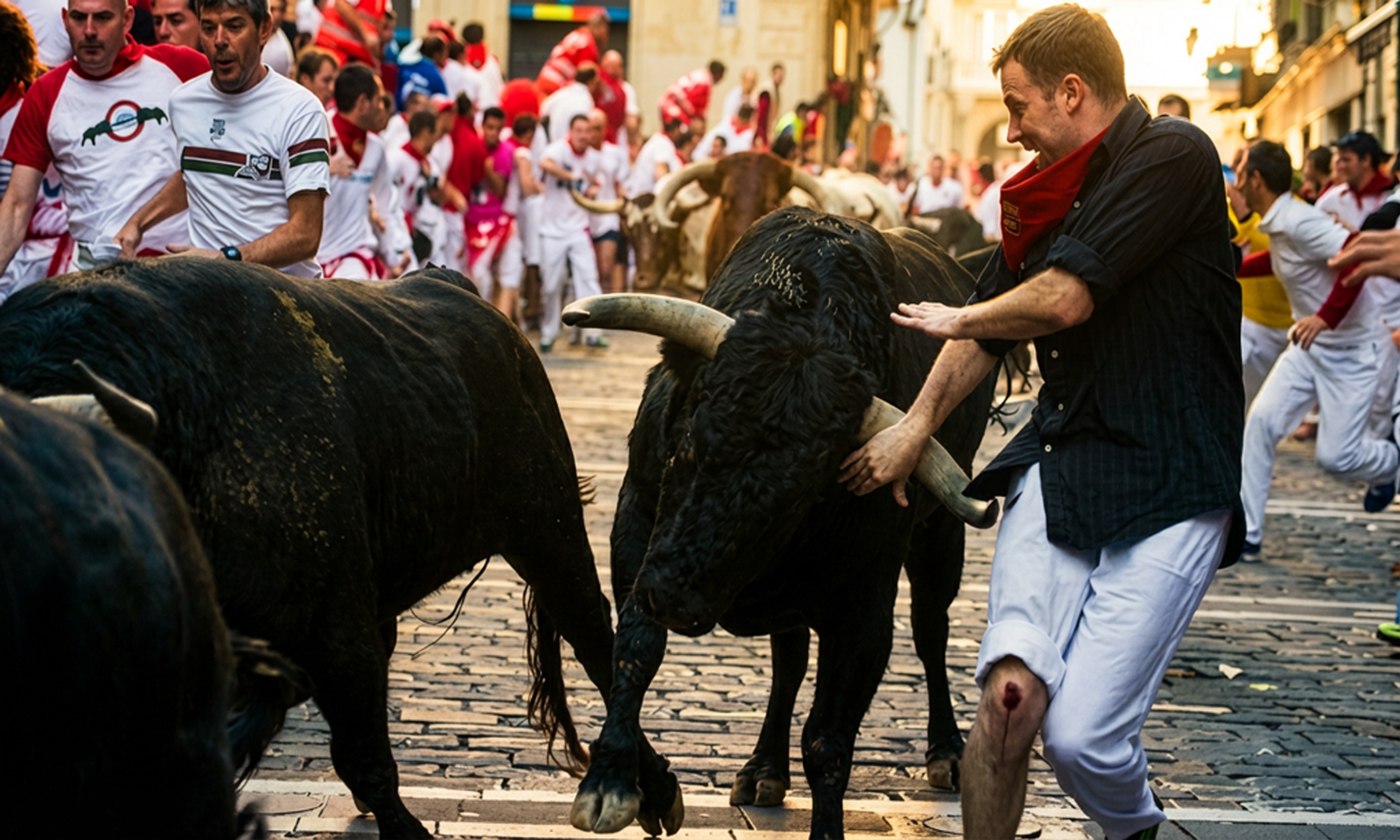
San Fermín 2010: The Running of the Bulls
July 6 to 14, 2010. Peñajara returns after twelve years. Fuente Ymbro produces the longest encierro ever recorded. Jandilla closes with four gorings and a suelto across Telefoníca.
What 2010 Was Really Like
2010 was still an early year for me in Pamplona. I was present for the fiesta and running, but still figuring out what my relationship to it was, what my role was, what the project that became “Chasing Red” and eventually Encierro would look like.
It was a quieter year in that sense. I was watching, learning the course, understanding how the week built from one morning to the next. The Fuente Ymbro encierro on July 9 was something I will not forget, a run that went over six minutes, the longest ever recorded, with one bull running the entire course from Santo Domingo to the ring alone. It is the kind of morning that stays with you. But that year was formative more than it was defining. The defining years came later.
Dennis Clancey, Founder, Encierro
The Longest Encierro Ever Recorded
The 2010 fiesta produced nine confirmed horn gorings across eight encierros and two moments that entered the record books. On July 9, Fuente Ymbro’s toro ‘Flamante’ separated from the herd in Santo Domingo and ran the entire course alone. The run lasted 6 minutes 23 seconds, the longest single encierro time ever recorded in Pamplona. One runner, English tourist Matthew Malkin, was gored by the suelto.
The closing encierro on July 14 brought Jandilla, one year after the same ganaderia’s bull ‘Capuchino’ had killed Daniel Jimeno Romero in 2009. The 2010 Jandilla run lasted 4:23, produced four gorings, and saw the toro ‘Gavioto’ run solo across Telefoníca. Peñajara returned to Pamplona after a twelve-year absence on July 7, opening the week with the fastest run of the fiesta at 2:24. El Pilar on July 13 ran in 2:14, the fifth fastest encierro in thirty years.
‘Flamante’ of Fuente Ymbro ran from Santo Domingo to the ring alone in 6:23, the longest encierro ever timed in Pamplona.
Every 2010 Encierro, Day by Day
Each run with its ganadería, time, horn injuries, and the official video archive.
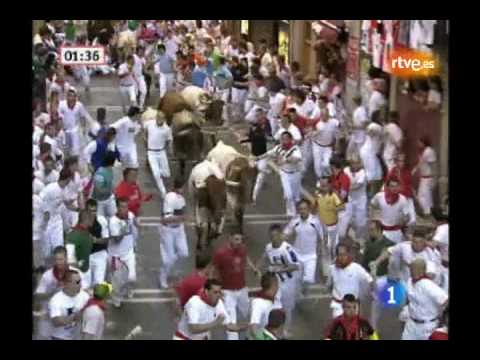
Peñajara Returned after 12 years
Peñajara returned to Pamplona for the first time in twelve years and opened the fiesta with the fastest run of the week at 2:24. The fast, compact herd produced no horn gorings. One runner suffered a vertebra fracture from a trampling on Estafeta.
Cebada Gago
The toro ‘Cabrero’ separated from the herd and ran much of the course alone, stretching the clock to 3:30 and creating danger throughout. Yago Mínguez was gored on Mercaderes (10 cm wound); Irish runner Conor Canton received a leg wound on Estafeta. Two hospital admissions.
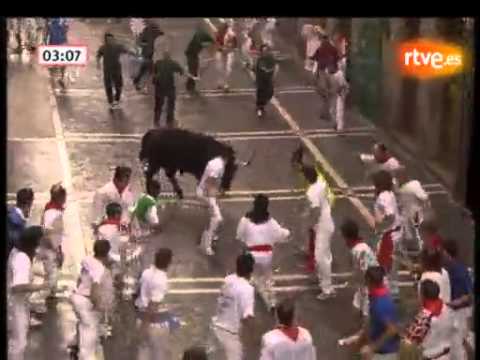
Fuente Ymbro Longest ever
The toro ‘Flamante’ separated from the herd in Santo Domingo and ran the entire 849-metre course alone, producing the longest encierro time ever recorded at 6 minutes 23 seconds. English runner Matthew Malkin was gored. The run redefined what a suelto could do to a morning.
Dolores Aguirre
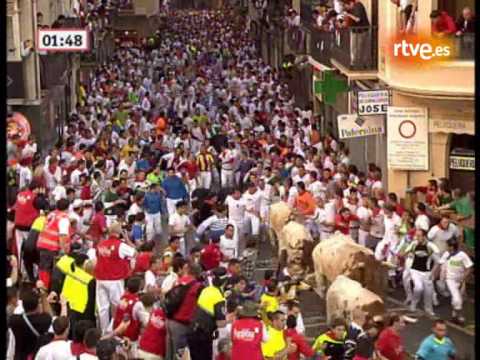
The Dolores Aguirre bulls ran in a strung-out formation across a hot, crowded Saturday morning. No horn gorings. One Irish runner was treated for a skull traumatism from a trampling. A hard but incident-free run for a ganaderia that tends to produce heavy, slow-moving animals.
Miura
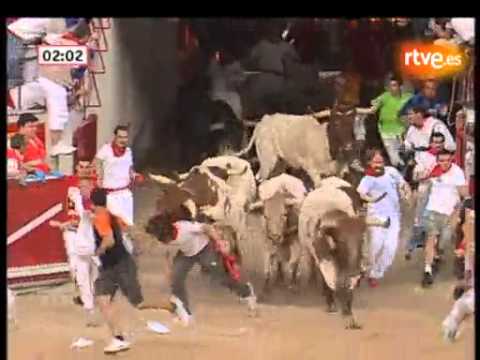
The toro ‘Cachero’ separated from the Miura herd and charged repeatedly near Telefoníca. Juan Pedro Lecuona was gored with a 20 cm wound. The run lasted 3:02. Six runners in total required hospital attention. A typical Miura morning: long, dangerous, and uncertain to the end.
Victoriano del Río
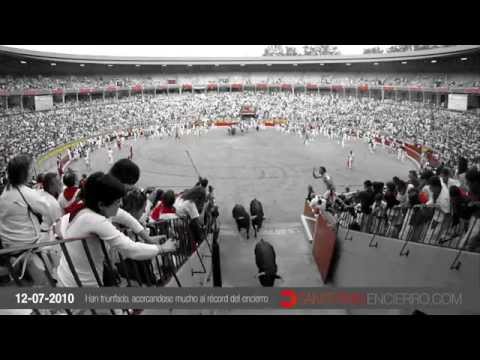
A clean, fast run at 2:16, one of the ten fastest in thirty years at the time. No horn gorings. Victoriano del Río’s bulls moved in a tight, controlled pack from start to finish. The second fastest encierro of the fiesta and one of the smoothest mornings of the week.
El Pilar 5th fastest ever
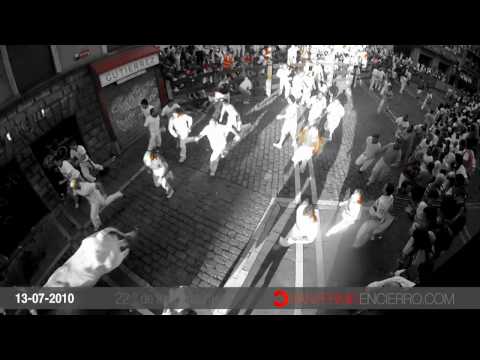
At 2:14, the fifth fastest encierro in thirty years of official records. The toro ‘Campanero’ separated from the herd on Estafeta and gored Jaime Hita Cuadrado in the arm. Despite the incident, the overall run time was exceptional. The fastest morning of the 2010 fiesta.
Jandilla
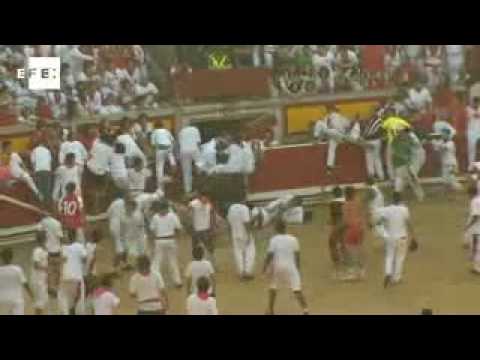
The most dangerous encierro of the 2010 fiesta. One year after the same ganaderia’s bull killed Daniel Jimeno Romero, Jandilla’s toro ‘Gavioto’ separated and ran Telefoníca alone. Four gorings: Alfonso Galbis on Mercaderes; Alonso Ceardi (Chile) and Francisco Murillo on Telefoníca; Daniel Earl in the plaza. The run lasted 4:23.
The Stories the Numbers Leave Out
San Fermín 2010: Official Cartel
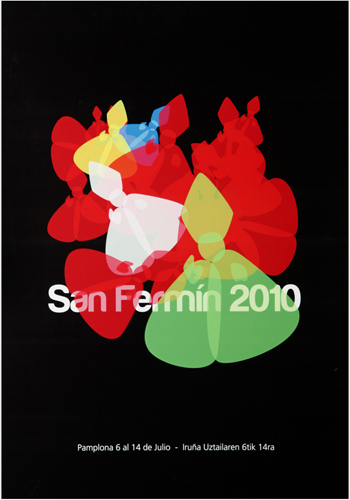
Cartel by Koldo Villarreal Armendáriz.
The 2010 winning poster was designed by Koldo Villarreal Armendáriz, selected through the Ayuntamiento de Pamplona’s public competition. The image followed the tradition established by the annual poster contest, which brings in hundreds of entries judged first by a panel and then by public vote. Villarreal Armendáriz’s design captured the festive energy of San Fermín and carried the visual identity of the fiesta throughout July.
Source: Ayuntamiento de Pamplona, cartel archive
Selected as the official poster of Sanfermines 2010 through Pamplona’s annual concurso de carteles.
The City in 2010
The chupinazo opened San Fermín 2010 at noon on Tuesday, July 6, in the Plaza Consistorial. The fiesta ran through Wednesday, July 14, when the Pobre de Mí concluded the festivities at midnight.
The corridas of the 2010 Feria del Toro matched the eight encierro ganaderías in the afternoons. The 2010 taurine program was notable for the corrida of Peñajara, the returning ganaderia’s bulls facing top-tier matadors in the afternoon after the morning’s clean encierro. The week also featured the noche de los fuegos artificiales from the Ciudadela ramparts, the giants and big-heads procession through the old city, and the full program of riau-riau, diana bands, and evening concerts in the Plaza del Castillo.
2010, As the World Saw It
A selection of the international coverage of San Fermín 2010.
How 2010 Came Together
The planning and key dates, kept on the record.
The cartel by Koldo Villarreal Armendáriz was selected and published by the Ayuntamiento de Pamplona. The ganaderia lineup was confirmed, including the return of Peñajara after a twelve-year absence and the inclusion of Jandilla, returning one year after the 2009 death of Daniel Jimeno Romero.
The chupinazo opened San Fermín 2010 in the Plaza Consistorial at noon. Peñajara ran the following morning in 2:24, producing the fastest encierro of the fiesta and no horn gorings.
Fuente Ymbro’s ‘Flamante’ separated in Santo Domingo and ran the full course alone, producing a run of 6 minutes 23 seconds, the longest encierro ever recorded. One runner was gored.
El Pilar ran in 2:14, the fifth fastest encierro in thirty years of official records and the fastest morning of the 2010 fiesta. One goring on Estafeta by the suelto ‘Campanero’.
Jandilla’s closing encierro produced four gorings in 4:23, with the toro ‘Gavioto’ running Telefoníca alone. That evening, the Pobre de Mí closed the fiesta at midnight in the Plaza del Castillo.
San Fermín 2010, Answered
Which ganaderia ran in each encierro in 2010?
Peñajara on July 7, Cebada Gago on July 8, Fuente Ymbro on July 9, Dolores Aguirre on July 10, Miura on July 11, Victoriano del Rio on July 12, El Pilar on July 13, and Jandilla on July 14.
What was the longest encierro in San Fermín 2010?
Fuente Ymbro on July 9, at 6 minutes 23 seconds. The bull ‘Flamante’ separated from the herd in Santo Domingo and ran the entire course alone. It is the longest encierro time ever recorded in Pamplona.
What was the fastest encierro in San Fermín 2010?
El Pilar on July 13, at 2 minutes 14 seconds, the fifth fastest encierro in thirty years of official records. Peñajara’s opening run on July 7 at 2:24 was the second fastest of the fiesta.
How many runners were gored in San Fermín 2010?
Nine runners were gored by horn across the eight encierros: two by Cebada Gago on July 8, one by Fuente Ymbro on July 9, one by Miura on July 11, one by El Pilar on July 13, and four in the closing Jandilla run on July 14.
Planning your own run?
2010 is part of the record. For what came before, see San Fermín 2009, or for what came after, San Fermín 2011.