
San Fermín 2002: The Running of the Bulls
July 6 to 14, 2002. The year the slowest encierro in modern history stopped Pamplona cold, eleven minutes and fifty-seven seconds with Santiago Domecq bulls on the streets.
Looking Back at 2002
Looking back at 2002, the year is defined by a single morning that has no parallel in the modern history of the encierro. On July 9, a Santiago Domecq bull fell behind the herd on Estafeta, turned against the flow of runners, and spent nearly twelve minutes working the street before entering the corrals. The official time of 11 minutes and 57 seconds remains the slowest run ever recorded in San Fermín.
That single extraordinary run sits against an otherwise turbulent fiesta. Twelve runners gored across the eight days placed 2002 in the second tier of the most dangerous years on record, tied with 2001 and 2016. For students of the encierro, 2002 is a reminder that the course does not always end in two or three minutes, and that the danger does not end until the last bull is in the pen.
Dennis Clancey, Founder, Encierro
A Year That Reset the Clock
The 2002 fiesta opened on a clean note: Núñez del Cuvillo ran the first encierro on July 7 with no horn gorings, one of only a handful of zero-goring first runs in the modern era. But the week that followed was unforgiving. Over eight days, twelve runners were caught by horn, a total that, alongside 2001 and 2016, stands as the second highest in recorded San Fermín history.
The defining event came on July 9 when a Santiago Domecq bull separated from the pack on Estafeta and reversed course. The chaos lasted 11 minutes and 57 seconds before the bull finally entered the corrals, leaving five gored runners and a record no fiesta has broken since. The Miura closer on July 14 brought the fiesta to its traditional end, rounding out a week that had tested every section of the 849-meter route. Explore the full record in the year-by-year archive.
Eleven minutes and fifty-seven seconds: the slowest encierro in San Fermín history, still unbroken.
Every 2002 Encierro, Day by Day
Each run with its ganaderiía, time, horn injuries, and notes. The route runs approximately 849 meters from Santo Domingo to the ring. Video recordings of individual 2002 runs are not available online; the television era for encierro footage began consistently from 2011 onward.
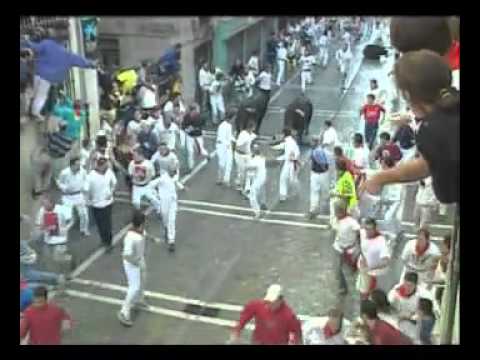
Núñez del Cuvillo
A rare clean opener: Núñez del Cuvillo’s bulls ran smoothly from Santo Domingo to the ring with no horn injuries, one of only a handful of zero-goring first runs in the modern history of the fiesta. The El Puerto de Santa María ranch is known for speed and herd cohesion, and the 2002 debut delivered exactly that.
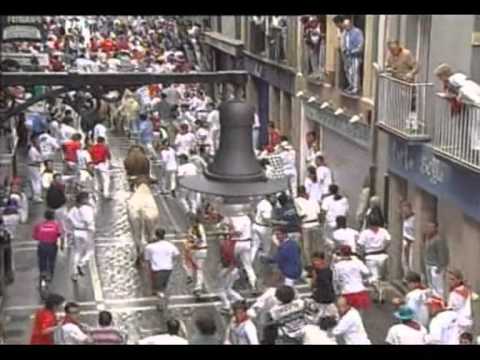
Cebada Gago
Cebada Gago brought its customary danger to the Monday run: two gorings on a tense morning on Estafeta. The feared Jerez ranch carries the highest gorings-per-run average in the modern encierro, and the 2002 appearance was consistent with that record. The next morning would prove the most extraordinary in San Fermín history.
Santiago Domecq
The third run produced the slowest encierro ever recorded in San Fermín history. A Santiago Domecq bull separated from the herd on Estafeta and turned back against the flow of runners, holding the street for 11 minutes and 57 seconds before the corrals finally received all the bulls. The time stands as the all-time record for a single encierro and has never been approached since. The extended chaos left multiple runners injured on the course.
Jandilla
The fourth encierro brought Jandilla bulls onto the course, the morning after the extraordinary Santiago Domecq slow run of 11 minutes and 57 seconds. Jandilla, known for speed and compactness, produced a run that stood in sharp contrast to the previous morning’s drawn-out chaos.
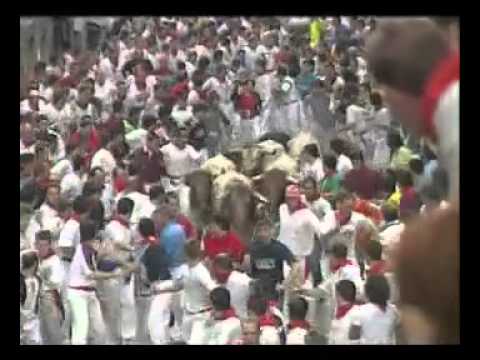
Gutiérrez Lorenzo
The Salamanca ranch ran the fifth encierro, two days after the all-time record 11:57 Santiago Domecq morning. One runner was caught by horn in what was otherwise a moderately paced morning, the city was still absorbing the chaos of Tuesday.
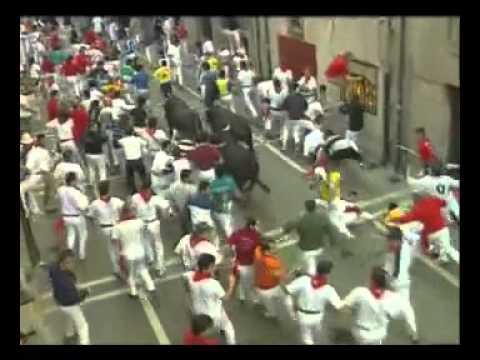
Dolores Aguirre
The Navarra ranch known for large, powerful, and unpredictable bulls ran the sixth encierro. Two runners were gored on a morning that kept the medical teams busy heading into the weekend. Dolores Aguirre produces some of the most physically imposing animals on the course.
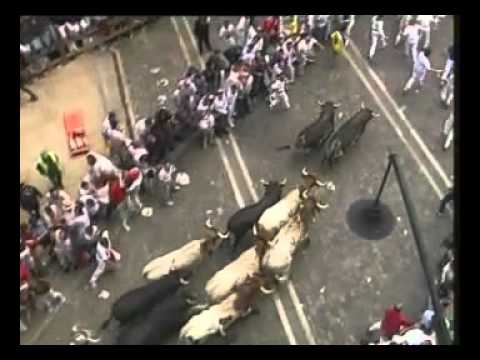
Torrestrella
The Álvaro Domecq ranch provided the penultimate encierro. The Torrestrella bulls moved in a compact herd and finished without horn gorings, a brief reprieve heading into the Miura finale.
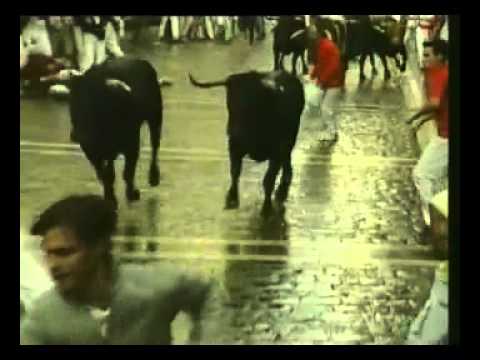
Miura
Miura closed the fiesta in its traditional role. When the count was complete, 2002 stood at twelve horn gorings across eight encierros, alongside 2001 and 2016 in second place in the all-time dangerous-fiesta rankings.
What the Record Remembers
Official Poster of San Fermín 2002
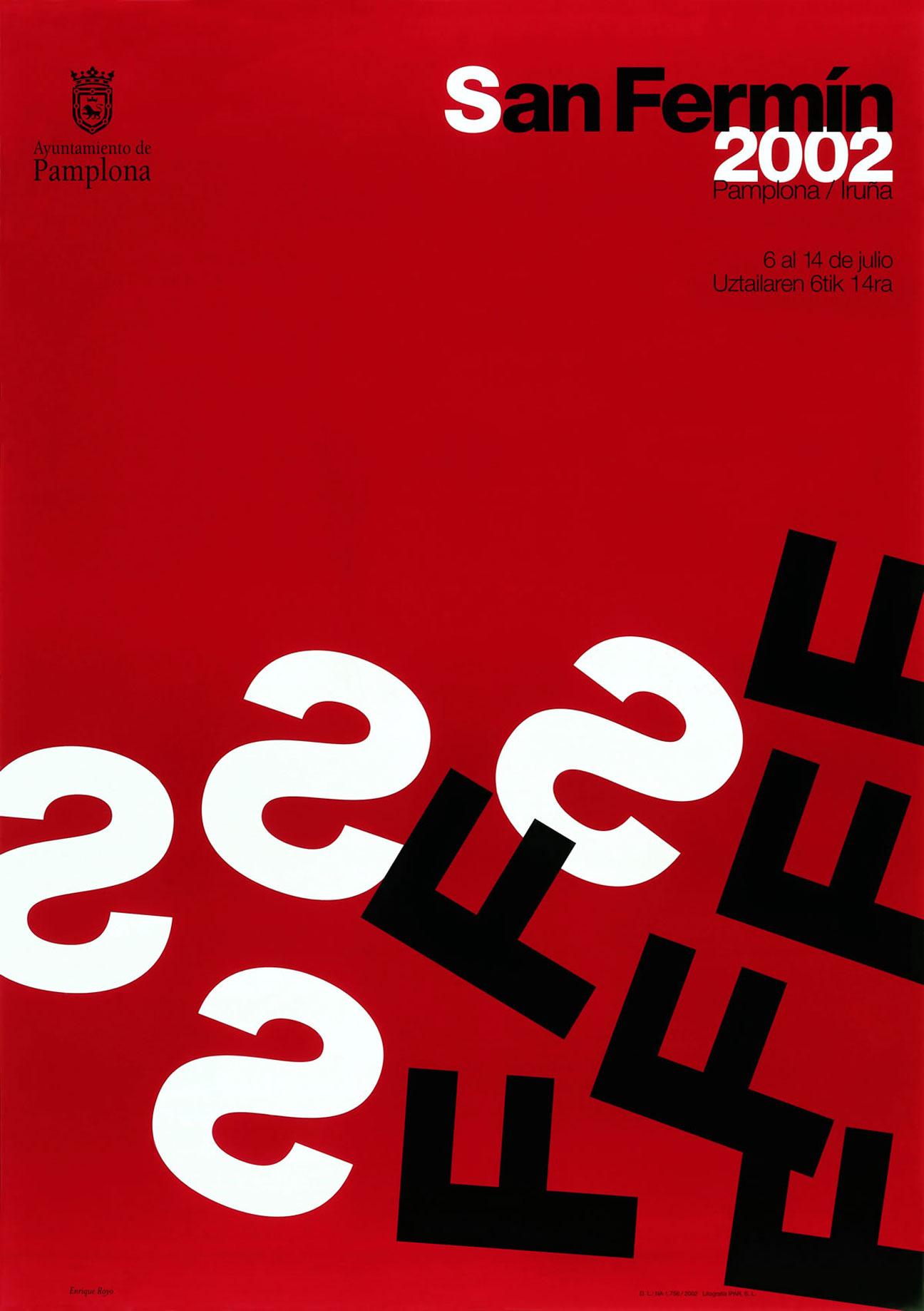
Cartel 2002 by Enrique Royo Romeo.
The official poster for San Fermín 2002 was designed by Enrique Royo Romeo, selected through the annual poster competition administered by the Ayuntamiento de Pamplona. The poster is part of the continuous tradition of commissioned art that has promoted the fiesta since the late nineteenth century.
The Casa de Misericordia of Pamplona oversees the bullfighting programme; the municipal government selects the fiesta poster through open competition. Both institutions have shaped the visual identity of San Fermín for more than a century.
Source: Ayuntamiento de Pamplona, cartel archive
The 2002 San Fermín official poster, selected through the annual concurso de carteles held by Pamplona each year.
The City in 2002
The chupinazo fired at noon on Saturday, July 6, opened the nine-day fiesta as it does every year from the balcony of the Pamplona town hall. The fireworks competition, the peñas, the procession of San Fermín on July 7, and the daily noon bullfights at the Plaza de Toros de Pamplona all ran on their traditional schedule around the eight encierros.
The year 2002 fell squarely within a period of high attendance and growing international participation in the encierro. The streets from Santo Domingo to the bullring were lined with runners from Spain, the United States, Australia, and across Europe. The record slowness of the July 9 encierro, broadcast on Spanish television, brought the 2002 fiesta to a wider audience than usual and reinforced the unpredictability that defines the encierro year after year. The fiesta closed on the night of July 14 with the candlelit Pobre de Mí in the Plaza del Castillo.
How 2002 Came Together
Key dates in the 2002 fiesta, kept on the record.
Eight ranches confirmed for 2002: Núñez del Cuvillo, Cebada Gago, Santiago Domecq, Jandilla, Gutiérrez Lorenzo, Dolores Aguirre, Torrestrella, and Miura. Miura closed the fiesta as is tradition.
The chupinazo fired at noon from the Pamplona town hall balcony, opening nine days of fiesta. Runners from across the world began the week of daily 8:00 a.m. encierros.
A Santiago Domecq bull separated on Estafeta and ran alone for 11 minutes 57 seconds, the longest encierro in the modern history of San Fermín. Five runners were gored on this one morning alone.
Miura closed the fiesta with two more gorings. The total for 2002 reached twelve horn gorings, the second-highest single-year total in the history of the encierro alongside 2001 and 2016. The Pobre de Mí at midnight ended the fiesta.
San Fermín 2002, Answered
How many runners were gored in San Fermín 2002?
Twelve runners were gored by horn across the eight encierros of 2002, placing the year alongside 2001 and 2016 in second place in the all-time rankings for gorings in a single San Fermín fiesta. Five of those twelve gorings came in a single run on July 9 with Santiago Domecq.
What ganaderiía ran in each encierro in 2002?
Núñez del Cuvillo on July 7, Cebada Gago on July 8, Santiago Domecq on July 9, Jandilla on July 10, Gutiérrez Lorenzo on July 11, Dolores Aguirre on July 12, Torrestrella on July 13, and Miura on July 14.
What made the July 9, 2002 encierro historic?
A Santiago Domecq bull fell behind the herd on Estafeta, turned back against the runners, and held the street for 11 minutes and 57 seconds before entering the corrals. That time is the longest official encierro duration in the modern history of San Fermín in Pamplona and has not been surpassed since.
Was anyone killed in San Fermín 2002?
No. There were no deaths in the 2002 encierros. The last death before 2002 occurred in 1995, and the next after 2002 came in 2003, when Fermín Etxeberria Irañeta died from injuries sustained during the July 12 encierro.
Planning your own run?
2002 set one of the sport’s strangest records. For what came before, see San Fermín 2001, or explore the route with the runners who have studied it longest.