
San Fermín 2001: The Running of the Bulls
July 6 to 14, 2001. Twelve gored, eight ranches, and a Miura finale that closed one of the most dangerous fiestas of its era.
Looking Back at 2001
Looking back at 2001, the year stands as one of the most concentrated periods of danger in the recent history of the encierro. Twelve runners gored across eight mornings placed 2001 in the second tier of the all-time records, a figure that the following year, 2002, would equal and 2016 would later match.
The lineup that year was formidable. Cebada Gago on the Monday, Santiago Domecq midweek, the Marés de Domecq ranch, and Miura to close. Jandilla ran with characteristic speed. The fiesta took place in the summer after a normal political year in Spain, drawing the usual international crowd of runners who had come to test themselves against the streets of the old city. The encierro does not change; only the men and bulls do.
Dennis Clancey, Founder, Encierro
The Second Most Dangerous Year of Its Era
The 2001 fiesta produced twelve horn gorings across eight encierros, the same total that 2002 would reach and that 2016 would later tie, making all three years joint-second in the all-time record for gorings in a single San Fermín. Only the most dangerous fiestas of the twentieth century surpassed that count.
The lineup was heavy: Cebada Gago, historically the most prolific goring ganaderiía in San Fermín, ran on Monday July 9. Santiago Domecq ran midweek, and the Miura bulls closed the fiesta on July 14 in their traditional final slot. Jandilla, known for speed and compact movement, ran its sixth encierro in Pamplona with only one goring in its entire history at that point, a remarkable record for a ranch of its profile. Read the full record in the year-by-year archive.
Twelve gored across eight mornings: 2001 tied for the second-most dangerous year in the history of the Pamplona encierro.
Every 2001 Encierro, Day by Day
Each run with its ganaderiía, approximate time, and horn injuries. The route runs approximately 849 meters from Santo Domingo to the ring. Video recordings of individual 2001 encierros are not available online; consistent television coverage of the full route began from 2011 onward.
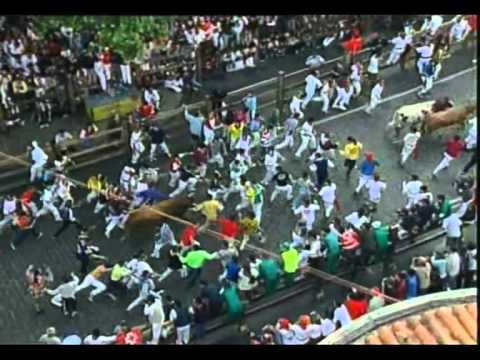
Torrestrella
The Álvaro Domecq ranch opened the 2001 fiesta with bulls that ran in a solid, compact pack from Santo Domingo to the bullring. No horn gorings in the first encierro, a clean start to a week that would prove far less forgiving, with twelve runners ultimately caught by horn across the eight mornings.
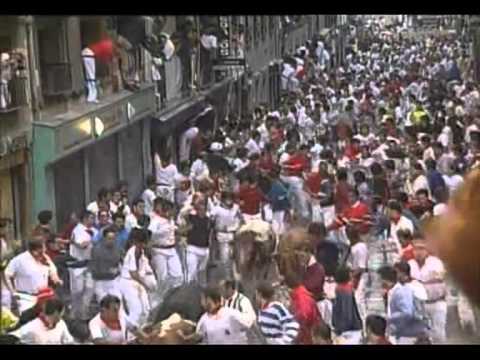
Millares
The Millares ranch brought their Salamanca-bred fighting bulls to Pamplona for one of their relatively rare appearances in the modern era. One runner was caught by horn on the second morning, an early signal of the danger that would build through the week.
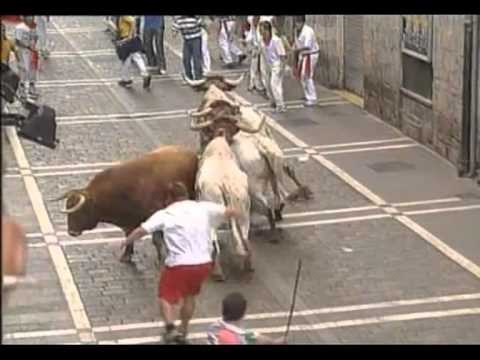
Cebada Gago
Cebada Gago’s Monday run produced three gorings, the largest single-day toll of the 2001 fiesta and entirely in keeping with the Jerez ranch’s reputation as the highest gorings-per-encierro average in San Fermín history. The bulls scattered on Estafeta, leaving runners exposed across multiple sections of the route.
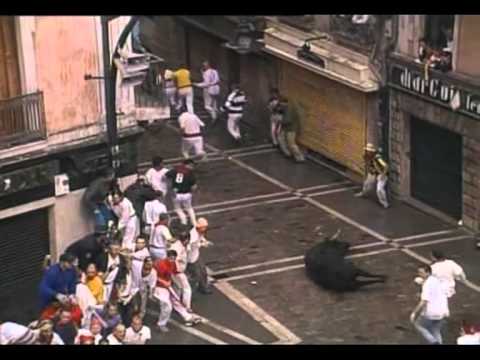
Jandilla
Jandilla ran fast and tight, crossing the 849-metre course without leaving a gored runner behind. Through 2001, the Benaños ranch had participated in six encierros in Pamplona since their debut and produced just one total goring, a record of remarkable cleanliness for a front-rank ganadería that would change dramatically in later years.
Santiago Domecq
The fifth run brought Santiago Domecq bulls onto the course. The 2001 fiesta logged twelve gorings across eight days, placing it among the more dangerous years on record, though no deaths occurred. All twelve injured runners survived. The last fatality in the Pamplona encierro before 2001 had been in 1995; the next would come in 2003.
Marqués de Domecq
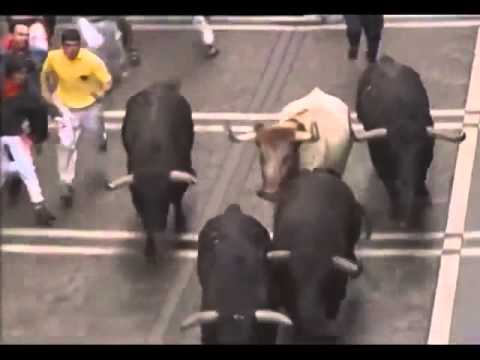
Marqués de Domecq ran the sixth encierro, producing two more gorings and pushing the week’s total to eight. Coming a day after Santiago Domecq’s two gorings, the Domecq family’s cattle had now provided two of the week’s most contested mornings on consecutive days.
Gutiérrez Lorenzo
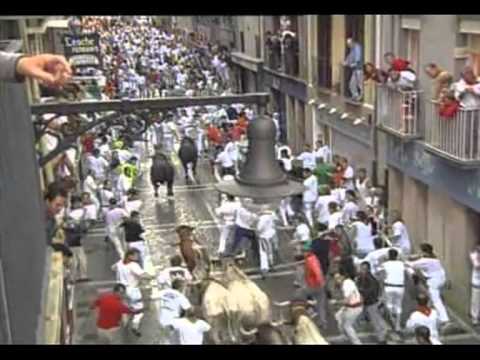
The Salamanca ranch ran the penultimate encierro of the fiesta. Two more runners were caught by horn on the second-to-last morning, bringing the week’s total to eleven going into the Miura finale.
Miura
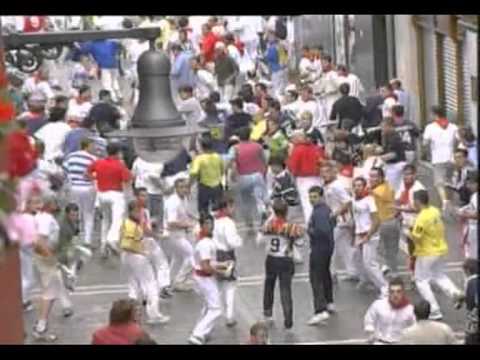
Miura closed the 2001 fiesta as is tradition. When the Pobre de Mí sounded at midnight, the 2001 total stood at twelve horn gorings, placing the year in second place in the all-time rankings for gorings in a single San Fermín fiesta. No runner died.
What the Record Remembers
San Fermín 2001 Official Poster
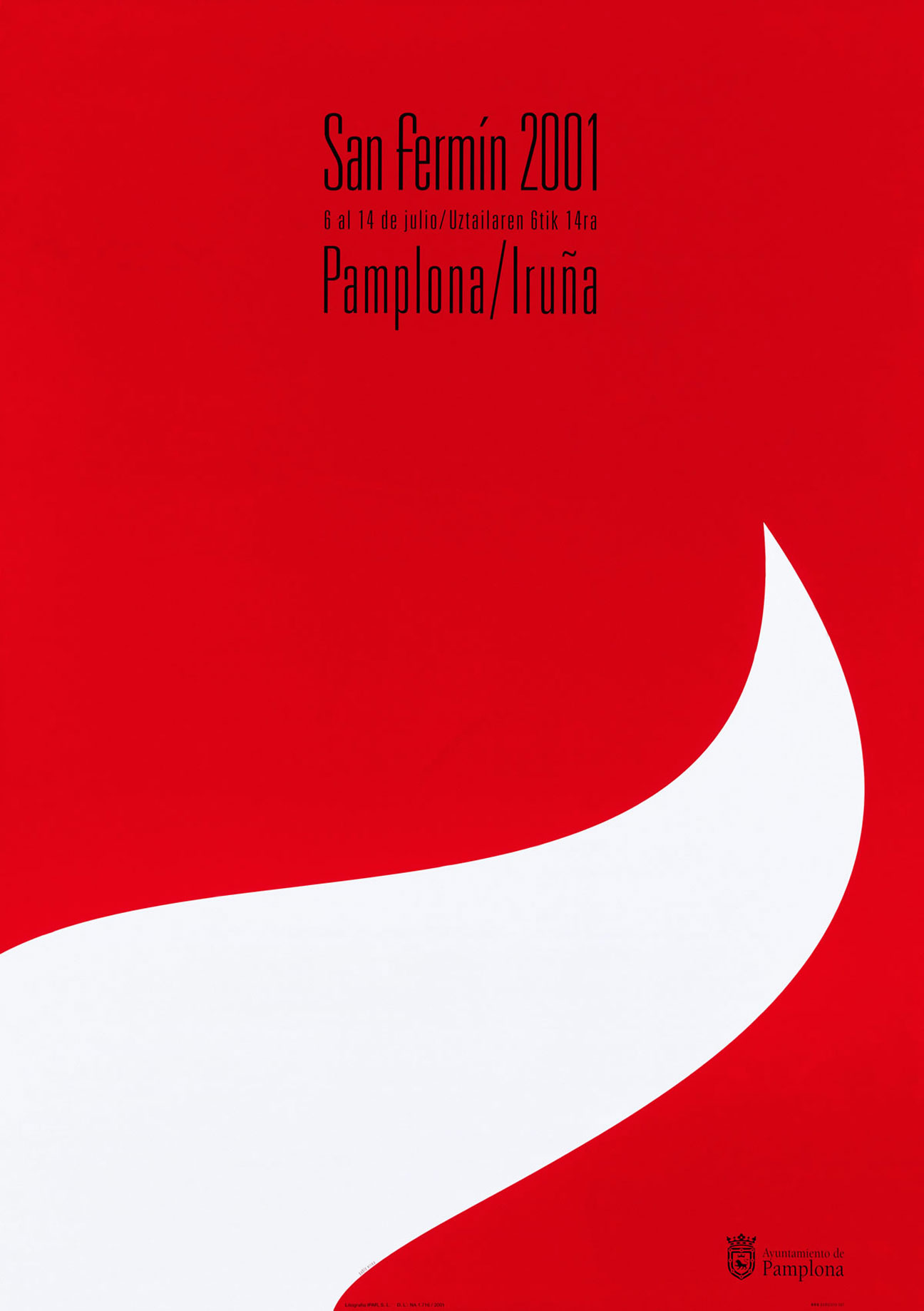
Cartel 2001 by Pablo Errea Rodríguez.
The official poster for San Fermín 2001 was designed by Pablo Errea Rodríguez, selected through the annual competition administered by the Ayuntamiento de Pamplona. The poster is part of a continuous tradition of commissioned art that has promoted the fiesta since the late nineteenth century.
The annual poster competition draws entries from artists across Spain and beyond. The winning design is announced in the spring and becomes the visual symbol of that year’s fiesta on banners, programmes, and merchandise throughout Pamplona.
Source: Ayuntamiento de Pamplona, cartel archive
Named the official cartel of San Fermín 2001 after winning the Ayuntamiento’s annual poster contest.
The City in 2001
The chupinazo opened the fiesta at noon on Saturday, July 6, as the crowd packed the Plaza Consistorial and the streets of the old city. The nine days that followed brought bullfights, concerts, peñas, giants and the full programme that surrounds the encierro in its traditional form.
July 2001 fell in the final summer before the September 11 attacks would fundamentally alter international travel and the character of large public gatherings worldwide. San Fermín 2001 drew its customary international crowd and ran on the established pattern unchanged. The closing Pobre de Mí at midnight on July 14 marked the end of a fiesta that had set one of the highest goring totals of the decade, though no runner died and the city returned to its normal rhythm within days.
How 2001 Came Together
Key facts in the 2001 fiesta, kept on the record.
Eight ranches confirmed for 2001: Torrestrella, Millares, Cebada Gago, Jandilla, Santiago Domecq, Marqués de Domécq, Gutiérrez Lorenzo, and Miura. Miura closed the fiesta in the traditional final-day role.
The chupinazo fired at noon from the town hall balcony in the Plaza Consistorial, opening the nine-day fiesta. The daily 8:00 a.m. encierros began the following morning with Torrestrella.
Cebada Gago ran the Monday encierro, producing three gorings in a single morning, the largest single-day toll of the fiesta. The Jerez ranch’s bulls scattered on Estafeta in a pattern the course has seen from this ganaderiía across decades.
Miura closed with two gorings. The 2001 total reached twelve horn gorings, the second-highest single-year total in San Fermín history. The Pobre de Mí at midnight ended the fiesta.
San Fermín 2001, Answered
How many runners were gored in San Fermín 2001?
Twelve runners were gored by horn across the eight encierros, placing 2001 in second place in the all-time San Fermín gorings record alongside 2002 and 2016. Cebada Gago alone accounted for three gorings on Monday July 9.
Which ganaderiía ran in each encierro in 2001?
Torrestrella on July 7, Millares on July 8, Cebada Gago on July 9, Jandilla on July 10, Santiago Domecq on July 11, Marqués de Domécq on July 12, Gutiérrez Lorenzo on July 13, and Miura on July 14.
Was anyone killed in San Fermín 2001?
No. There were no deaths in the 2001 encierros. The last death in the Pamplona encierro before 2001 occurred in 1995, and the next after 2001 came in 2003. The 2001 fiesta was dangerous by the measure of gorings but all twelve injured runners survived.
Why is San Fermín 2001 significant historically?
It is tied for the second-highest goring count in a single San Fermín fiesta in recorded history. The 2001 fiesta also took place in the final summer before the September 11 attacks of that year reshaped international travel; San Fermín 2001 was thus the last edition of the classic pre-9/11 era.
Planning your own run?
2001 set one of the fiesta’s highest goring records. For what came next, see San Fermín 2002, or explore the route with the runners who have studied it longest.