
July 12, 2026
Julio Caro Baroja Made Zugarramurdi Famous. He Never Saw the Original Trial Files.
Julio Caro Baroja made Zugarramurdi world famous in 1961, using an archive that had already lost its key trial records for over a century.

Blog
Explore Pamplona’s rich heritage—Roman origins, medieval kingdom of Navarre, Hemingway’s influence, bull traditions, and the cultural significance of San Fermín.
Julio Caro Baroja made Zugarramurdi world famous in 1961, using an archive that had already lost its key trial records for over a century.

Fuerte de San Cristóbal sits on Mount Ezkaba, 892.8 meters high and about 4 kilometers north of Pamplona, and it was built to defend the city with artillery.…

The txalaparta, the two-person Basque wooden percussion instrument struck upright with heavy sticks, was not born in Pamplona and was never a documented part of the city’s own…

Ask most people how a Catholic saint’s day fair in a mid-sized Navarrese city became a global event and they will give you one answer: Ernest Hemingway wrote…
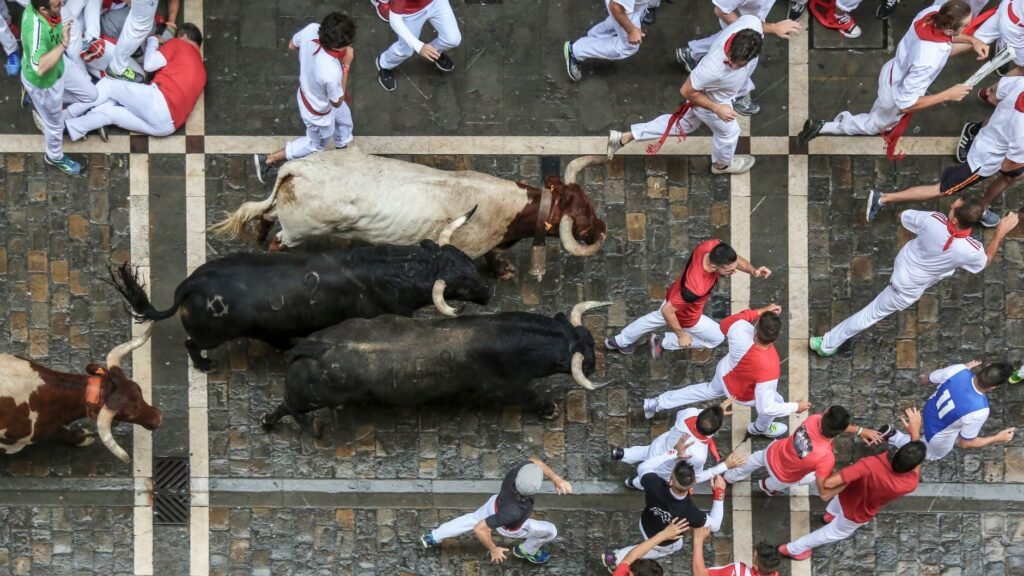
Most encierro history stops at the cattle-transport explanation. Here's the full timeline: banned racing, 18th-century ordinances, and how the run outlived the job that created it.

A single line keeps resurfacing in articles about Ernest Hemingway and San Fermín: word has it that Hemingway himself never actually ran with the bulls, that he only…

The standard version of the Roland Roncesvalles myth goes like this: a medieval poem turned a small ambush into a holy war, swapping the real attackers for an…

Every English-language account of Ernest Hemingway’s visits to San Fermín traces back, whether it says so or not, to a single 1970 book: Hemingway y los Sanfermines. Its…

Women were banned from Pamplona's encierro for 107 years under an 1867 law. The history behind the 1974 repeal and today's low turnout.

Sancho III el Mayor is remembered for splitting his kingdom in 1035. His deeper legacy: the Camino de Santiago route through Navarra still walked today.