Most visitors who want to watch the running of the bulls, the encierro, in Pamplona assume there are two choices: pay hundreds of euros for a balcony, or squeeze against the barrier in the street and hope to see something. Both assumptions miss the best value in the city. The seat most first-time spectators never hear about is inside the Plaza de Toros (the bullring), where the run ends, and in 2026 it cost between 7 and 12 euros.
It matters because a spectator who picks the wrong spot can arrive at dawn, stand for two hours and see the herd for a few seconds through two rows of wooden fencing. Every vantage point shows a different part of the run, costs a different amount and asks for a different arrival time. Knowing those differences before you arrive decides what you actually see on the morning.
Encierro founder Dennis Clancey has run the encierro every encierro year since 2007. “I’ve had many clients who have opted to watch from the stands,” he says. What follows sets out every way to see the run in person, with the city’s own figures and rules, and his answers in his own words.
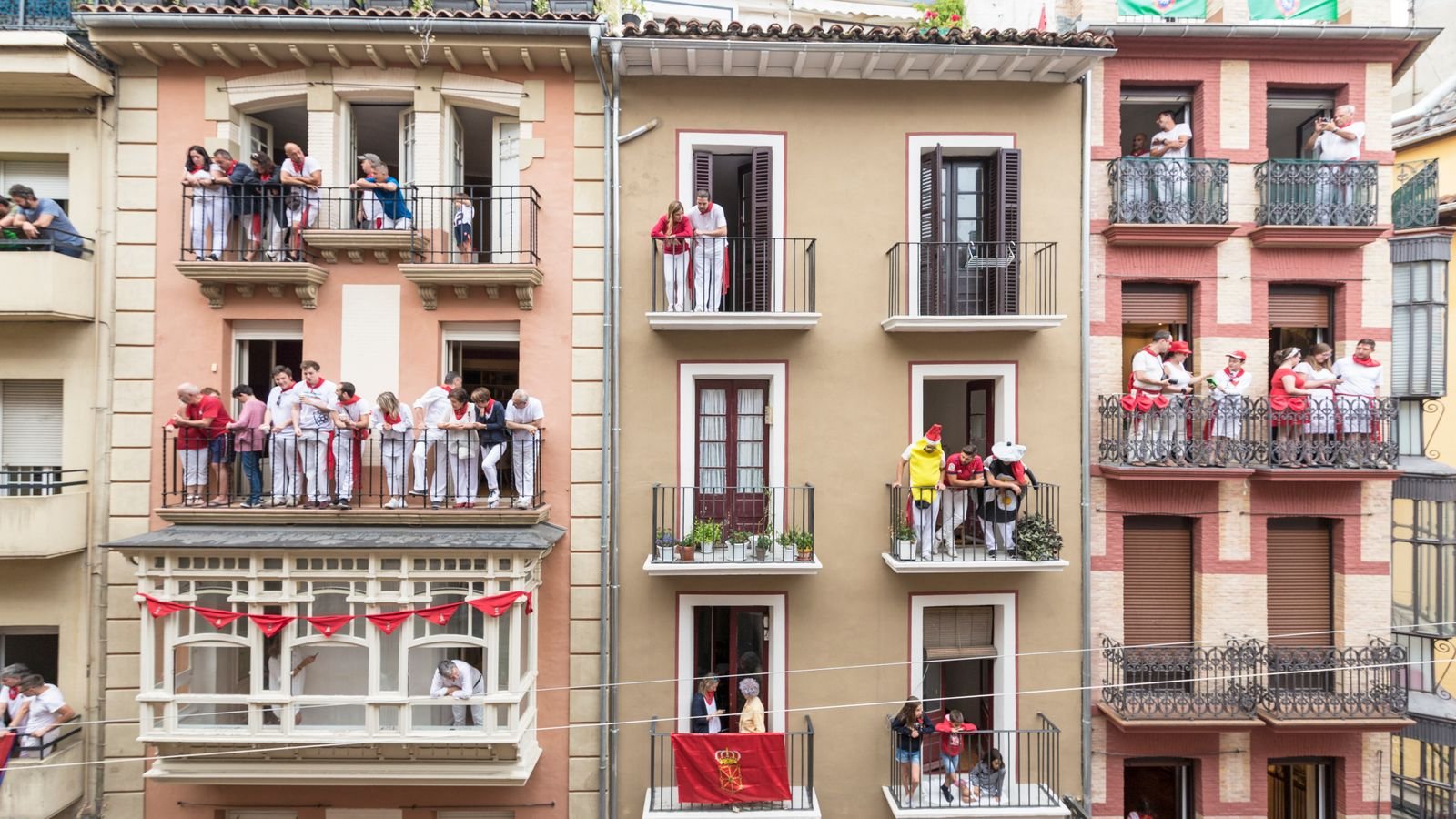
Every Way to Watch the Running of the Bulls in Person, Side by Side
The Ayuntamiento de Pamplona (the city council) counted about 30,000 people watching the encierro live each day in 2023: up to 20,000 in the Plaza de Toros, between 5,000 and 8,000 on the roughly 1,500 balconies that face the route, and about 3,000 at the barriers. That makes the bullring, by the city’s count, the place where most spectators see the run.
| Where you watch | Cost (2026) | When to be there | What you see |
|---|---|---|---|
| Second barrier in the street | Free | At least two hours before 8:00 (city advice); streets close 90 minutes before | The herd passing for a few seconds, through the fencing |
| The wall above the saint’s niche on the Cuesta de Santo Domingo (the first stretch of the route) | Free | “By about 5 a.m., you’re probably good” (Dennis Clancey) | The runners’ song to the saint and the opening stretch of the run, from above |
| Rented balcony | Set by private renters; national press reported 200 to 500 euros per person in 2025 | As the renter instructs, before the streets close | A longer stretch of one street, from above |
| Plaza de Toros stands | 7 to 12 euros for adults; 4 euros for under-12s on five of the eight run days | Doors open at 6:00; “best practice is by 6:30” (Dennis Clancey) | The whole run on a giant screen, the herd entering the ring live, then the suelta de vaquillas (release of young cows) |
Can You Watch the Running of the Bulls for Free From the Barrier?
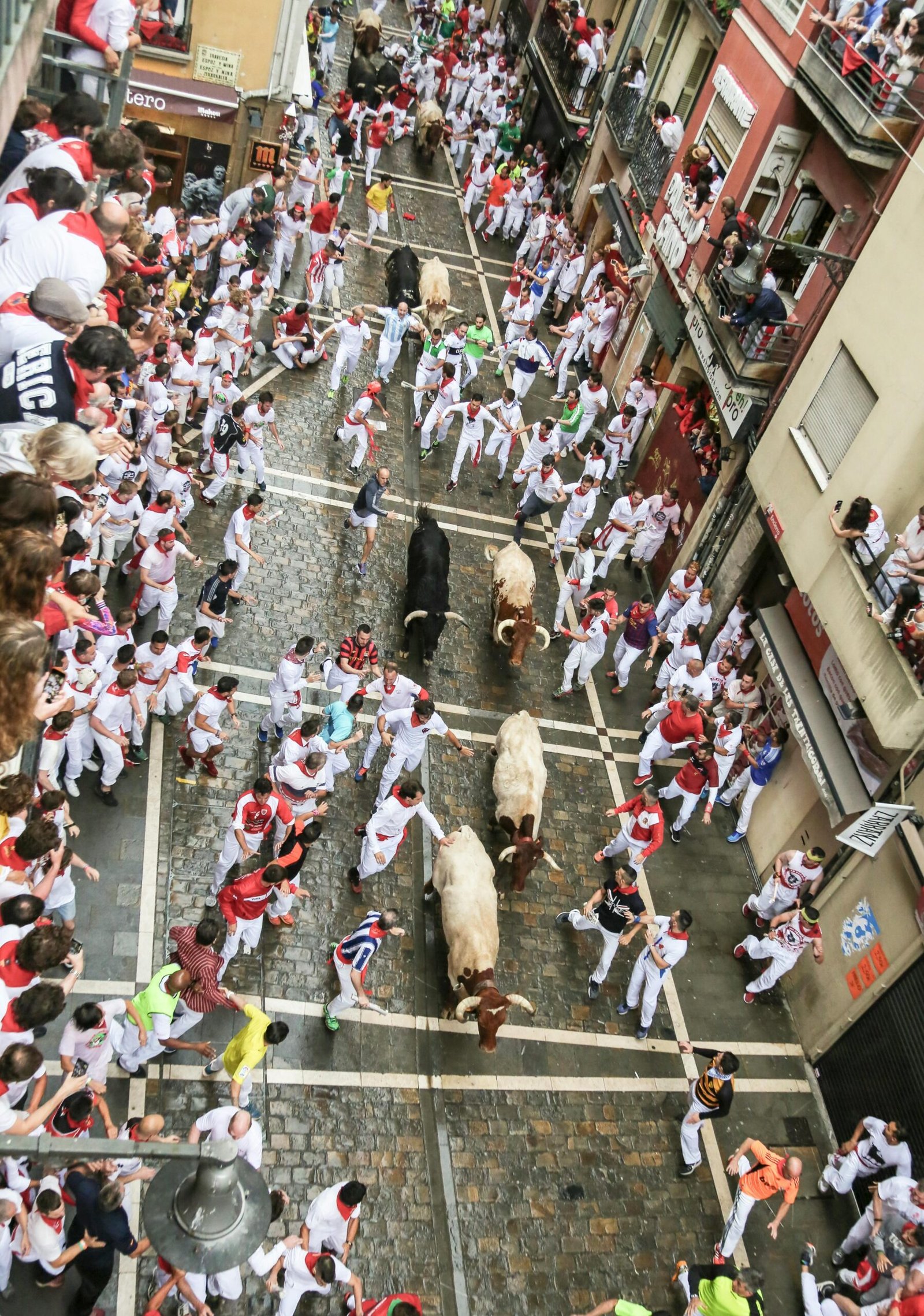
Yes, but the view is worse than most people expect. Along parts of the route the run is lined by a double fence, the vallado, made of two rows of wooden barreras (barriers). The city’s tourism page says the first fence is reserved for runners, medical staff and press, and the second is for the general public. The municipal ordinance goes further: spectators may not stand in the space between the two fences, which is kept for people the city authorises. The city recommends arriving at least two hours before the 8:00 start, the streets on the route close to pedestrians 90 minutes before, and from 7:30 only runners may stay on the route itself.
“Sometimes people assume they might be able to get a view by hanging on the second barrier and trying to peek through at the run, but it’s very hard getting any good view of the bulls. And usually you have to arrive quite early to stake out a spot on the barrier.”
Dennis Clancey, Founder of Encierro
“People forget that you can’t be on the first barrier. There’s a no man’s land between the first and second barrier, and so you have to be on the second barrier, and that will further remove you from the run route and obstruct your view.”
Dennis Clancey, Founder of Encierro
The gap between the fences is not wasted space. It is where police, medical teams and photographers work, and where runners in trouble can roll out of the street. The city’s safety rules for runners also say not to take photographs from the street or from the barriers and fencing. A spectator who climbs onto the first fence or into the gap will be moved on. Encierro’s map of every barrera gap and the full route map show where the fencing runs.
Where Is the Best Free View? The Wall Above the Saint’s Niche on Santo Domingo
The run starts at the bottom of the Cuesta de Santo Domingo, the steep first stretch of the route. Set into the old city wall there is a hornacina (a small arched niche), made by the Ayuntamiento in 1981. According to the city, at 7:15 a small image of San Fermín is placed in it, and at 7:55, 7:57 and 7:59 the runners sing to the saint, asking for his protection, in Spanish and in Basque. Dennis Clancey describes the spot as a raised street above the street the runners use: the drop between the two streets forms the wall that holds the niche. Spectators stand on the raised side, on the same side of the street as the Museo de Navarra, and look straight down on the song and on the start of the run.
“The one place along the run route where you can get a very good view of the bulls, but requires you to arrive very early … on the initial stretch of Calle Santo Domingo, there is a high stone wall … and you can look down over the area where the runners will sing the benediction to the saint before the run. And from that vantage point up on the wall, you have a very good view of the run.”
Dennis Clancey, Founder of Encierro
“When I was filming Chasing Red, to get certain shots, we’d show up as early as 3:30, 4 in the morning to stake out a spot. Nowadays, by about 5 a.m., you’re probably good. … You can’t go all the way down to the corrales, so if you have a view of the bulls in the corrales, you’re probably in the wrong spot. You need to be directly on the wall, directly above where they bring the small statue of the saint in the morning for the benediction.”
Dennis Clancey, Founder of Encierro
Encierro found no city rule or notice about standing on the wall, so the advice here rests on Dennis Clancey’s own mornings there. The corrales he mentions are the Corrales de Santo Domingo, the pens where the bulls wait before the run.
Is Renting a Balcony Worth It to Watch the Running of the Bulls?
A balcony gives the longest view of any spot on the street: you see the runners gather and the herd pass along a stretch of one street, from above. According to the Ayuntamiento, about 1,500 balconies face the route, more than 900 of them on Calle Estafeta, and between 5,000 and 8,000 people watched from them each day in 2023. The city does not rent balconies itself. Its tourism pages point visitors to independent providers, and prices are set by the owners and renters. The national newspaper El Debate reported prices from 200 to 500 euros per person in 2025. Encierro found no independent source for the higher figures that circulate online.
“Aside from renting a spot on a balcony along the run route, the Plaza de Toros view is the only other solution to get a good view of the bull run.”
Dennis Clancey, Founder of Encierro
Are the Balconies Inspected?
Yes. In May 2026 the city’s technicians checked the balconies and facade elements along the route, such as railings and brackets, from the street and without entering the buildings, and found 39 balconies and elements with some kind of deficiency. The Ayuntamiento said the inspections were stepped up after a case at a building on the Plaza del Castillo whose facade faces Calle Estafeta, that owners and occupants are responsible for the safety of their buildings, and that the balconies would be checked again in June. The city’s bando (proclamation) for San Fermín 2026 also requires owners to keep facades and balconies in adequate condition, to see that balconies are not occupied by more people than is appropriate, and, along the route, to remove or protect anything that sticks out over the run. Before you book, it is reasonable to ask the renter how many people will share the balcony.
Two practical points apply to every balcony. The city’s safety rules ask residents not to overload their balconies with people, and the ordinance bans throwing anything onto the route once it has been cleaned. A balcony is worth the money for a visitor who wants a long, calm view of the street and does not mind the price. For a visitor who wants to see the bulls themselves for the least money, the bullring is the better choice.
Watching the Running of the Bulls From the Bullring: What You See, and How to Get a Seat
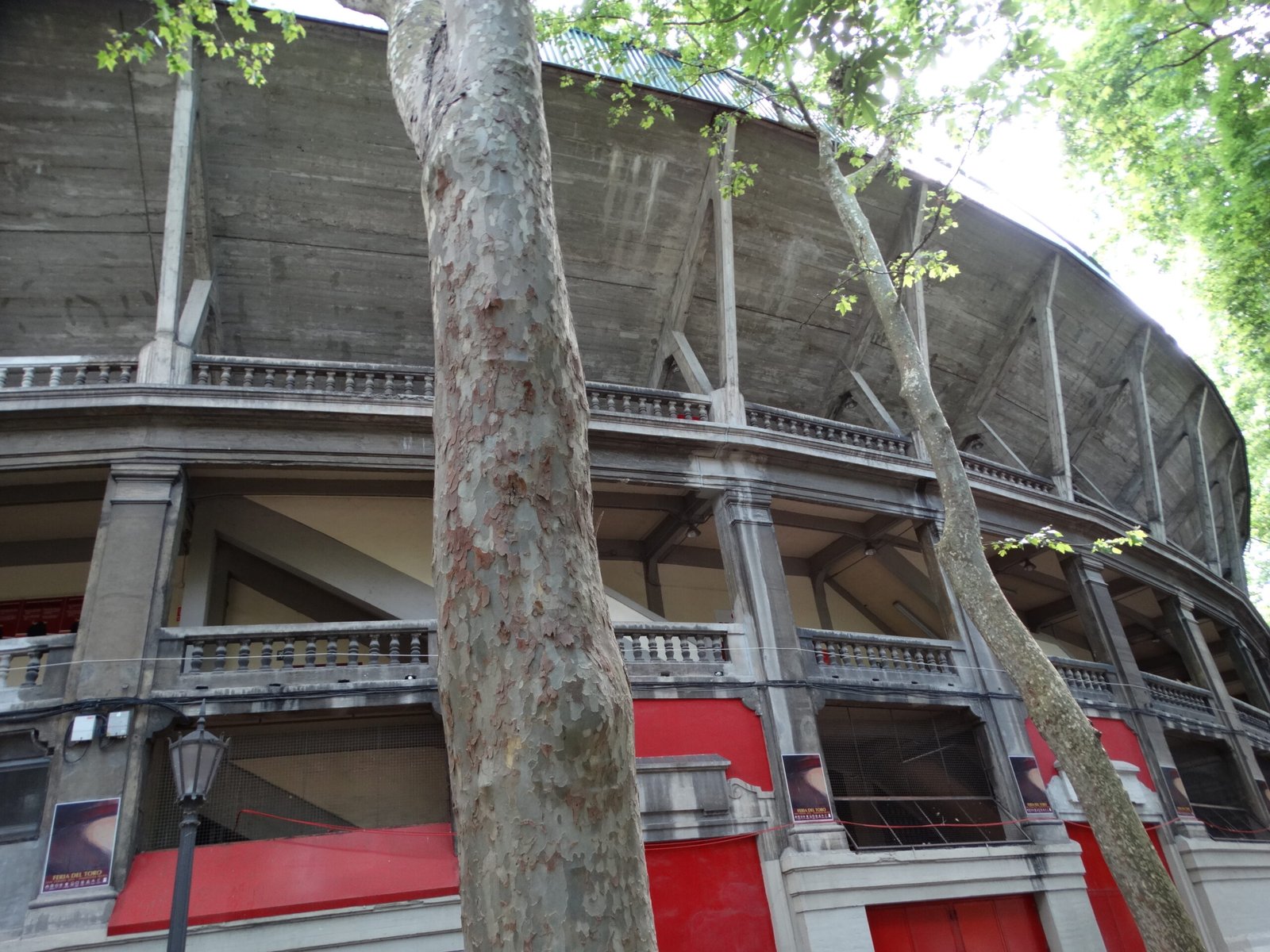
The Plaza de Toros belongs to the Casa de Misericordia, a charitable institution in Pamplona. It opened on 7 July 1922 and was enlarged in 1967 to a design by Rafael Moneo, and today it holds 19,529 seats, according to the Ayuntamiento. Encierro has written about the building’s history separately. On encierro mornings it opens at 6:00. The Casa de Misericordia’s encierro.es describes the programme: a band and other live acts while the stands fill, the whole run shown live on a giant screen, the herd entering the ring and crossing it into the toriles (the bull pens beneath the stands), and afterwards the suelta de vaquillas (the release of young cows into the ring).
“There are daily tickets for spectators to watch from the stands of the bullring. They get to see the bulls running in onto the sand and across the sand to the toriles. These tickets are very cheap.”
Dennis Clancey, Founder of Encierro
“Most tourists don’t know about these seats. Many of the tour companies are trying to steer people towards balconies, but it is significantly cheaper to watch from the Plaza de Toros.”
Dennis Clancey, Founder of Encierro
| 2026 run day | Adults | Under 12 |
|---|---|---|
| 7 July | 12 euros | 12 euros |
| 8, 9 and 10 July | 7 euros | 4 euros |
| 11 and 12 July (weekend) | 12 euros | 12 euros |
| 13 and 14 July | 7 euros | 4 euros |
Tickets are sold in two places: online through encierro.es (sales run on the Bacantix platform), where sales for the 2026 fiesta opened on 1 June, and at the ticket window at the Plaza de Toros. In previous years the window has opened at 6:00 on run days while tickets remain, but hours can change from one fiesta to the next, so check encierro.es before you travel. Your ticket names the section to enter, the tendido (lower stands), the grada (middle tier) or the andanada (upper tier), and you choose your own seat inside it.
“If they want a seat in the Plaza de Toros, they should go to encierro.es to check availability. Otherwise, they can pick it up from a ticket counter in Pamplona at the Plaza de Toros when they arrive.”
Dennis Clancey, Founder of Encierro
“I’ve had many clients who just went to the Plaza de Toros and got tickets on the outside, and then went the next day. It’s a legitimate way to watch the running of the bulls if balconies are not available or balcony prices are excessive.”
Dennis Clancey, Founder of Encierro
Some tour companies resell the same unnumbered seat as part of a package.
“For ease, a lot of people might choose to get those tickets through [a] tour operator. The tickets are much more expensive from those tour operators. There’s a significant markup usually, but it’s a markup that comes with ease of not having to walk over to the Plaza de Toros.”
Dennis Clancey, Founder of Encierro
Compare any package price with the face value on encierro.es before you book.
When to Arrive, and What to Bring to the Plaza de Toros
“I advise people get there 6:45 latest. Best practice is by 6:30.”
Dennis Clancey, Founder of Encierro
“One bit of advice I always provide people going to the Plaza de Toros … if they plan to sit there, is that they need to purchase inside the Plaza de Toros a red foam pad to protect their butt, because otherwise they’re sitting on a stone ledge that’s quite dirty, and will not only be uncomfortable for their butt, but also, if wearing white pants, leave an indelible mark on their bum.”
Dennis Clancey, Founder of Encierro
“The foam pads have traditionally been under five euros, so not a significant price.”
Dennis Clancey, Founder of Encierro
In recent years the pads have cost about 2 euros inside the ring, and Dennis Clancey expects them to stay under 5 euros, though prices can change. You leave the pad where you sat.
Food and drink are a different matter. The encierro.es FAQ says nothing about them, so this rests on Dennis Clancey’s own mornings in the Plaza.
“They can bring in food and drink, because there are no concessions inside the bullring. So bring what you want, including alcohol. All that is fine. Always a good idea to bring a few extra drinks for those around you to make friends.”
Dennis Clancey, Founder of Encierro
“You can bring in glass and alcohol. There are massive amounts of alcohol carried into that Plaza de Toros every day of fiesta.”
Dennis Clancey, Founder of Encierro
The Animals in the Ring After the Run Are Not the Bulls
A seat in the stands also shows the suelta de vaquillas, which first-timers often mistake for part of the run. Once the bulls have crossed the sand into the toriles, young cows are let into the ring among the runners who stayed on the sand. The vaquillas’ horns are capped, and they are a separate event from the encierro.
“It gives those spectators an ability to also see the suelta de vaquillas, which is a separate event after the running of the bulls. It doesn’t feature bulls. It features young cows, vaquillas. Those vaquillas do have capped horns, but they can injure people, and quite regularly do.”
Dennis Clancey, Founder of Encierro
“One of the common mistakes first-timers who are running will often say is that they ran around with the bulls in the Plaza de Toros after the run. But this is not the case. They’re not bulls. The toro bravo, the fighting bull that participates in the encierro, would kill so many runners if it was forced to stay on the sand of the bullring with a packed crowd of inexperienced runners.”
Dennis Clancey, Founder of Encierro
July 2026: Why the Sand Is Mostly Clear Until the Bulls Arrive
In 2026 the ring looked different in the minutes before the herd arrived. On 29 May 2026 the regional outlet Navarra.com reported that the Mesa del Encierro, the city’s working group on the run, had approved a rule that runners who reach the Plaza de Toros before the bulls may not stay on the sand. The city’s safety rules now state the prohibition, so that early arrivals do not obstruct everyone else.
“It’s been a known thing for a long time, this kind of idea of the valientes, the valiant ones. It’s kind of a joke, of people that are so brave that they run into the bullring minutes before the bulls arrive. It’s a thing that the town finds annoying. Traditionally, the story’s always been, I’ve seen this to be true, people run into the sand of the bullring minutes before the bulls arrive, and then people usually seek to throw stuff at them. Nowadays, you have so many people that try to do that, they just wait in the bullring. But by waiting in the bullring, those individuals [are] really showing that they have no intent of actually running with the bulls.”
Dennis Clancey, Founder of Encierro
“And the bullring can get very crowded. For that reason, starting in 2026, the police were diligent about removing from the run route anyone that runs into the sand of the bullring too early. So the sand of the Plaza de Toros in Pamplona is mostly cleared up until the bulls are about to arrive. What has happened in recent years is you’ve had individuals with no intent on running crowding the run route, getting onto the sand and then standing on the sand with their cell phones, waiting to get a video of the bulls coming in to the arena.”
Dennis Clancey, Founder of Encierro
For spectators, the change means a clearer view of the moment the herd comes in. For anyone tempted to claim they ran by waiting on the sand, the rule removes the option.
“Whenever someone says they’ve run with the bulls, there’s a good chance that they didn’t do any running at all, or weren’t actively participating in it.”
Dennis Clancey, Founder of Encierro
“Part of the rules of the run is to avoid doing any filming while the run is ongoing. If you are participating, the reason for that is you’re being an obstacle to the natural flow of the run, if you’re not completely focused on running.”
Dennis Clancey, Founder of Encierro
Other Ways to See the Bulls: the Corrales del Gas and the Encierrillo
The bulls for each morning’s run can be seen the day before at the Corrales del Gas, the pens beside the Curtidores bridge where the bulls are kept after arriving from the ranches. In 2026 the city listed visiting hours of 11:00 to 13:30 and 16:30 to 20:30, with tickets at 4 euros for adults, free for accompanied children under 12, sold only at the gate. Late each night the bulls are moved from there to the Corrales de Santo Domingo in the encierrillo, a short run through the dark with no runners. Watching it needs a pass from a city draw: in 2026 the Ayuntamiento offered 1,400 double passes, 175 a night, with applications in early June.
Frequently Asked Questions
Do you need tickets to watch the running of the bulls in Pamplona?
No ticket is needed to watch from the street. Standing at the second barrier is free, as is the wall above the saint’s niche on Santo Domingo, though both need a very early start. A seat in the Plaza de Toros needs a ticket: it cost 7 to 12 euros for adults in 2026, sold on encierro.es and at the bullring’s ticket window. Balconies are rented privately, and the price is set by the renter.
Where does the running of the bulls end?
The run ends in the Plaza de Toros, the bullring at the end of the route, after about 848.6 metres according to the Ayuntamiento. Encierro does not call it a finish line, because the bulls keep going past the runners, across the sand and into the toriles. As Dennis Clancey puts it, “the bulls run beyond where the humans are.” The entrance to the ring, where runners go from concrete to sand at full speed, produces some of the most dramatic moments of any run, and a seat in the stands is the only place to see it in person.
How early should you get there to watch the running of the bulls?
For the barrier, the city recommends at least two hours before the 8:00 start, and the streets on the route close to pedestrians 90 minutes before. For the bullring, the doors open at 6:00, and Dennis Clancey’s advice is “6:45 latest. Best practice is by 6:30.” For the wall above the saint’s niche on Santo Domingo, he says that “by about 5 a.m., you’re probably good.” The city notes that the number of people at the barriers varies from day to day; the San Fermín 2027 page has next year’s dates.
Can children watch the running of the bulls?
Yes. The city’s age limit of 18 applies to runners, not to spectators, and the Plaza de Toros sells reduced tickets for children under 12 on five of the eight run days, at 4 euros in 2026. The barrier is the hardest place for a child to see anything, because of the crowd and the double fence. A balcony or a seat in the bullring will show a child far more of the run. Encierro’s guide for festival visitors covers the wider fiesta.
Encierro founder Dennis Clancey has run the encierro every encierro year since 2007. Every article on the Encierro blog is authored or reviewed by active bull runners with direct experience in Pamplona.