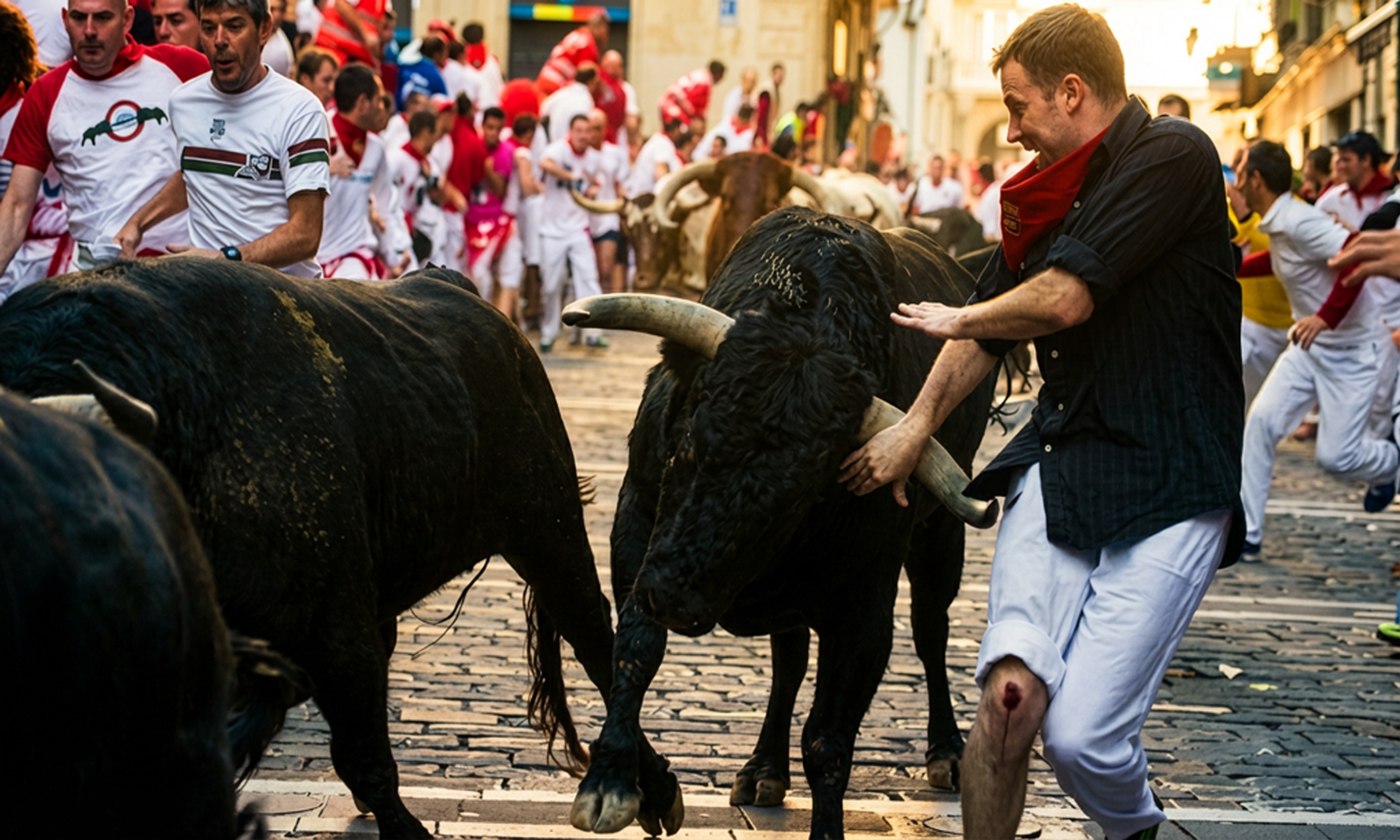
San Fermín 1963: The Running of the Bulls
July 6 to 14, 1963. Hollywood keeps coming. Filmmaker Nicholas Ray and producer Darryl F. Zanuck in the crowd. The pre-run prayer takes hold for its second year. The city is building and changing around the course.
Looking Back at 1963
Looking back at 1963, it was the second year of the prayer — which means it was the year the prayer stopped being a one-off and became a tradition. The difference between something happening once and something happening twice is enormous. When El Tuli knelt again on the Cuesta de Santo Domingo, or others continued what he had begun, the question of whether it would become a fixture was answered. It would.
The filmmakers arriving in Pamplona this year — Nicholas Ray, Darryl F. Zanuck — were part of a pattern that the Hemingway connection had established and that was deepening year by year. Hollywood had not finished with San Fermín, and San Fermín had not finished with Hollywood. The city was also physically changing: the Avenida de Bayona was inaugurated as a symbolic gesture toward the Pamplona-Bayonne twinning, and major construction was underway across the city centre. The encierro route itself was being surrounded by a different city each year, even if the course stayed the same.
No one died in the 1963 encierros. Eight runs, no deaths. These were years before the dramatic goring toll of the 1970s. Looking back, the relative calm of the early 1960s encierros feels like a particular historical moment — the fiesta was big enough to attract the world, but still small enough that the world had not yet overwhelmed it.
Dennis Clancey, Founder, Encierro
The Fiesta Grows, the City Changes
The 1963 fiesta opened on July 6 and ran its eight encierros through July 14 at 7 a.m. International attendance continued to grow, driven by Hemingway’s literary legacy and Spain’s ongoing “desarrollismo” economic boom. Among the notable visitors were filmmaker Nicholas Ray (director of Rebel Without a Cause) and Hollywood producer Darryl F. Zanuck, the latest in a string of film industry figures drawn to Pamplona since the 1950s.
The city was transforming around the encierro. The Avenida de Bayona was symbolically inaugurated in connection with the Pamplona-Bayonne twinning agreement signed in 1960. The old Coliseo Olimpia cinema closed, and construction on the new Hotel Maisonnave began. A new mural decoration of the Casa Seminario wall along the encierro route (by Pedro Lozano de Sotes, costing 42,000 pesetas) was completed in time for the fiesta.
Hollywood keeps coming to Pamplona. The encierros run at seven in the morning. The prayer is sung for the second year. A city in the middle of an economic boom is learning that its oldest tradition is also its greatest asset.
Every 1963 Encierro, Day by Day
Eight runs, July 7–14, 1963. The route runs approximately 849 metres from Santo Domingo to the bullring. Two archival footage compilations are available below. See the route map.
Run 1
The opening run of the 1963 fiesta. Day-by-day ganadería assignments are not in the digitized historical record. An archival NODO compilation of the 1963 encierros is available in the film section above.
Run 2
The second morning of the 1963 fiesta. A second archival compilation is available above (Encierros San Fermín channel).
Run 3
The third morning of the 1963 fiesta.
Run 4
The fourth morning of the 1963 fiesta.
Run 5
The fifth morning of the 1963 fiesta.
Run 6
The sixth morning of the 1963 fiesta.
Run 7
The seventh morning of the 1963 fiesta.
Run 8
The eighth and final morning of the 1963 fiesta. At midnight, the Pobre de Mí ceremony closed the fiesta in the Plaza del Castillo.
Official Sanfermines Poster, 1963
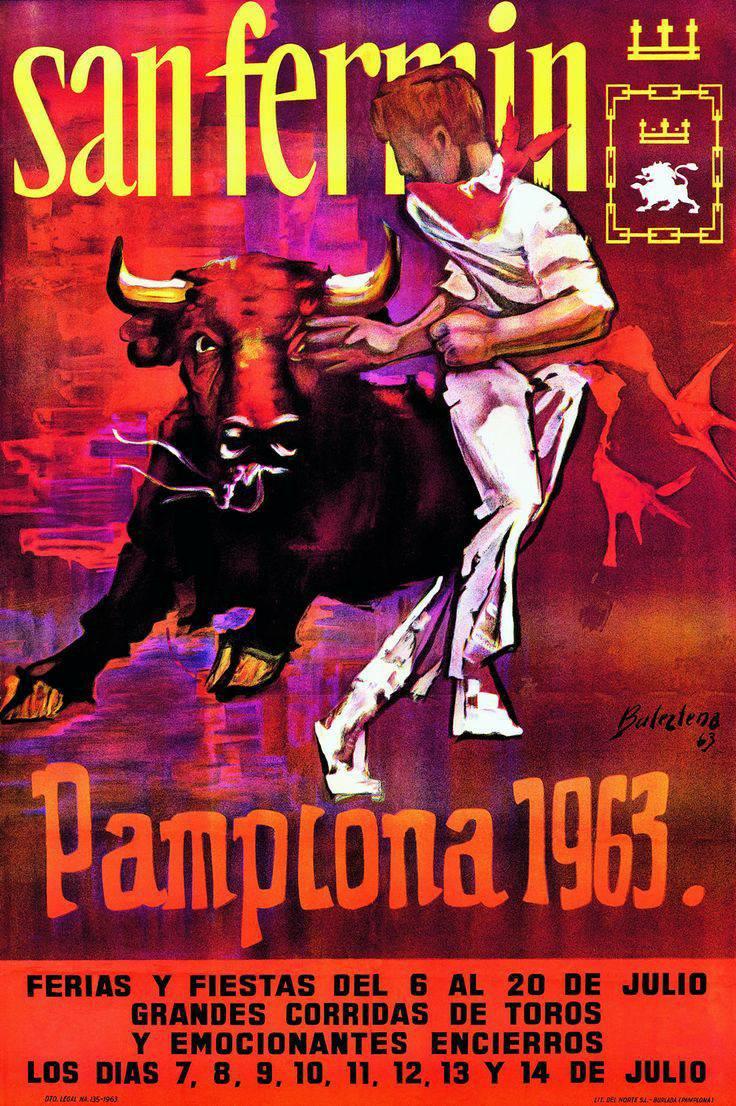
The official San Fermín 1963 cartel was chosen via the city’s annual poster contest, the concurso de carteles — the open competition through which Pamplona has selected its official Sanfermines poster each year.