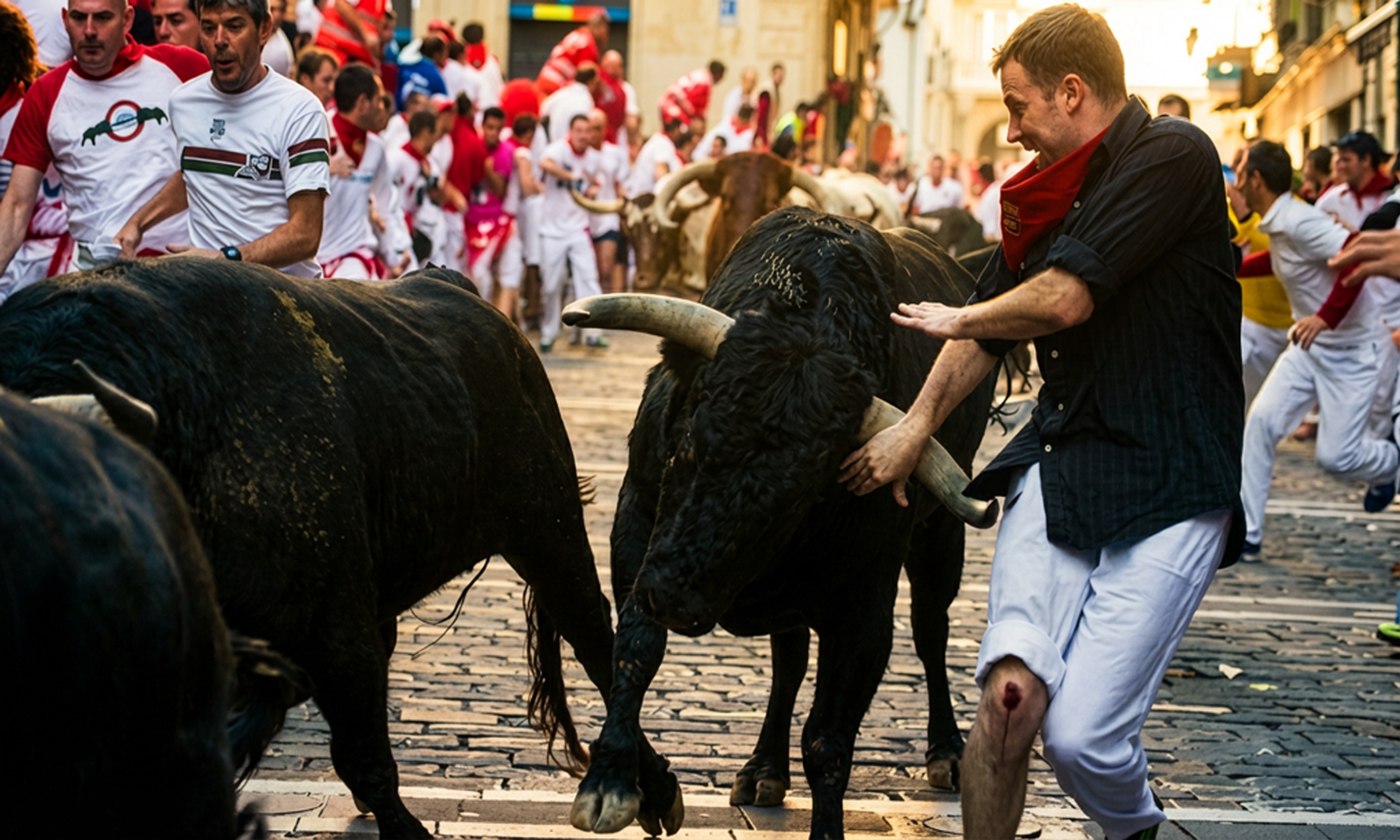
San Fermín 1967: The Running of the Bulls
July 6 to 14, 1967. Rafael Moneo expands the bullring from 12,500 to 19,500 seats, the second largest in Spain. The penas elect their first collective madrina de honor. The fiesta’s infrastructure scales to match the crowd.
Looking Back at 1967
Looking back at 1967, the most significant change to the San Fermín infrastructure in the entire decade was completed in time for the fiesta: Rafael Moneo’s expansion of the plaza de toros from 12,500 to 19,500 seats. Moneo was a young architect then, he was born in 1937 and would go on to win the Pritzker Prize in 1996 and become one of the most celebrated architects of the twentieth century. In 1967, in Pamplona, he was building a bullring. It is worth holding both facts together.
The expansion changed the encierro in a concrete way. The moment the runners and bulls enter the ring, coming through the tunnel from Calle Estafeta and emerging into the sun, is the climax of every run. A crowd of 19,500 watching that moment is a qualitatively different experience from 12,500. The roar is different. The weight of attention is different. Every runner who has run into that ring since 1967 has run into a larger, louder space than the one that existed the year before.
No deaths in the encierros. Eight clean runs, the encierro at seven in the morning, and the whole city arriving in September to watch Osasuna open the new Estadio de El Sadar. A year of buildings going up.
Dennis Clancey, Founder, Encierro
A Bullring Made for the World
The 1967 fiesta opened on July 6 at noon with the chupinazo and ran its eight encierros through July 14 at 7 a.m. The defining event of the fiesta calendar was the completion and inauguration of the expanded plaza de toros, designed by Rafael Moneo, which increased capacity from 12,500 to 19,500 seats, making it the second largest bullring in Spain after Madrid’s Las Ventas.
The peñas, the youth clubs that organise much of the fiesta’s social life, collectively elected their first “madrina de honor” this year, a new tradition reflecting their growing collective identity. The first Cross del Encierro was held, and the first Festival de las Peñas took place. A new tradition of a floral offering to San Fermín at the Pozo de San Cernin was established. The fiesta was adding new layers of ritual even as its physical infrastructure expanded.
A 26-year-old architect named Rafael Moneo expanded the bullring. Every runner who has entered that ring since 1967 has done so to a larger crowd and a louder roar than anyone who ran before 1967 ever experienced.
Every 1967 Encierro, Day by Day
Eight runs, July 7–14, 1967. The route runs approximately 849 metres from Santo Domingo to the newly expanded bullring. See the route map.
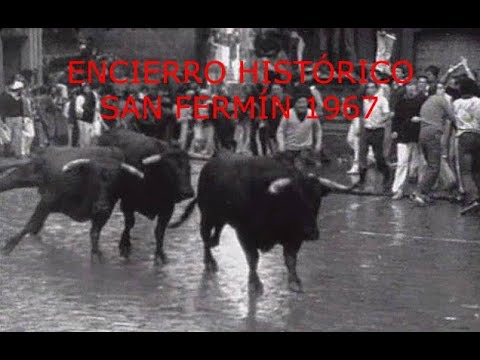
Run 1, Ganadéría Not Recorded
The opening run of the 1967 fiesta. Day-by-day ganadéría assignments for this year’s encierros are not in the digitized historical record. The systematic per-day database on sanfermin.com begins in 1982. The footage above is an archival encierro compilation from 1967 (Encierros San Fermín channel).
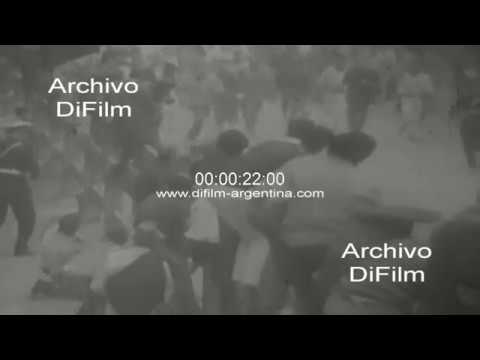
Run 2, Ganadéría Not Recorded
The second morning of the 1967 fiesta. Day-by-day ganadéría assignments for this year’s encierros are not in the digitized historical record. The systematic per-day database on sanfermin.com begins in 1982. A second archival footage compilation is available above (DiFilm channel).
Run 3, Ganadéría Not Recorded
The third morning of the 1967 fiesta. Day-by-day ganadéría assignments for this year’s encierros are not in the digitized historical record. The systematic per-day database on sanfermin.com begins in 1982.
Run 4, Ganadéría Not Recorded
The fourth morning of the 1967 fiesta. Day-by-day ganadéría assignments for this year’s encierros are not in the digitized historical record. The systematic per-day database on sanfermin.com begins in 1982.
Run 5, Ganadéría Not Recorded
The fifth morning of the 1967 fiesta. Day-by-day ganadéría assignments for this year’s encierros are not in the digitized historical record. The systematic per-day database on sanfermin.com begins in 1982.
Run 6, Ganadéría Not Recorded
The sixth morning of the 1967 fiesta. Day-by-day ganadéría assignments for this year’s encierros are not in the digitized historical record. The systematic per-day database on sanfermin.com begins in 1982.
Run 7, Ganadéría Not Recorded
The seventh morning of the 1967 fiesta. Day-by-day ganadéría assignments for this year’s encierros are not in the digitized historical record. The systematic per-day database on sanfermin.com begins in 1982.
Run 8, Ganadéría Not Recorded
The eighth and final morning of the 1967 fiesta. Day-by-day ganadéría assignments for this year’s encierros are not in the digitized historical record. The systematic per-day database on sanfermin.com begins in 1982. At midnight, the Pobre de Mí ceremony closed the fiesta.
The Stories the Numbers Leave Out
Official Poster of San Fermín 1967
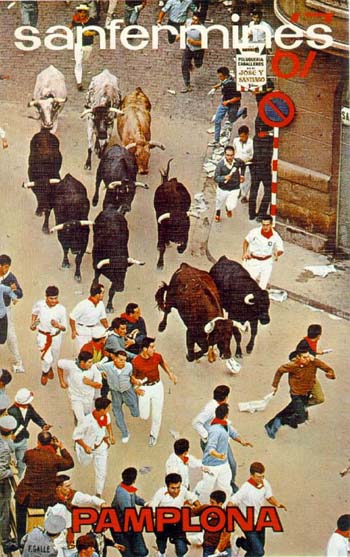
Cartel: Fernando Galle.
The 1967 San Fermín poster was the work of Fernando Galle, who also designed the 1968 cartel. The poster was produced for the Ayuntamiento de Pamplona ahead of the July fiesta.
The full archive of San Fermín official posters is maintained by the Ayuntamiento de Pamplona, cartel archive.
Winner of the annual cartel contest and the official San Fermín 1967 poster for Sanfermines.
The City in 1967
The chupinazo opened the fiesta at noon on Thursday, July 6. Encierros followed at 7 a.m. through July 14, running into the newly expanded bullring for the first time. Mayor Ángel Goicoechea had taken over from Juan Miguel Arrieta earlier in the year. Pamplona’s rapid population growth, driven by industrial immigration and the Authi automobile factory, was putting pressure on the city’s infrastructure and social fabric.
The fiesta closed at midnight on July 14 with the Pobre de Mí in the Plaza del Castillo. In September, Osasuna would open the Estadio de El Sadar. 1967 was a year in which Pamplona built its way into a larger future, one structure at a time.
How 1967 Came Together
The cartel by Fernando Galle confirmed. Rafael Moneo’s expansion of the plaza de toros to 19,500 seats completed. Ángel Goicoechea became Mayor of Pamplona.
The chupinazo opened the 1967 fiesta at noon in the Plaza del Ayuntamiento.
Eight encierros at 7 a.m., the first to finish inside the newly expanded bullring. No deaths. The peñas elected their first collective madrina de honor. The first Cross del Encierro and Festival de las Peñas were held.
The final encierro completed the 1967 fiesta. At midnight, the Pobre de Mí in the Plaza del Castillo closed the celebration.
San Fermín 1967, Answered
Was anyone killed in the 1967 encierros?
No. There were no deaths in the 1967 encierros across all eight runs.
What changed about the bullring for 1967?
Architect Rafael Moneo expanded the plaza de toros from 12,500 to 19,500 seats, making it the second largest bullring in Spain after Madrid’s Las Ventas. Every encierro since 1967 has ended in front of nearly 20,000 spectators in that expanded ring.
What time did the encierros run in 1967?
7 a.m., as they had since 1924. The start time was not moved to 8 a.m. until 1974.
What came next
For what followed, see San Fermín 1968, the year the Hemingway monument was unveiled on the first day of the fiesta, or explore the full 1960s archive.