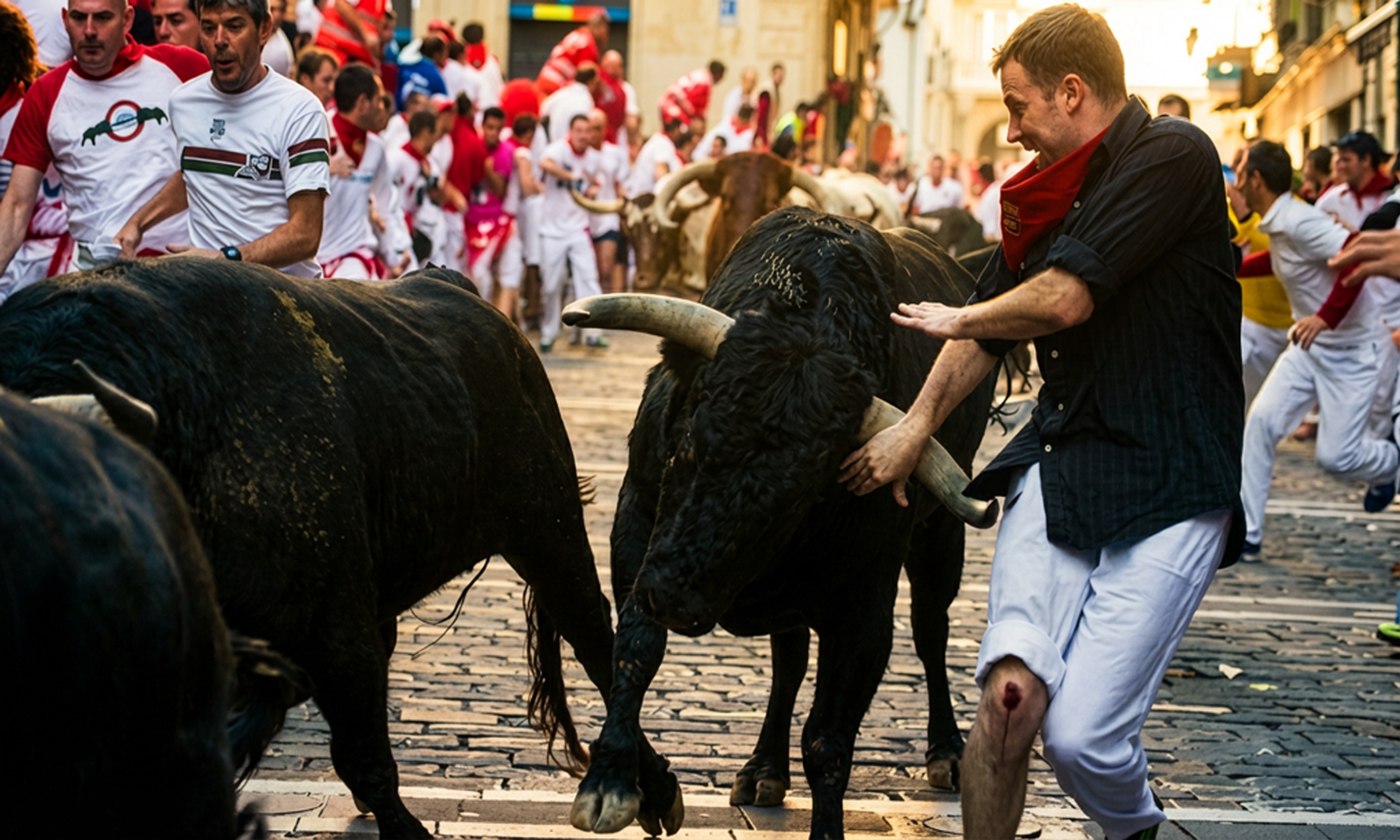
San Fermín 1970: The Running of the Bulls
July 6 to 14, 1970. The year Miura entered the encierro rotation, bringing their long-horned Sevillian bulls to the cobblestones of Pamplona for the first time. Eight mornings at six in the morning, in a Spain still under Franco.
Looking Back at 1970
Looking back at 1970, what stands out most is that this was the year Miura entered the encierro rotation. The ranch from the Sevillian countryside had long been the most storied ganadéria in all of bullfighting, the breeder of the bull that killed Manolete, the source of animals that had ended careers and lives in the corrida for generations. When their bulls arrived in Pamplona for the first time and ran those 849 metres through the old city, it was a significant moment in the history of the encierro. Their horns are longer, their temperament more independent, and their tendency to separate from the herd more pronounced than most of what Pamplona had seen before.
It is worth remembering the Spain in which this happened. 1970 was the year of the Burgos Trials, when the Franco regime put sixteen Basques on trial before a military tribunal, six of them facing the death penalty, in proceedings that drew international condemnation and protests from across the country. Pamplona itself, the capital of the Foral Community of Navarra and a city with deep Basque cultural ties, was not insulated from that tension. The fiesta opened on July 6 as it always did, with the chupinazo and the crowds in the Plaza del Ayuntamiento, but the political atmosphere of that summer was not a backdrop anyone could ignore entirely. The dictatorship was in its thirty-first year.
TVE was also expanding its coverage of the encierro in this period. The runs were beginning to reach Spanish living rooms more reliably, a transformation that would accelerate through the following years and eventually bring the encierro to an audience far beyond Pamplona. The 1970 fiesta passed without fatalities. None of the specific run times have been preserved in the record, and the individual ganaderías for each of the eight mornings are not recorded with certainty, beyond Miura’s confirmed participation that year.
Dennis Clancey, Founder, Encierro
Miura Arrives, Spain Watches
The 1970 fiesta ran from July 6 to July 14, opening with the traditional chupinazo at noon in the Plaza del Ayuntamiento. The eight encierros were held each morning at 6:00 AM, the start time that would remain in place until 1974, when the hour was moved to 8:00 AM to reduce the number of intoxicated runners on the course.
The defining event of the 1970 encierro season was the debut of the Miura ganadéria. The Sevillian ranch, based in La Rinconada and founded in the nineteenth century, brought to Pamplona the breed most associated with danger in the corrida. Their presence in the encierro rotation added a new element to the course. Miura bulls are known for their long horns, their independent behavior when separated from the herd, and their unpredictability on an unfamiliar route.
Miura entered the encierro rotation in 1970. Their long-horned Sevillian bulls would return to Pamplona every year through the 1970s, with one exception.
Nationally, Spain was gripped by the controversy surrounding the Burgos Trials. The proceedings began in December 1970 and drew massive international attention, with European governments and the Vatican calling for clemency. The summer fiesta in July preceded the formal trial, but the political temperature throughout the country was already elevated well before the autumn. The thirty-one years of the Franco regime were beginning to show the strains that would shape the Spain of the following decade.
Every 1970 Encierro, Day by Day
Eight runs, July 7–14, 1970. The route runs approximately 849 metres from Santo Domingo to the bull ring. The ganaderías for individual mornings are not recorded, beyond Miura’s confirmed participation that year. See the route map.
First Run
The first encierro of 1970 took place at 6:00 AM, the standard start time of the era. The specific ganadéria for this morning is not recorded in the historical sources currently available. Miura is confirmed among the ganaderías of the 1970 fiesta, though which morning they ran has not been established with certainty.
Second Run
The second morning of the 1970 fiesta. The specific ganadéria is not recorded. The encierro ran at 6:00 AM. No fatalities are recorded for this morning or for the 1970 fiesta as a whole.
Third Run
The third encierro of 1970. The ganadéria is not recorded in the available historical sources. The route and conditions were those of the traditional 1970s encierro, running at 6:00 AM through the narrow streets of the old city.
Fourth Run
The fourth morning. Ganadéria not recorded. 1970 was the debut year for Miura in the encierro rotation; whichever morning they ran, it would have been the first time their long-horned bulls covered this particular 849-metre route.
Fifth Run
The fifth encierro of the 1970 fiesta. The ganadéria for this morning is not recorded in the available sources. No gorings or fatalities are confirmed for this morning.
Sixth Run
The sixth morning of the 1970 encierro. Ganadéria not recorded. The 6:00 AM start time placed the runs in the early morning light, a feature of the encierro experience that would change in 1974 with the move to 8:00 AM.
Seventh Run
The seventh encierro of 1970. Ganadéria not recorded. No fatalities confirmed for this morning.
Eighth Run
The closing encierro of the 1970 fiesta. Ganadéria not recorded. Miura ran at some point during the eight mornings of 1970, marking their first appearance in the encierro rotation. The fiesta closed at midnight on July 14 with the Pobre de Mí in the Plaza del Castillo.
The Stories the Numbers Leave Out
Official Sanfermines Poster, 1970
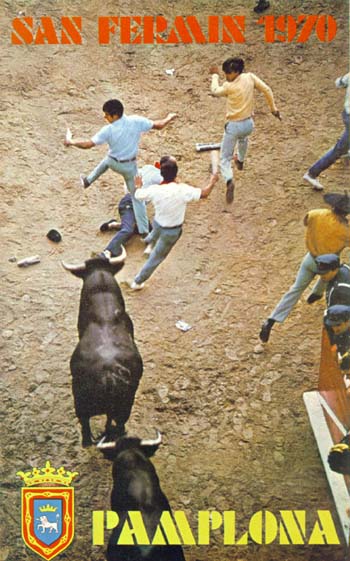
Cartel: Javier Cejuela.
The 1970 San Fermín poster was designed by Javier Cejuela, whose work represented a contemporary graphic sensibility distinct from the more traditional painted posters that had characterized many earlier decades of the fiesta. Cejuela brought a modernizing approach to the official cartel, engaging with the visual language of Spanish graphic design in the 1970s.
The full archive of San Fermín official posters from 1846 to the present is maintained by the Ayuntamiento de Pamplona, cartel archive.
Pamplona’s annual concurso de carteles selected this as the official Sanfermines poster for 1970.
The City in 1970
The chupinazo opened the fiesta at noon on Monday, July 6, 1970. The encierros ran each morning at 6:00 AM, a start time that made the runs a feature of the pre-dawn city rather than the mid-morning one. This would change in 1974, when the Ayuntamiento moved the encierro to 8:00 AM in an effort to reduce the number of participants still intoxicated from the previous night.
Pamplona in 1970 was a city growing in population and industrial activity, drawing workers from across Spain and from Navarra’s rural communities. International tourism was also growing steadily, with the encierro attracting visitors from France, the United States, and across Europe. The Hemingway connection, established by The Sun Also Rises in 1926, continued to draw English-speaking travelers in particular. The fiesta closed at midnight on July 14 with the Pobre de Mí in the Plaza del Castillo.
How 1970 Came Together
Key dates in the 1970 fiesta, as the record stands.
The official cartel by Javier Cejuela was announced ahead of the July fiesta. The encierro ganaderías were confirmed, including the first participation of Miura in the Pamplona rotation.
The chupinazo opened the fiesta at noon in the Plaza del Ayuntamiento. The vallado was in place along the 849-metre route from Santo Domingo to the bullring. The encierros were scheduled to begin the following morning at 6:00 AM.
Eight encierros ran on consecutive mornings at 6:00 AM. Miura participated in the 1970 rotation, marking their debut in the Pamplona encierro. The specific morning is not confirmed in the available record. No deaths were recorded across the eight runs.
The Burgos Trials verdict was handed down in December 1970. Six death sentences were initially issued before international pressure led Franco to commute them. The trials had cast a shadow over Spain throughout the year, including the months surrounding the July fiesta.
San Fermín 1970, Answered
Did Miura run in the 1970 San Fermín encierro?
Yes. Miura is confirmed as having entered the encierro rotation in 1970, marking their debut in Pamplona. The specific morning on which they ran is not confirmed in the available historical record. They would return every year of the 1970s except 1976.
What time did the encierro start in 1970?
The encierro ran at 6:00 AM in 1970, which was the standard start time of the era. In 1974 the Ayuntamiento moved the start to 8:00 AM, a change made partly to reduce the number of intoxicated participants on the course. The 8:00 AM time has remained in place since.
Were there any deaths in the 1970 encierro?
No deaths are recorded for the 1970 San Fermín encierro. The fiesta’s eight runs passed without a fatality on the course.
What were the ganaderías of the 1970 encierro?
The individual ganaderías for each of the eight mornings are not recorded with certainty in the sources currently available. Miura’s participation in 1970 is confirmed. Other ranches ran that year but their assignments to specific mornings have not been preserved in the accessible record.
Explore the encierro by year
1970 is part of the record. For the years on either side, see San Fermín 1969 or San Fermín 1971.