
San Fermín 1988: The Year Cebada Gago Stopped the Nation
July 6 to 14, 1988. Nine gorings, one run for the ages, and a Cebada Gago performance on July 12 that RTVE would hold up for years as the benchmark of what the festival could produce.
Looking Back at 1988
Looking back at 1988, the festival lands in a Spain that was mid-transformation. EEC membership had cleared, the economy was beginning to surge, and the country was already building toward the twin spectacles of the 1992 Barcelona Olympics and the Seville Expo. San Fermín that year carried this national energy into the streets of Pamplona in a fiesta that was, by any statistical measure, one of the more dangerous of the decade. Approximately nine gorings across eight runs placed 1988 above the era’s average, and the Cebada Gago bulls on July 12 were the single most discussed run of the festival.
What RTVE captured and broadcast that July 12 became one of the most-rewatched encierro recordings of the 1980s. The coverage itself was still relatively young, only six years removed from the 1982 television debut, and the Cebada Gago run gave the network precisely the material that would cement the encierro as a national television event. For anyone studying the history of how this festival grew from a regional tradition into a Spanish institution, 1988 is a year worth examining closely.
Dennis Clancey, Founder, Encierro
A Country Accelerating
Spain in 1988 was a country accelerating. Prime Minister Felipe González had guided the country into the EEC two years earlier, and the economic dividends were starting to show. The Barcelona Olympics and Seville Expo announcements had given the nation twin focal points for a decade-long project of modernization and international projection. Against this backdrop, Pamplona hosted its annual festival in a Navarra that remained politically complicated, with Basque tension running through the region and ETA activity still shaping the security environment across the north.
The 1988 ganaderiía lineup brought eight ranches to the Calle Estafeta, and the bulls delivered a fiesta that skewed dangerous. Approximately nine gorings across the week placed the year firmly above average for the period. The Cebada Gago run on July 12 concentrated much of the drama, producing what RTVE described as one of the longest and most chaotic passages the festival had seen in recent memory. Television audiences across Spain watched in real time as the compact, fast bulls from Bornos, Cádiz, turned the route into something approaching controlled chaos. This was the run that demonstrated, on a national stage, exactly why the encierro had earned its reputation.
“The longest. The best bull runs of San Fermín.” (RTVE Noticias, July 12, 1988)
Every 1988 Encierro, Day by Day
Each run with its ganaderiía, approximate time, and horn injuries. The route runs approximately 849 meters from Santo Domingo to the ring. All eight runs from 1988 have video records available via the SanFerminEncierroTV archive on YouTube.

Torrestrella
Gored: see year total
Torrestrella opened the 1988 fiesta with the well-built, consistent cattle the Jerez runch was known for producing. The bulls ran with the kind of steadiness that gives experienced runners a workable rhythm on the route.

Guardiola Fantoni
Gored: see year total
Guardiola Fantoni had appeared every year from 1985 through 1989, and their Huelva-bred cattle arrived with a reputation for aggression and unpredictability that kept runners on edge from the first rocket. Their fifth consecutive appearance at Pamplona meant the crowd knew what to expect, and the bulls delivered.

Carmen Camacho
Gored: see year total
Carmen Camacho was among the less common names to appear on the Pamplona ganaderiía list during this era, making the July 9 run one of the harder days to calibrate for experienced participants. The relative unfamiliarity with the ranch’s cattle added a layer of uncertainty to an already inherently unpredictable event.

Pablo Romero
Gored: see year total
The Seville ranch brought large, powerful animals with traditional breeding that tends to produce deliberate, powerful runs rather than the quick explosive chaos associated with smaller, faster ganaderiías. Pablo Romero bulls command respect on the route, and July 10 reflected the classic character of the ranch.

Murteira
Gored: see year total
Murteira brought the Lusophone taurine tradition to Pamplona in what was one of the less common appearances by a Portuguese ranch at the festival. Their cattle tended toward a more measured pace compared to the Andalusian ganaderiías, and the July 11 run reflected that character.
Cebada Gago
Gored: see year total
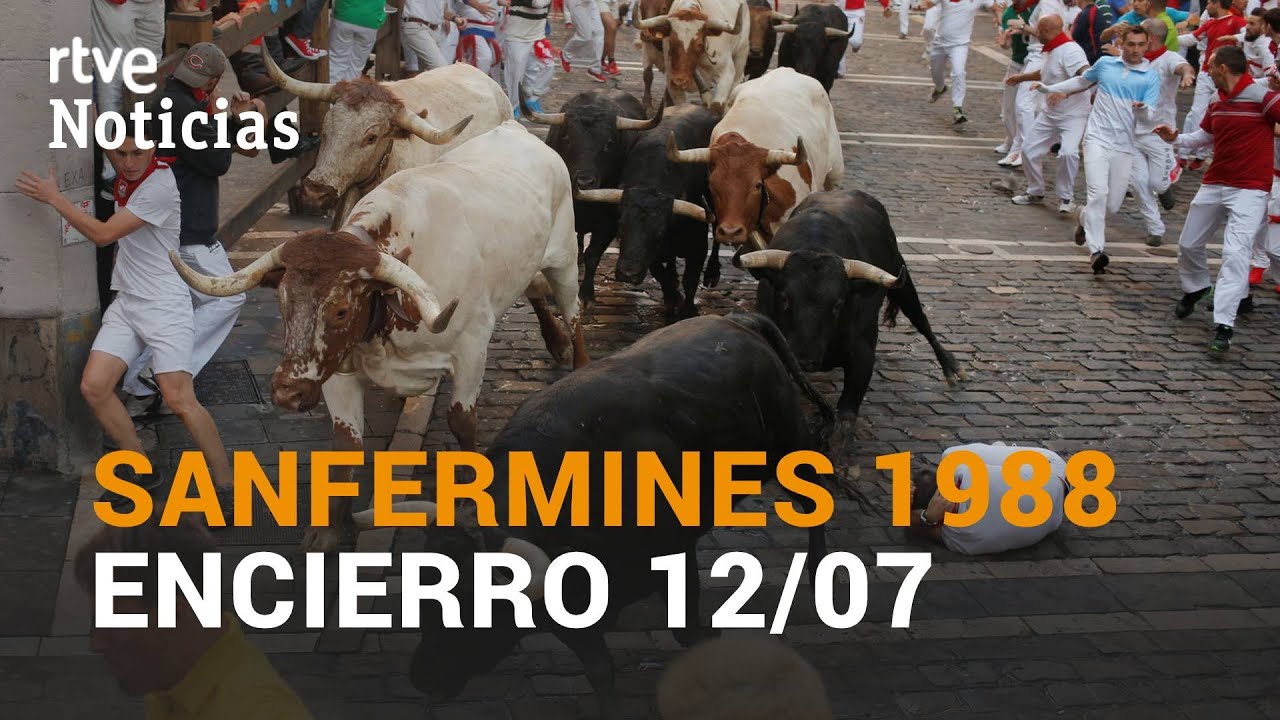
This was the run of 1988. RTVE described the July 12 Cebada Gago encierro as one of “the longest, the best bull runs” in the festival’s recent history. The compact, fast, aggressive bulls from Bornos turned the route into extended chaos, keeping runners and spectators locked in for a passage that stretched well beyond the typical duration. The recording remains one of the most-watched encierro documents from the decade.

Atanasio Fernández
Gored: see year total
The Salamanca ranch brought a different character to the penultimate run, with cattle from a breeding tradition distinct from the Andalusian ganaderiías that had dominated the week’s most memorable moments. July 13 served as a transition between the explosive July 12 and the final day’s ceremonial weight.

Miura
Gored: 0
Miura closed the 1988 fiesta on July 14, as they always did. The tall, athletic, long-horned cattle from Lora del Río carry the most feared name in encierro history, yet 1988 fell within a remarkable stretch in which Miura ran through Pamplona without goring anyone, a streak that ran from 1982 through 2000. The final run of the festival carried its usual weight of ceremony and dread.
What the Record Remembers
Official Poster of San Fermín 1988
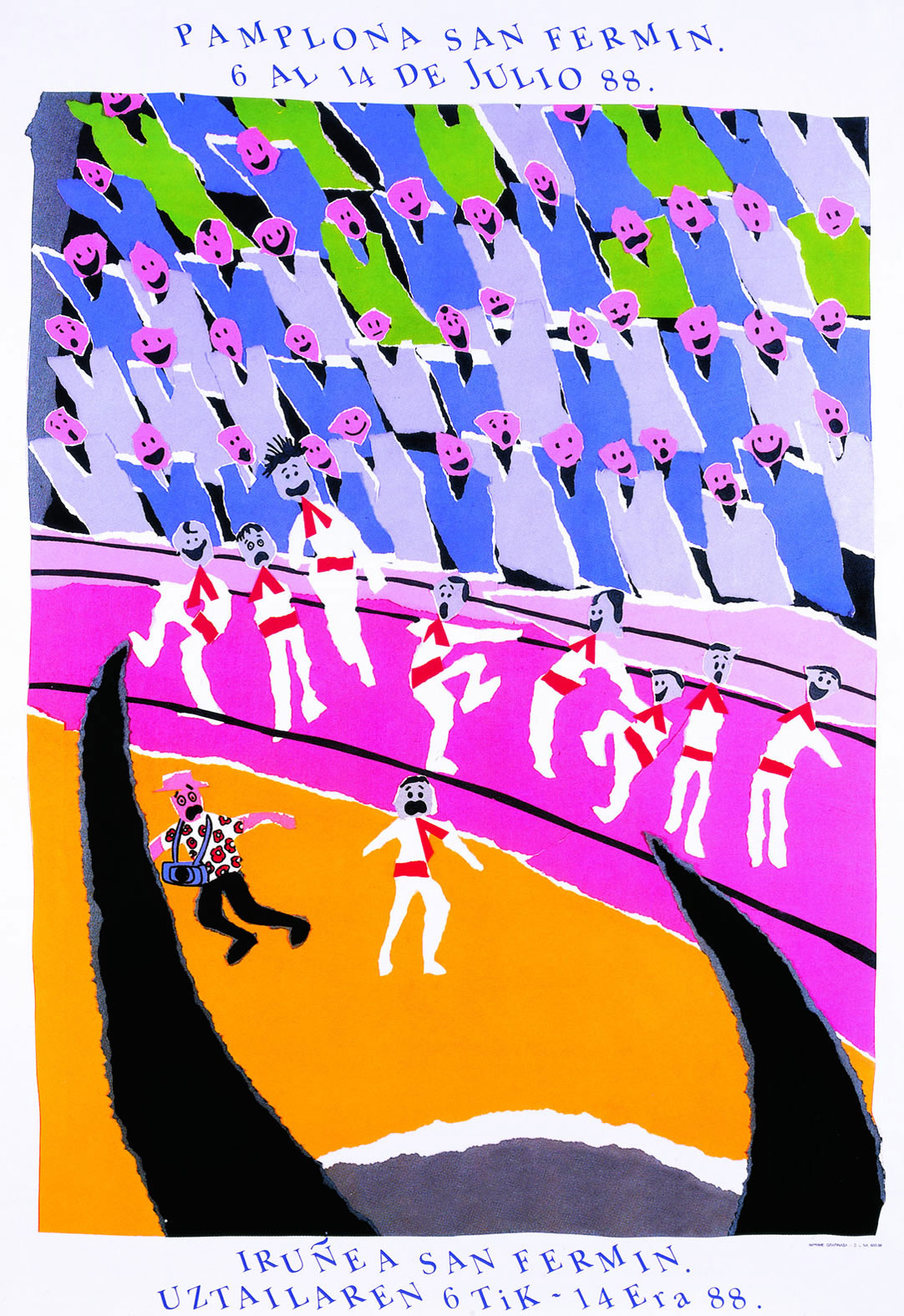
Cartel 1988 by Umberto Dos Santos Franca.
Dos Santos Franca brought an artist’s name that sat outside the typical Navarran or Spanish tradition, a detail that reflected the broader cultural openness Spain was expressing in the late 1980s as EEC membership opened borders and international exchange accelerated. The 1988 cartel reflects a festival that was simultaneously rooted in centuries of Navarran tradition and increasingly visible on an international stage. Whether Dos Santos Franca worked in illustration, painting, or graphic design, the commission itself represented the kind of cross-cultural creative engagement that characterized Spain’s cultural moment in this period.
Source: Ayuntamiento de Pamplona, cartel archive
Pamplona’s annual concurso de carteles selected this as the official Sanfermines poster for 1988.
The City in 1988
Pamplona in July 1988 was a city inside a country moving fast. The Spanish economic expansion of the late 1980s was arriving in Navarra, bringing construction, consumer spending, and a new national confidence that the EEC membership had authorized and the Olympic bid had crystallized. The 1992 Barcelona Games and the Seville Expo were already reshaping how Spain projected itself outward, and Pamplona was navigating this national energy from a particular position: a city in a region that was neither cleanly Castilian nor Basque, with its own political complexities.
ETA activity remained a live concern across the north, and the security environment that came with it shaped daily life in ways that visitors absorbed without always registering. The encierro ran through all of this, indifferent to the political weather, as it always had.
How 1988 Came Together
Key facts in the 1988 fiesta, kept on the record.
The chupinazo signals the official opening of the 1988 San Fermín festival. The rocket fires from the balcony of Pamplona’s city hall, and the crowd in the Plaza del Castillo responds with the traditional red scarves and the first wave of celebration.
Run 1 opens the encierro week with the Torrestrella ganaderiía from Jerez de la Frontera. The festival establishes its pace with consistent, well-built bulls from one of the south’s more reliable ranches.
Cebada Gago runs. RTVE cameras capture what the network will describe as one of “the longest, the best bull runs” in the festival’s recent history. The extended, chaotic passage becomes a landmark broadcast moment and one of the most-rewatched encierro recordings of the decade.
Miura closes the fiesta. The most feared name in the encierro runs without goring anyone, continuing a streak that would hold from 1982 through 2000. The closing ceremony follows, and the 1988 festival passes into the record.
San Fermín 1988, Answered
What made the 1988 San Fermín encierro stand out?
The July 12 Cebada Gago run, which RTVE described as one of “the longest, the best bull runs” in the festival’s recent history, gave 1988 its defining moment. The overall goring count of approximately nine across eight runs also placed the year above average for the era, making it one of the more statistically dangerous festivals of the decade.
Why is the July 12, 1988 Cebada Gago run significant?
RTVE captured and broadcast a run that stretched longer than typical and produced the kind of chaotic, extended passage that the network held up as a benchmark for years afterward. The recording (YouTube: V1dLebEPI30) became one of the most-watched encierro documents from the 1980s. For the Cebada Gago ranch, it was a defining performance at Pamplona.
How dangerous was 1988 compared to other years in this era?
With approximately nine gorings and zero deaths, 1988 sat above average for the period. The zero death toll kept it within the parameters of what local and national authorities accepted, but the goring count reflected a week that ran rough, particularly with the Cebada Gago bulls contributing significantly to the overall tally.
Did Miura gore anyone in 1988?
No. The 1988 Miura run on July 14 was goring-free, consistent with a remarkable streak in which the most feared ganaderiía in encierro history ran at Pamplona without goring anyone from 1982 through 2000.
Planning your own run?
The 1987 festival brought its own lineup and conditions worth examining alongside 1988, and the 1989 encierro continued the decade’s trajectory into the final years before Spain’s 1992 transformation.