
San Fermín 1993: Cebada Gago opened the fiesta for the first time, front-loading the week with Pamplona’s most unpredictable cattle and setting the highest goring total of the early decade
July 6 to 14, 1993. Eight encierros with the most volatile opener yet, as Cebada Gago took the first-run slot and the week produced approximately 8 gorings, the highest of the 1990-1994 period.
Looking Back at 1993
Looking back at 1993, the year stands out in the early-decade sequence for two reasons: Cebada Gago opened the fiesta in a position they rarely occupied, and the goring total of approximately 8 was the highest of the 1990-1994 run. These two facts are not obviously connected, since goring counts across a full week of eight runs are produced by many factors. But having the most statistically dangerous ganaderiía at Pamplona in the opening slot meant the fiesta started at an unusual pitch of unpredictability. Experienced runners who tracked the lineups each year took note.
The year came after Spain’s extraordinary 1992 moment, the Barcelona Olympics and Expo 92 in Sevilla, and Pamplona was now receiving a sustained level of international attention that had been building through the early decade. The post-Olympic crowd was a fiesta crowd that had expanded in size and geographic origin. What Cebada Gago’s opening slot added to that context was a first morning that gave the week no warm-up, no moderate opener to ease runners into the sequence. The fiesta of 1993 began as it meant to go on: fast and without obvious pattern.
Dennis Clancey, Founder, Encierro
The Year the Fiesta Opened at Full Intensity
Cebada Gago from Bornos, Cádiz, typically appeared in the mid-week portion of the encierro lineup through the early 1990s. In 1993, they drew the opening slot on July 7, a placement that disrupted the usual pattern in which a moderately dangerous ranch starts the week and the most challenging animals appear later. Runners who planned their week around the lineup had to recalibrate: the first morning was not an opportunity to shake off the previous year’s rust. It was a test at full intensity from the starting rocket.
Spain in 1993 was settling into the period after the big year. The Olympic infrastructure in Barcelona was being absorbed into everyday city life. The economic momentum of the late 1980s and early 1990s was beginning to slow, and the country was adjusting to a more normal international profile after the 1992 summit. Pamplona, insulated from these broader fluctuations by the fiesta’s annual character, continued to draw its crowd. The approximately 8 gorings made 1993 the most eventful week of the early decade in terms of injury count, though the record of zero deaths held.
“Cebada Gago opening means you don’t get Monday to find your feet. You show up on the seventh and the most unpredictable herd in the lineup is already at your back.”
Every 1993 Encierro, Day by Day
Each run with its ganaderiía and approximate time. The route runs approximately 875 meters from Santo Domingo to the ring. Gorings for 1993 are not individually recorded by run; the year total was approximately 8.

Cebada Gago
Gored: see year total
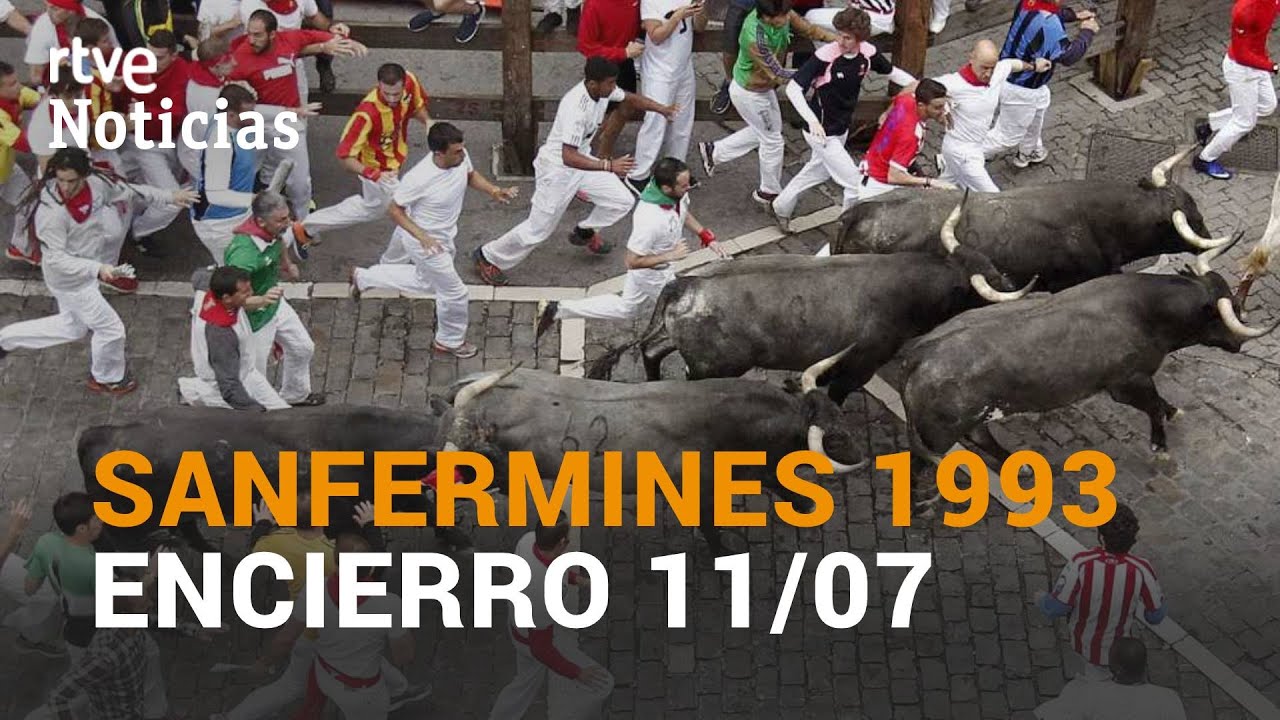
Cebada Gago opened the 1993 fiesta in a rare placement for a ganaderiía that usually ran mid-week. Their fast, compact bulls from Bornos hit the course on the first morning of the encierro sequence, with the kind of scattering behavior that produces isolated animals along multiple points of Estafeta. There was no gentle opening to 1993: the fiesta began with the week’s most unpredictable cattle.

Guardiola Fantoni
Gored: see year total
Guardiola Fantoni from Huelva ran the second encierro, another aggressive ganaderiía following a difficult opening day. The Huelva ranch’s cattle are known for unpredictable behavior through the turns of the course, and runners who had survived Wednesday were back on Thursday with no guarantee the week would settle down.

Marqués de Domecq
Gored: see year total
Marqués de Domecq brought some relative predictability to the third encierro. Their Jerez cattle are known for running in relatively ordered packs, which gave the Friday morning a different character from the two days that preceded it. After Cebada Gago and Guardiola Fantoni, a Domecq morning felt, by comparison, like a chance to run without the maximum degree of chaos.

Miura
Gored: see year total
Miura ran fourth on a Saturday, mid-week rather than in the closing position they occupy in some years. Part of the 1982-2000 clean streak at Pamplona, their tall, long-horned, intelligent Sevilla cattle completed the course without incident despite the weight of their name. A Saturday Miura morning draws the full crowd to the balconies of Estafeta, and 1993’s fourth encierro was no exception.
Pablo Romero
Gored: see year total
Pablo Romero from Sevilla brought a classic traditional ranch to the fifth morning, their large bulls representing a different physical profile from the compact Cebada Gago animals that opened the week. Pablo Romero cattle are substantial, traditionally bred, and carry the weight and presence that the Sevilla ganaderías are known for in the encierro.

Pérez Tabernero
Gored: see year total
Pérez Tabernero, a well-established Salamanca ranch, ran the sixth encierro. The Salamanca breeding tradition tends toward consistent, moderately sized cattle, and Pérez Tabernero’s reputation is solid within the wider field. Their sixth-day appearance gave the back half of the week a more measured quality after the front half’s volatility.
Torrealta
Gored: see year total
Torrealta, from the Sevilla area, appeared in the penultimate slot, a ganaderiía that was less common in Pamplona lineups than the established names. Their seventh-day placement meant they ran the second-to-last encierro, and runners who had navigated the week from Cebada Gago’s opening to Miura’s fourth run brought a particular kind of attention to the final two mornings.
Conde de la Corte
Gored: see year total
Conde de la Corte from Badajoz closed the 1993 fiesta on the final Wednesday, their Extremadura cattle generally regarded as reliable and well-behaved through the course. After a week that began with Cebada Gago and ran through Miura and Pablo Romero, the closing run with a measured, controlled herd gave the 1993 fiesta a final morning that was intense in the way all final mornings are, but not at the extreme end of the risk spectrum.
What the Record Remembers
The 1993 Sanfermines Official Cartel
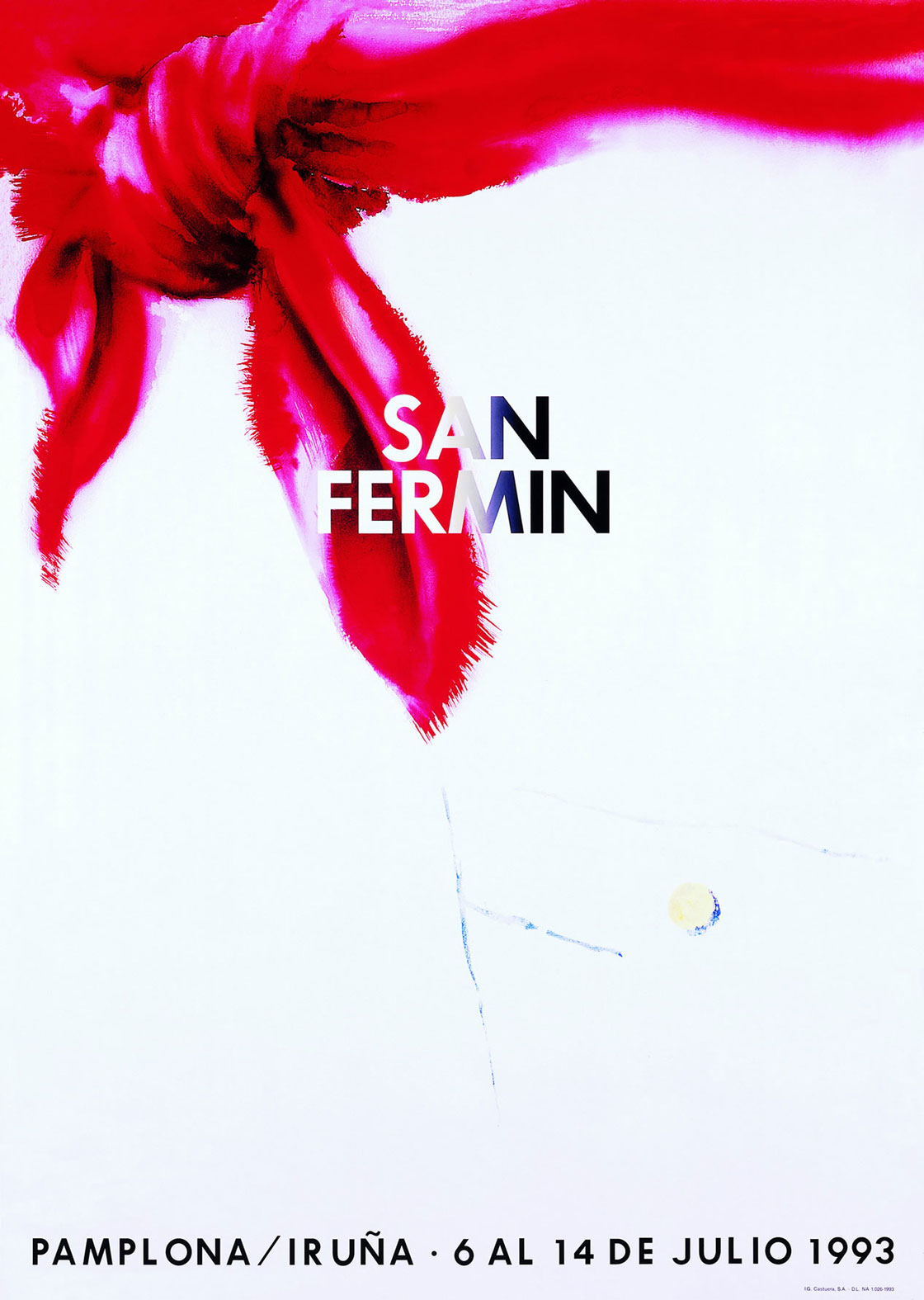
Cartel 1993 by Iñaki Palmou Fidalgo.
Iñaki Palmou Fidalgo’s 1993 poster continued the tradition of strong graphic design that distinguished the San Fermín cartel series through this era. Palmou Fidalgo worked in the visual language that the fiesta’s cartel art had developed over decades: bold color, strong figuration, the tension between the white of the runner’s outfit and the red of the pañuelo, with the bull’s presence anchoring the composition. The 1993 poster reflects the established aesthetic of a series that commissions a new artist each year while maintaining the fiesta’s visual identity.
Source: Ayuntamiento de Pamplona, cartel archive
The official San Fermín 1993 cartel was chosen via the city’s annual poster contest, the concurso de carteles.
The City in 1993
Pamplona in July 1993 was a city coming off its post-Olympic momentum, the international buzz of 1992 fading into a more normal rhythm that was still, by the standards of most European cities, extremely high. The international component of the crowd was larger than it had been a decade earlier, and the city had adapted to accommodate it: more tourist infrastructure, more multilingual services, more organized viewing options for the encierro for people who were not going to run.
The approximately 8 gorings across the week, the highest of the 1990-1994 sequence, gave local and international press more to write about than a quieter year would have. The fiesta of 1993 was, in its own way, a reminder that the encierro does not soften to accommodate its growing audience. The chupinazo opened the fiesta at noon on July 6; the Pobre de Mí at midnight on July 14 closed a week that Cebada Gago had opened at full speed.
How 1993 Came Together
Key facts in the 1993 fiesta, kept on the record.
The chupinazo fires from the Town Hall balcony, opening the 1993 fiesta. The crowd in the Plaza Consistorial is a mix of Navarrans who have attended for decades and an international contingent that has grown steadily through the early decade.
Cebada Gago runs the opening encierro, a rare first-slot placement for the ganaderiía from Bornos, Cádiz. The fiesta begins at its most unpredictable.
Miura runs the fourth encierro on a Saturday, appearing mid-week rather than in the closing slot, and completing the course as part of the 1982-2000 clean streak at Pamplona.
Conde de la Corte closes the 1993 fiesta in the eighth and final encierro. The most eventful week of the early decade in terms of gorings concludes without a fatality. The Pobre de Mí at midnight ends the fiesta.
San Fermín 1993, Answered
Why was Cebada Gago opening the 1993 fiesta significant?
Cebada Gago typically appeared mid-week in the San Fermín lineup during the early 1990s. Their placement in the opening slot on July 7, 1993, was unusual because the first morning of the encierro is traditionally when runners are reorienting themselves to the course after eleven months away. Having the most statistically dangerous and unpredictable ganaderiía at Pamplona in that opening slot removed the usual warm-up dynamic. The fiesta began at peak difficulty on its first morning.
Where did Miura run in 1993?
Miura ran the fourth encierro on Saturday July 10, mid-week rather than in the closing position they occupy in some years. As part of the 1982-2000 clean streak at Pamplona, they completed the course without a goring. A Saturday Miura morning drew maximum attendance on the balconies and barriers, even with the ganaderiía appearing in a non-closing slot.
What do approximately 8 gorings tell us about 1993?
The approximately 8 goring total in 1993 was the highest of the 1990-1994 period. The 1990 total was approximately 5, 1991 approximately 6, and 1992 approximately 7, so 1993 continued an upward trend. The higher total may reflect the front-loaded lineup, with two of the most volatile ganaderías in the first two slots, the growing size of the international crowd, or simply the inherent randomness in how individual animals behave on specific mornings. There were no deaths in 1993.
Which ganaderiía closed the 1993 fiesta?
Conde de la Corte from Badajoz, Extremadura, ran the eighth and final encierro on July 14, closing the 1993 fiesta. Their Extremadura cattle are generally well-regarded for the course, and the closing morning with Conde de la Corte gave the fiesta a finale that was intense by the standard of any encierro, but not at the extreme risk level of a closing Miura or Cebada Gago run.
Planning your own run?
The Year-by-Year Archive covers the full 1990-1994 sequence, including the years before and after Cebada Gago took the opening slot, and tracks how goring totals shifted across the decade.