
San Fermín 2000: The Running of the Bulls
July 6 to 14, 2000. The first encierros of the new millennium, eight mornings, eight ranches, and a Miura finale that closed a fiesta marked by Cebada Gago’s customary ferocity.
Looking Back at 2000
Looking back at 2000, this was the first San Fermín of the new millennium, though the encierro itself paid little attention to the calendar. The lineup that year included names that any student of the course will recognize: Cebada Gago on Monday, Jandilla for speed, Núñez del Cuvillo, and Miura to close. Partido de Resina, an older Andalusian ranch, ran one of its final appearances in Pamplona in 2000.
The millennium carried symbolic weight for the city, and San Fermín that summer drew reporters and visitors curious to see how the oldest living encierro tradition would enter the new century. It entered it the same way it always does: eight bulls out of the corrals at eight in the morning, the white shirts and red scarves filling Santo Domingo, and whatever happens next happening faster than thought allows.
Dennis Clancey, Founder, Encierro
The First Encierros of the New Millennium
The 2000 fiesta was the first San Fermín of a new century. The lineup included several of the most recognizable names in the encierro, Cebada Gago, Jandilla, Núñez del Cuvillo, and Miura, alongside Partido de Resina, a Jerez de la Frontera ranch in its final years of regular participation at Pamplona, and Gutiérrez Lorenzo from Salamanca. Adolfo Martín and Torrestrella completed the eight-ranch card.
Between 1982 and 2000, Miura had run nine times in Pamplona without leaving a runner gored by horn, a remarkable record for the ranch known above all others as the most dangerous in the history of the encierro. The 2000 closing run continued that extraordinary streak on the final morning. The year sat between the relatively clean late 1990s and the surge in gorings that 2001 and 2002 would bring. Explore the full record in the year-by-year archive.
The first San Fermín of a new millennium, and Miura, most feared of all ranches, closed it without goring a single runner.
Every 2000 Encierro, Day by Day
Each run with its ganaderiía, approximate time, and horn injuries. The route runs approximately 849 meters from Santo Domingo to the ring. Video recordings of individual 2000 encierros are not available online; consistent television coverage of the full route began from 2011 onward.
Cebada Gago
Cebada Gago opened the millennium fiesta on the first run, an unusually early slot for the ranch that more often runs on Monday. Two runners were caught by horn, a typical toll for the most prolific goring ganaderiía in the history of the encierro.
Adolfo Martín
Adolfo Martín’s Salamanca bulls ran the second encierro cleanly. No horn gorings on the Saturday morning as the fiesta found its rhythm after the Cebada Gago opener.
Partido de Resina
Partido de Resina, the Jerez de la Frontera ranch, ran one of its last appearances in Pamplona. A clean run on Sunday, with the bulls moving well across the nine sections of the route without leaving a gored runner.
Torrestrella
Torrestrella ran the Monday encierro. The Álvaro Domécq ranch produced one goring in a run that brought the midpoint of the fiesta without major incident.
Jandilla
Jandilla ran fast and compact on Tuesday, finishing without horn gorings. The Tarifa ranch’s encerros in Pamplona through this era were consistently among the fastest and cleanest on the annual calendar.
Núñez del Cuvillo
Núñez del Cuvillo ran the sixth encierro, producing two gorings on a Wednesday morning that lifted the week’s total back toward dangerous territory. The Cádiz ranch has been a regular Pamplona presence for decades.
Gutiérrez Lorenzo
Gutiérrez Lorenzo ran the seventh encierro on the penultimate morning of the fiesta. Two runners caught by horn brought the total to seven going into the Miura finale.
Miura
Miura closed the 2000 fiesta without goring a single runner, extending a streak that had now reached nine consecutive Pamplona runs without a horn wound since 1982. The most feared name in the history of the encierro finished the millennium’s first fiesta in silence.
What the Record Remembers
The 2000 Sanfermines Official Cartel
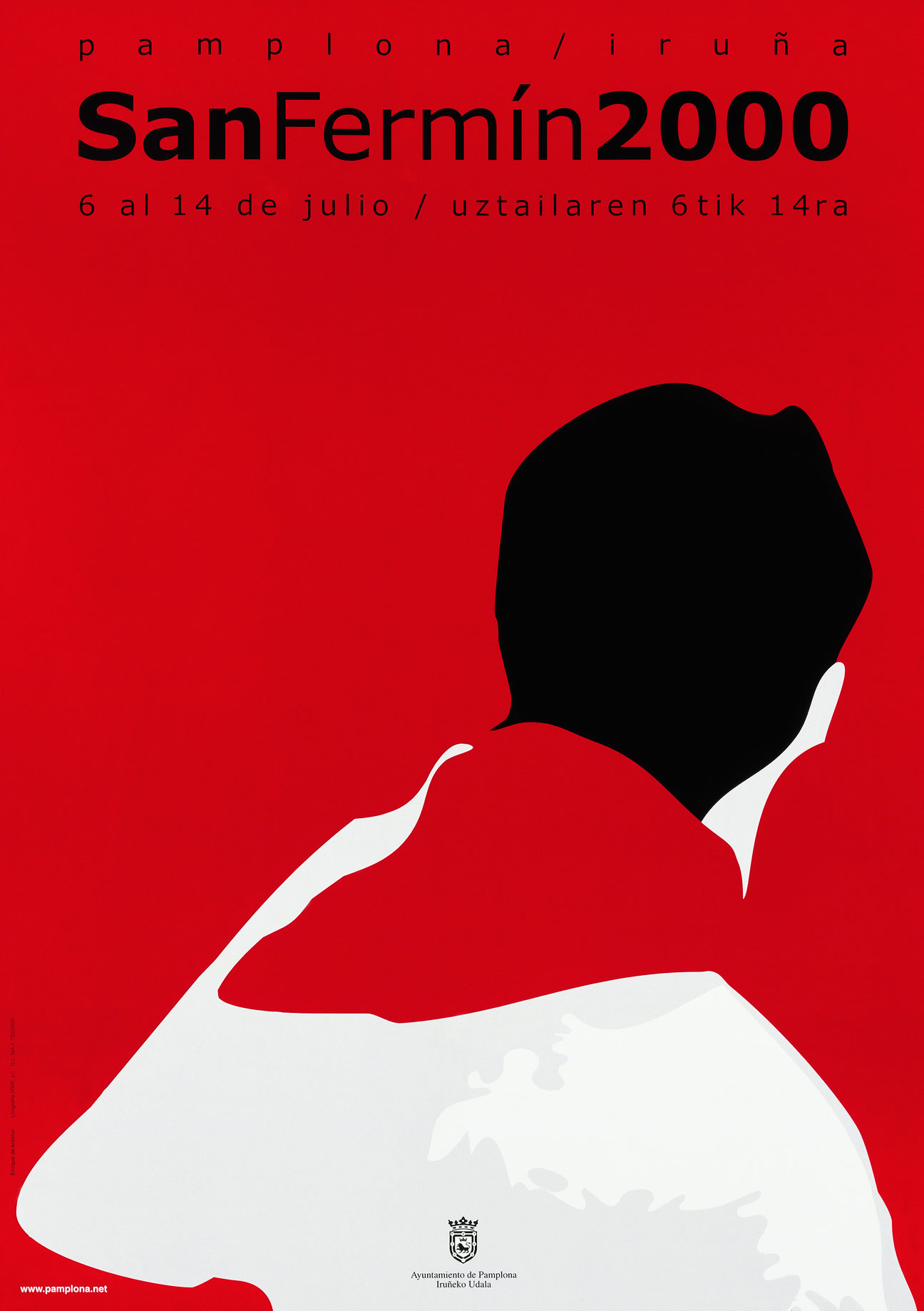
Cartel 2000 by Enrique de Antonio Sebrián.
The official poster for San Fermín 2000 was designed by Enrique de Antonio Sebrián, selected through the annual competition administered by the Ayuntamiento de Pamplona. As the first poster of the twenty-first century, it marks a natural boundary in the visual history of the fiesta.
The poster competition has been the mechanism for selecting the annual San Fermín image since the late nineteenth century. Artists from across Spain submit works each year; the winning design becomes the face of the fiesta on banners, programmes, and souvenirs throughout Pamplona and beyond.
Source: Ayuntamiento de Pamplona, cartel archive
Pamplona’s annual concurso de carteles selected this as the official Sanfermines poster for 2000.
The City in 2000
The chupinazo opened the fiesta at noon on Thursday, July 6, 2000, from the balcony of the Pamplona town hall. The symbolic weight of the first fiesta of a new millennium drew additional media interest to what is already one of the most covered festivals in the world. The traditional programme, procession of San Fermín on July 7, noon bullfights, peñas, concerts, fireworks, ran on its established schedule.
Pamplona itself in 2000 was a city of approximately 185,000 people, a compact and deeply traditional capital whose old quarter forms the entire encierro route. The same streets that runners take from Santo Domingo to the bullring are the same streets of the medieval city: Mercaderes, Estafeta, Telefónica. None of that changes year to year. The Pobre de Mí at midnight on July 14 brought the 2000 fiesta to its close.
How 2000 Came Together
Key facts in the 2000 fiesta, kept on the record.
Eight ranches confirmed for 2000: Cebada Gago, Adolfo Martín, Partido de Resina, Torrestrella, Jandilla, Núñez del Cuvillo, Gutiérrez Lorenzo, and Miura. Miura closed the fiesta as is the tradition for the most prestigious closer in the encierro.
The chupinazo fired at noon from the Pamplona town hall balcony, opening the first San Fermín fiesta of the new millennium. Eight encierros began the following morning.
For the ninth consecutive time since 1982, Miura closed the Pamplona fiesta without goring a single runner. Their reputation as the most dangerous ranch in the history of the encierro made that streak one of the remarkable anomalies in the sport’s records.
Miura closed the 2000 fiesta cleanly. The total for the week was approximately seven horn gorings, well below the totals that 2001 and 2002 would each reach. The Pobre de Mí at midnight ended the first San Fermín of the twenty-first century.
San Fermín 2000, Answered
How many runners were gored in San Fermín 2000?
Approximately seven runners were gored by horn across the eight encierros of 2000, a total lower than the twelve the following year (2001) and the twelve in 2002. Cebada Gago on July 7 produced two gorings in the opening run; Miura closed cleanly on July 14 without a single horn injury.
Which ganaderiía ran in each encierro in 2000?
Cebada Gago on July 7, Adolfo Martín on July 8, Partido de Resina on July 9, Torrestrella on July 10, Jandilla on July 11, Núñez del Cuvillo on July 12, Gutiérrez Lorenzo on July 13, and Miura on July 14.
Was anyone killed in San Fermín 2000?
No. There were no deaths in the 2000 encierros. The last death in the Pamplona encierro before 2000 was in 1995, and the next came in 2003. No runner died in the encierro in 2000, 2001, or 2002.
Why is San Fermín 2000 notable?
It was the first San Fermín fiesta of the twenty-first century, the first encierros of a new millennium. It was also notable for Miura’s continued clean streak: the ranch most associated with danger in the history of the encierro closed the 2000 fiesta, as they had eight consecutive fiestas before it, without goring a single runner.
Planning your own run?
2000 opened a new century in the encierro. For what came next, see San Fermín 2001, or explore the route with the runners who have studied it longest.