Deep dive into the 9-day fiesta, daily events schedule, Chupinazo opening ceremony, Giants & Big-Heads parades, nightly fireworks, peñas culture, bullfights, and how to experience San Fermín like a local.
Most English-language guides to “San Fermín Spanish” are really just festival glossaries wearing a language lesson’s clothes. They teach you that encierro means the running of the bulls…
Walk down Calle Jarauta during San Fermines and nearly every peña clubhouse you pass belongs to a group wearing a distinctive blusón, the colored smock jacket layered over…
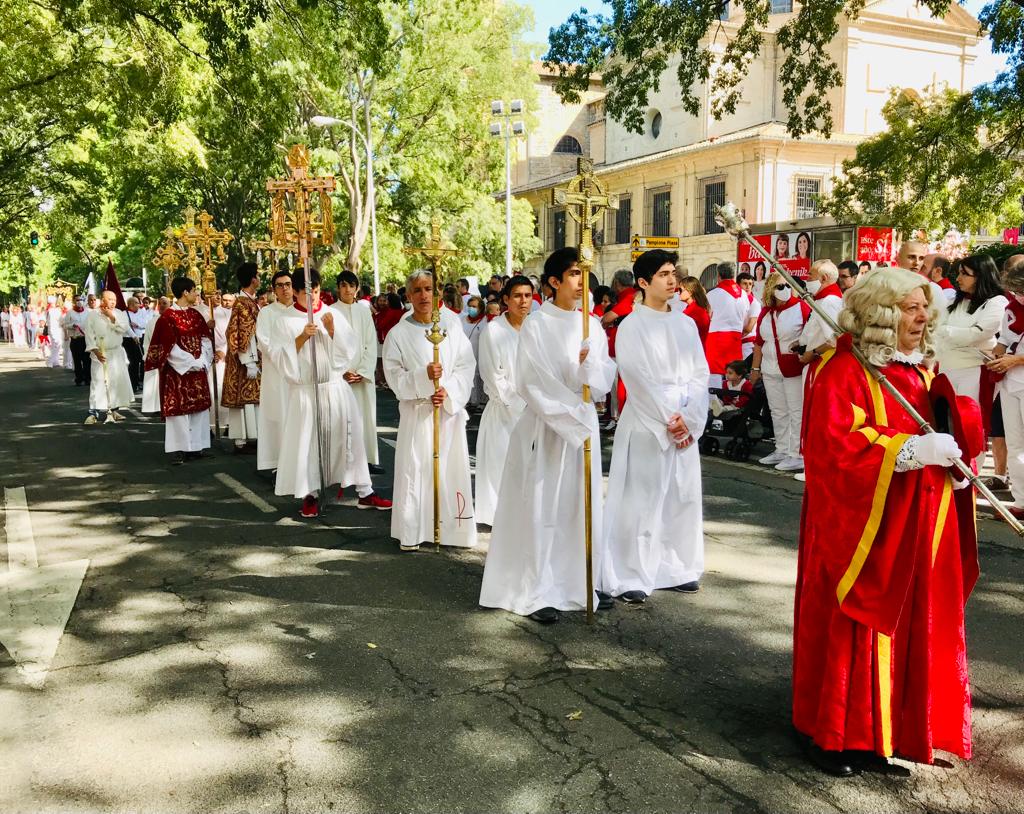
Inside the Capilla de San Fermín, in the church of San Lorenzo on Calle Mayor, sits a half-length image of the saint carved from polychrome wood and trimmed…
Most guides to the San Fermín daily schedule describe a single template and apply it to all nine days: a wake-up band before dawn, the encierro at 8am,…
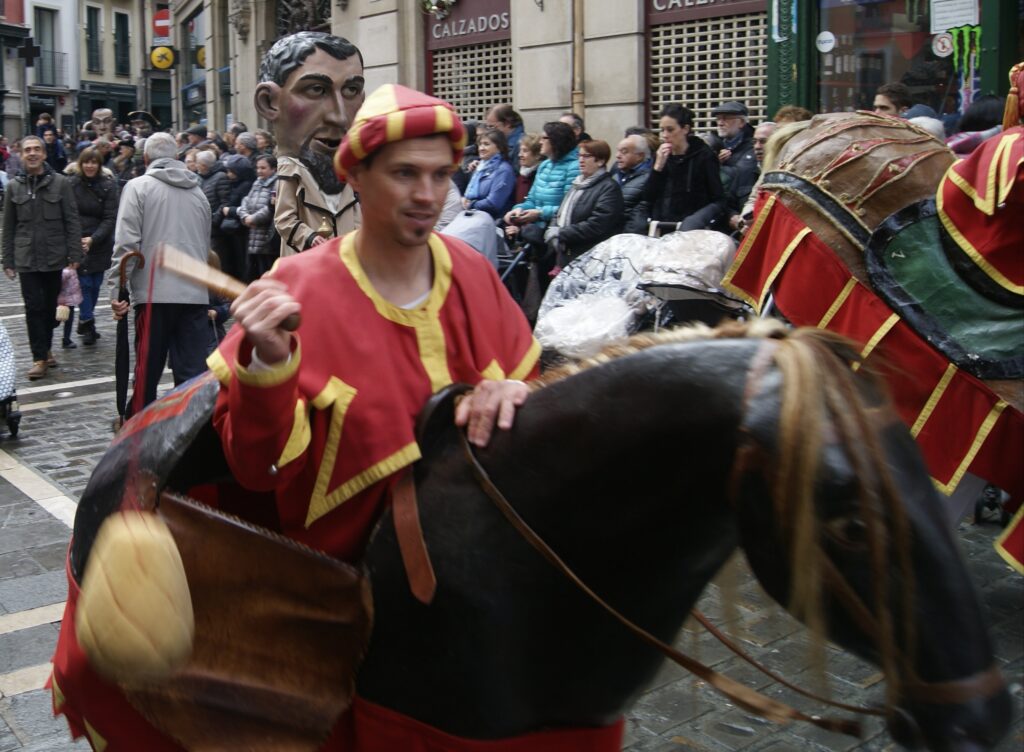
Every one of the 25 figures in Pamplona’s comparsa has an identity, except six. The zaldikos, the papier mache horses that walk alongside the giants during San Fermín,…
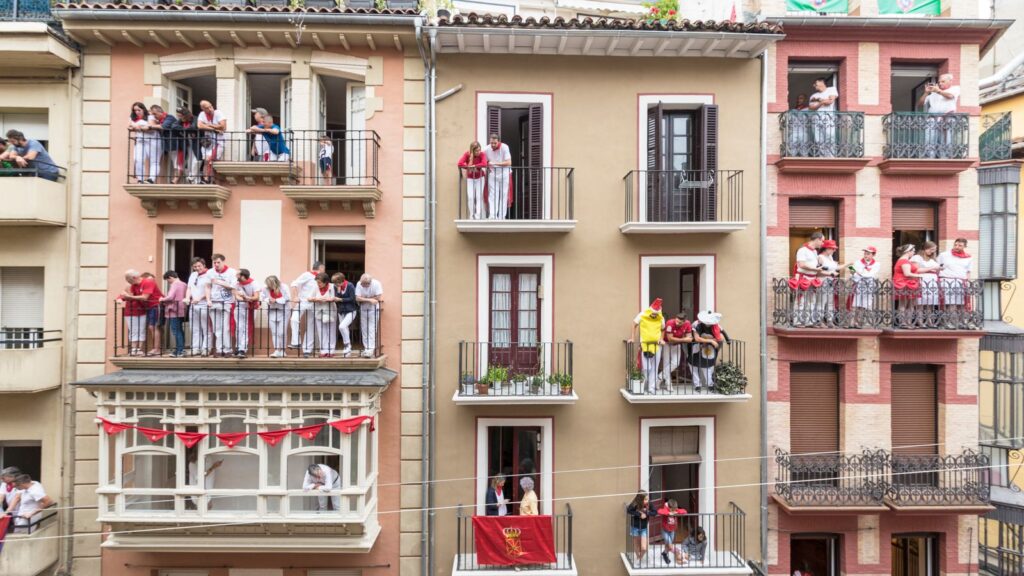
How to watch the running of the bulls in person in Pamplona: the free second barrier, the wall above the saint's niche on Santo Domingo, rented balconies, and…
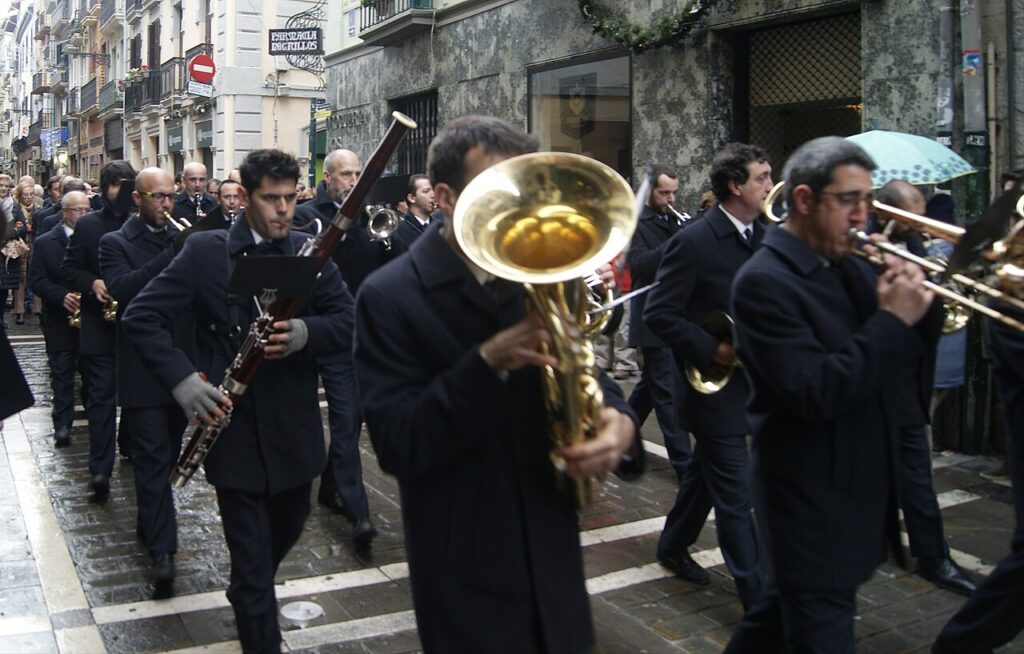
Every morning of San Fermín, at 6:45 AM, a band called La Pamplonesa gathers in the Plaza Consistorial and marches through Pamplona’s old town playing four songs on…