
July 7 · First run
La Palmosilla
4:02Gored: 1
The slowest run of the fiesta. Two bulls refused the corrals and circled the arena for about two extra minutes, producing genuinely dangerous moments as runners provoked them.
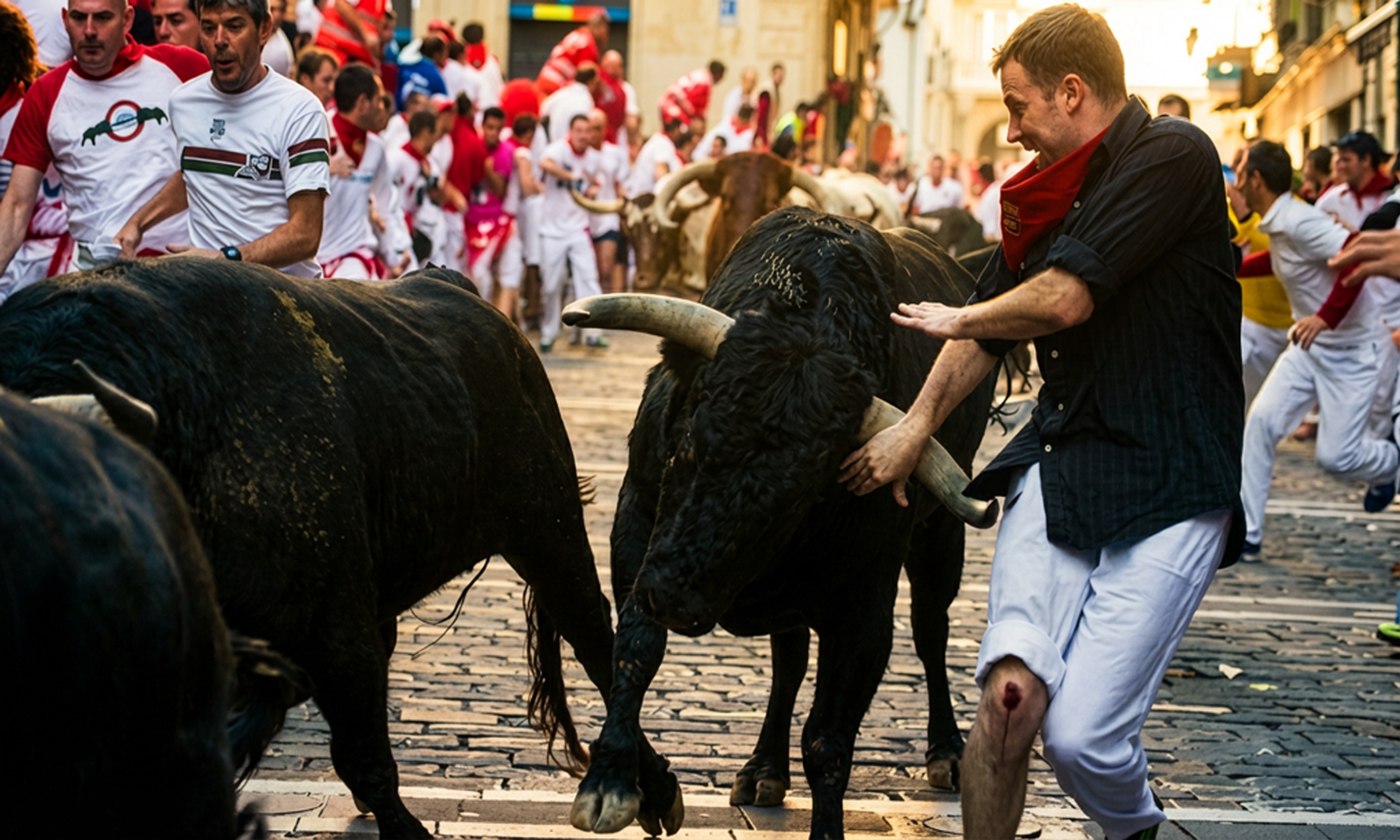
July 6 to 14, 2024. Every encierro, every ganadería, every video, and the stories the numbers leave out.
They will tell you 2024 was one of the safest years on record, and the count is real: only two runners were caught by a horn across eight mornings. But clean is not the same as safe. Ask anyone pinned against the boards as Chirrino came through on the 14th, or on Estafeta the morning Domingo Hernández debuted at a pace almost no herd has matched in forty years.
What has changed is the bulls. They run faster now, tighter, less inclined to single a runner out. That lowers the goring count, but a fast clean run can still turn in a single stride. I remember 2024 less for its statistics than for the people in it: the veteran who has run for fifty years carrying his son’s ashes, the strangers who lay their bodies over a fallen runner to shield him from the steers. That is what the encierro actually is.
The danger was there from the first morning, when two La Palmosilla bulls refused the corrals and circled the arena loose, and it was there on the last, when the Miura Chirrino threw runners into the boards entering Mercaderes. And yet, by the count that matters most, just two runners were gored across the eight runs, tying 2024 with 2018 and 1984 as the cleanest editions on record, even as Pamplona drew its largest crowds in history. Read the full archive year by year, or the 2025 recap, to see where 2024 sits.
Nineteen consecutive mornings without two or more runners gored in a single run, the best streak in more than forty years.
Each run with its ganadería, time, horn injuries, and the official video. The route runs about 849 meters from Santo Domingo to the ring; see the route map.
The slowest run of the fiesta. Two bulls refused the corrals and circled the arena for about two extra minutes, producing genuinely dangerous moments as runners provoked them.
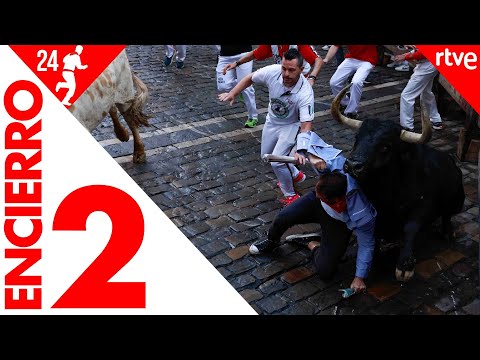
The program’s most feared ranch ran clean. The bull Desgreñado broke a horn in a fall and came close to a runner in the callejón.
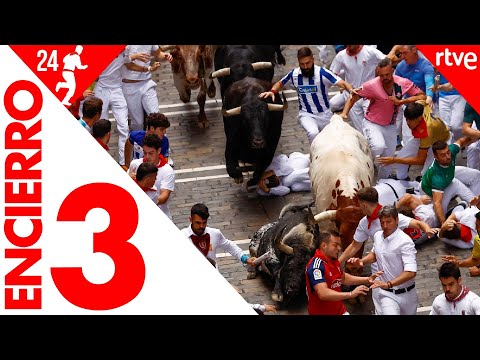
Vertiginous and clean, with heavy falls on Estafeta and a tense pile-up at Telefónica; the bull Pocosol grazed fallen runners but caught no one.
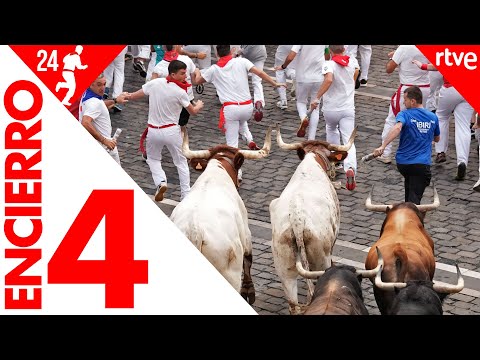
Fast and tightly grouped on the 15th anniversary of Daniel Jimeno’s death. The ranch extended eight straight years without a goring.
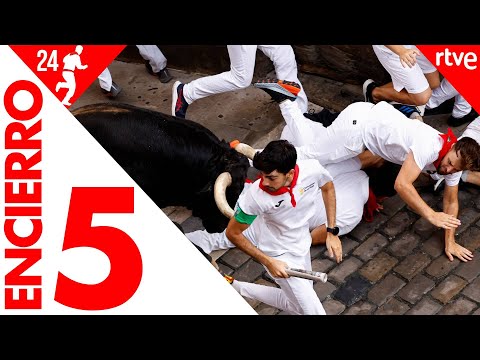
A debut for the record books. The bulls led the herd themselves from Santo Domingo to the ring in the second-fastest run in forty years.
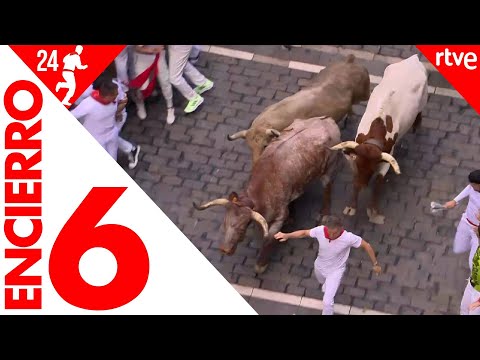
A strung-out herd and the fiesta’s second goring: a 73-year-old veteran from San Sebastián caught at the Cuesta de Santo Domingo.
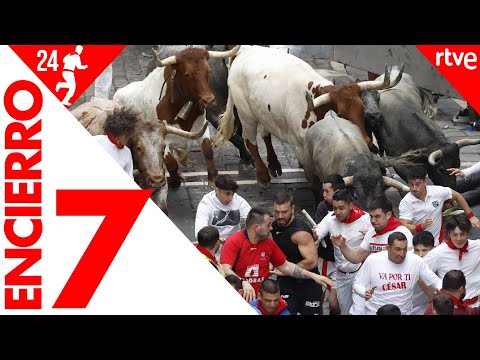
Very fast and clean, the herd splitting into pairs on Estafeta and entering the arena hard but catching no one.
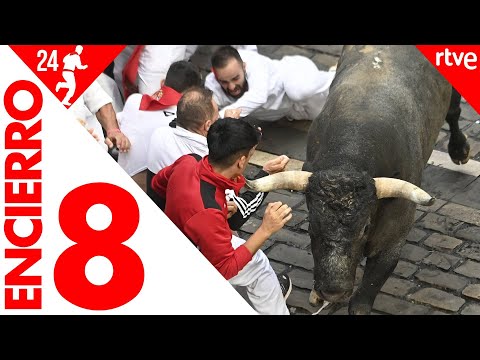
Miura closed the fiesta clean for the ninth straight year. The 620-kilo Chirrino slammed runners into the boards entering Mercaderes.
The fourth run, on July 10, fell on the 15th anniversary of the death of Daniel Jimeno Romero, the 27-year-old from Alcalá de Henares gored on Telefónica in 2009. He remains the last person killed in the Pamplona encierro. Before the run, his parents, Mari Carmen and Antonio, laid flowers at the fence where their son died, joined by his hometown friends and runners who came to stand with them.
The same morning carried a second weight: it was 100 years to the day since the first recorded fatal goring, that of Esteban Domeño of Sangüesa, in 1924. Sixteen runners have died in the encierro across more than a century, their names set in cobblestones along the route. With record crowds and only two gored, 2024 added no name to that list, fifteen years on from the last.
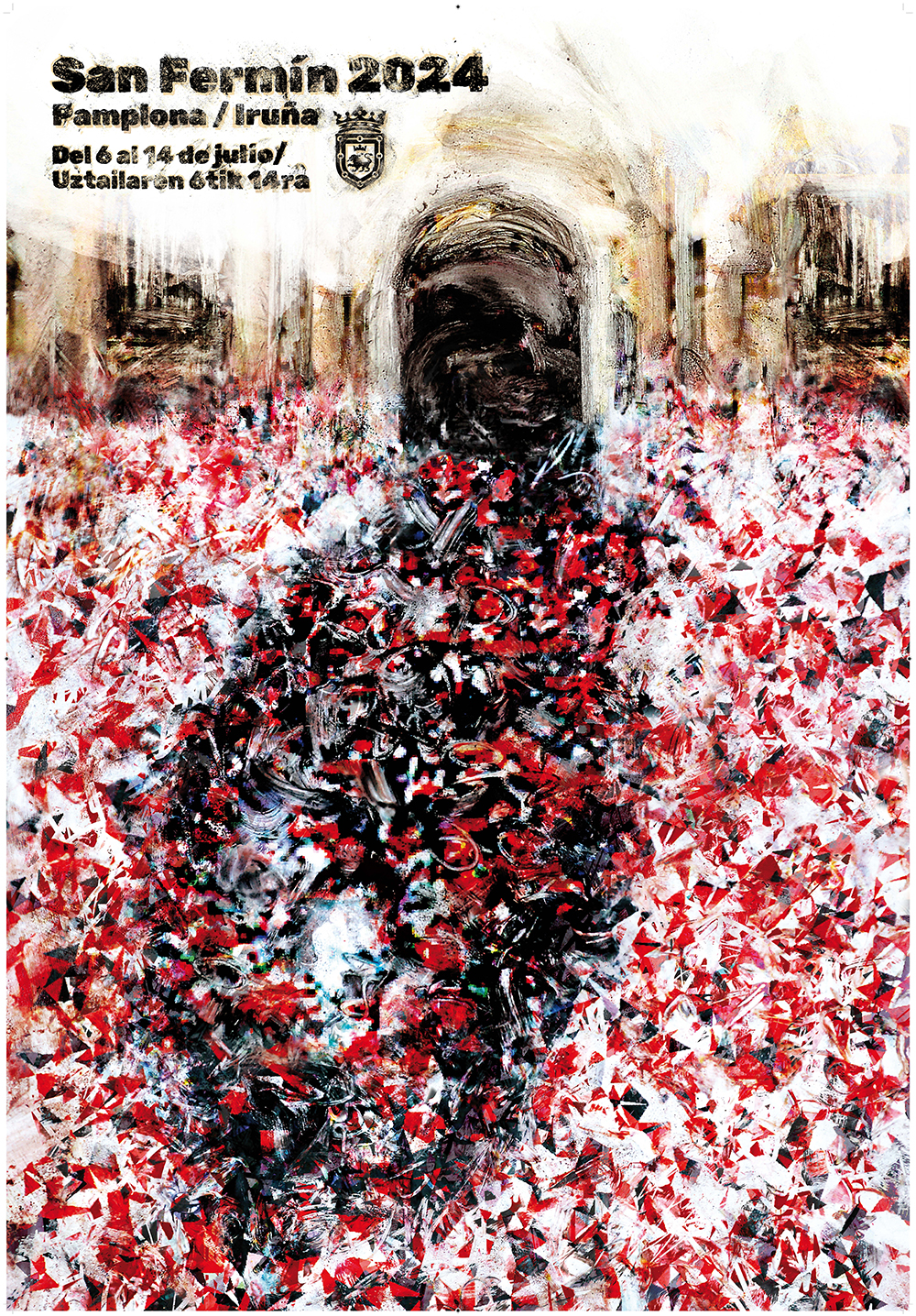
Pamplona’s annual concurso de carteles selected this as the official Sanfermines poster for 2024.
The fiesta opened with a rain-soaked chupinazo fired by the Duguna dance group on its 75th anniversary, and closed nine days later with the candlelit Pobre de Mí. In between, the procession of San Fermín moved through a Calle Curia that, the city said, had recovered its sense of coexistence after two hard years. Denmark’s Gunnar Boerge Knudsen took the San Fermín de Oro for his fireworks display “Nattens magi,” the giants and the recortes drew their crowds, and the Plaza del Castillo filled for Zetak and El Drogas. It was, by the city’s count, the most attended San Fermín ever held.
A sample of the international coverage of the 2024 running of the bulls.
The planning and key dates, kept on the record.
The poster “Gaiteros” by Ángel Blanco Egoskozabal won the public vote, the first author to repeat as winner since voting began in 2008.
Assembly of the vallado, the route fence, began, roughly 6,100 pieces built by the Aldaz Remiro carpenters.
Eight ranches were set, with Domingo Hernández debuting on the 11th and Miura closing on the 14th.
The chupinazo opened the fiesta; nine days later Pobre de Mí closed it at midnight.
Two, across the eight encierros, on July 7 and July 12, one of the lowest totals on record. Notably, the July 7 wound came from a steer, not a fighting bull.
La Palmosilla, Cebada Gago, Victoriano del Rio, Fuente Ymbro, Domingo Hernandez (debut), Jandilla, Jose Escolar, and Miura, in that order from July 7 to 14.
The Domingo Hernandez debut on July 11, at 2 minutes 9 seconds, the second-fastest run in forty years.
No. The last death in the Pamplona encierro was Daniel Jimeno in 2009, so 2024 marked fifteen years without a fatality.
About 1.84 million across the programmed events, a record, up 27 percent on 2023.
2024 is the record. For the upcoming fiesta and how to prepare, see San Fermín 2026 or learn the route with the runners who teach it.